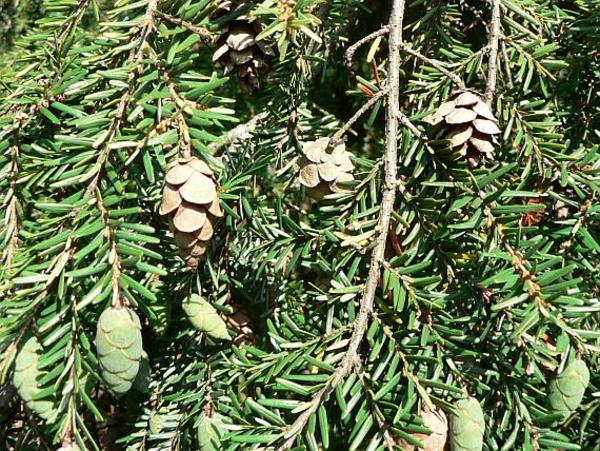
Abies canadensis-pinus canadensis
Tsuga canadensis · Hemlock spruce, Canada pitch, Canada spruce. · Plant · Pinaceae
Abies can. is best suited to people who tend to be either fretful or quiet and careful. Often weak, nervous, and lightheaded, they may lie down frequently, especially with their legs drawn up, to avoid fainting.
Classic physical characteristics include chilliness and clammy skin, a sensation that the blood has turned to cold water, or a feeling that there is a wet cloth between the shoulder blades.
Abies can. is given primarily to treat digestive disorders associated with inflamed mucous membranes in the stomach and poor absorption of food. Overeating is common in such cases; even after eating there are hunger pains and rumbling in the bowels. Nausea, bloating, and severe burning pain in the abdomen may cause palpitations to develop in the heart.
Key symptoms
- Gnawing, hungry, faint feeling at the epigastrium
- Tendency to eat far beyond capacity for digestion
- Craving for meat, pickles, radishes, and coarse food
- Distension of stomach and abdomen with palpitation
- Sensation as if right lung and liver feel small and hard
- Uterine displacement; sore feeling at fundus relieved by pressure
- Great prostration; wants to lie down all the time
- Cold shivering as if blood turned to ice-water; chills down back
- Feeling of cold water between the shoulders
- Skin cold, clammy, and sticky; hands cold
Worse (aggravation)
Better (amelioration)

Hemlock Spruce
Mucous membranes are affected by Abies can and gastric symptoms are most marked, and a catarrhal condition of the stomach is produced. There are peculiar cravings and chilly sensations that are very characteristic, especially for women with uterine displacement, probably due to defective nutrition with debility. Respiration and heart action labored. Wants to lie down all the time; skin cold and clammy, hands cold; very faint. Right lung and liver feel small and hard. Gleet.
Head
Feels light-headed, tipsy. Irritable.
Stomach
Canine hunger with torpid liver. Gnawing, hungry, faint feeling at the epigastrium. Great appetite, craving for meat, pickles, radishes, turnips, artichokes, coarse food. Tendency to eat far beyond capacity for digestion. Burning and distention of stomach and abdomen with palpitation. Flatulence disturbs the heart's action. Pain in right shoulder-blade, and constipation, with burning in rectum.
Female
Uterine displacements. Sore feeling at fundus of uterus, relieved by pressure. Prostration; wants to lie down all the time. Thinks womb is soft and feeble.
Fever
Cold shivering, as if blood were ice-water (Acon). Chills run down back. Cold water feeling between shoulders (Ammon mur). Skin clammy and sticky. Night-sweat (China).
Dose
First to third potency.

Pinus canadensis. Hemlock Spruce. Canada Pitch. N. O. Coniferæ. Tincture of fresh bark and young buds.
Clinical
Indigestion. Liver disorder. Uterine displacement.
Characteristics
Abies can. has been only imperfectly proved, but it has marked symptoms which will serve to indicate it in any case of disease in which they may be prominent: Great appetite, tendency to over-eat; gnawing, hungry, faint feeling in epigastrium. According to Hale it has cured: "A light-headed feeling, attended with a gnawing, hungry, faint feeling at epigastrium, craving hunger which, if gratified, was followed by distension of the stomach and hard beating of the heart." Among the peculiar sensations are: A feeling as if the right lung and liver were small and hard; pain beneath right scapula. The patient lies with the legs drawn up. Shivering as if the blood turned to cold water.

Phatak's chapter on Abies canadensis-pinus canadensis is available in the app.
Read Phatak in the appClassical texts are in the public domain. Educational reference only — not medical advice.
