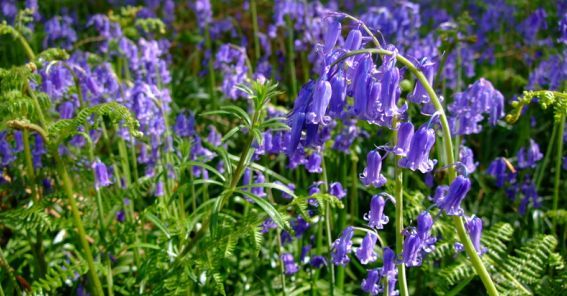
Agraphis nutans
Hyacinthoides non-scripta · Bluebell, wild hyacinth. · Plant · Asparagaceae
People for whom Agraphis is best suited are low in vitality and prone to catching colds. The classic symptom picture is of ear, nose, and throat infections linked to catarrh and deafness, particularly during childhood. There may be catarrh in the bridge of the nose, obstructing the nostrils, and discharges from all the mucous embranes. Chills develop easily after exposure to cold winds, accompanied by diarrhea with mucus. During infection the tonsils and adenoids may be swollen.
Key symptoms
- Obstruction of nostrils from adenoids with enlarged tonsils
- Throat deafness and mutinism of childhood
- Catarrhal conditions with free discharge from mucous membranes
- Tendency to take cold from exposure to cold winds
- Mucous diarrhea following suppressed cold
- Action felt toward root of nose
Worse (aggravation)
Better (amelioration)

Bluebell
A relaxed condition of the system generally and a proneness to take cold on exposure to cold winds.
Catarrhal conditions; obstruction of nostrils. Adenoids, throat deafness. Enlarged tonsils. Mucous diarrhœa from cold. Chill from cold winds. Throat and ear troubles with tendency to free discharge from mucous membranes. Mutinism of childhood unconnected with deafness.
Relationship
Compare: Hydrast; Cepa; Calc phos; Sulph jod; Calc jod.
Dose
Third potency. Single doses of tincture (Dr. Cooper).

Bluebell. Wild Hyacinth. Scilla nutans. N. O. Liliaceæ. Tincture of fresh plant and growing shoots.
Clinical
Adenoids. Catarrh. Deafness. Diarrhœa.
Characteristics
Agraphis is one of the remedies introduced by Dr. Cooper. It partakes of the characters of the lilies and corresponds to catarrhal conditions. Obstruction of the nostrils, especially from adenoids, and throat deafness I have frequently seen relieved by the remedy. The action of it is felt towards the root of the nose. The plant grows in sheltered places, and Dr. Cooper gives > from shelter as a leading indication. It also corresponds to chill from cold winds, and is very like Silica in this. I regard it as one of the leading remedies in cases of adenoids. Dr. Cooper gives: "Adenoids with enlarged tonsils; frequently accompanying dentition." He has cured with it mucous diarrhœa following a suppressed cold.

Phatak's chapter on Agraphis nutans is available in the app.
Read Phatak in the appClassical texts are in the public domain. Educational reference only — not medical advice.
