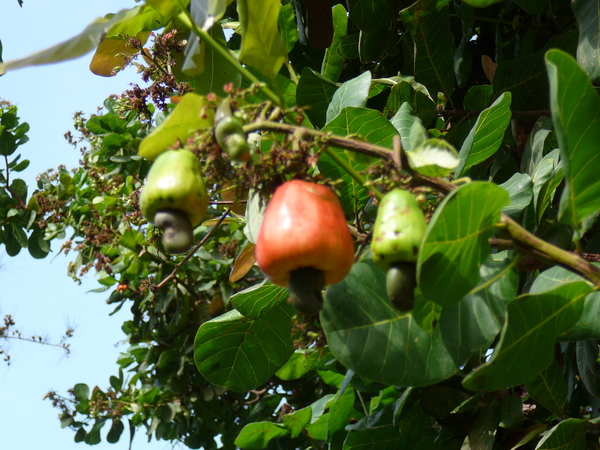
Anacardium occidentale
Cashew nut. · Plant · Anacardiaceae
Anacardium occ. is most appropriate for people who are prone to poor memory and willpower, and who feel mentally and physically apathetic and numb. They are prone to exam nerves and phobias.
The remedy is given for the above state of mind in conjunction with skin and muscle complaints. Skin eruptions initially itch and burn, then become swollen and sore, before producing blisters that may become infected. The ears and face may itch and burn.
Anacardium occ. may also be prescribed for warts or leprosy.
Key symptoms
- Powerful action on the skin causing erysipelas, blisters, and swelling
- Erysipelas spreads from left to right
- Weakness of memory and mind
- General paralytic state
- Tongue painfully swollen
- Vesicular eruption especially on the face
- Itching almost intolerable; umbilicated vesicles as in small-pox
- Antidote to Rhus poisoning
- Useful externally for corns, warts, and hard excrescences
Worse (aggravation)
Better (amelioration)

Cashew Nut. (West Indies.) N. O. Anacardiaceæ. Tincture of the black juice between outer and inner shell. (This nut is kidney-shaped, that of Anac. orient. is heart-shaped.)
Clinical
Corns. Erysipelas. Imbecility. Itching. Paralysis. Rhus poisoning. Ringworm. Small-pox. Warts.
Characteristics
The effects of the Cashew nut are known through instances of poisoning. It acts powerfully on the skin, causing erysipelas, blisters, and swelling, and has been used as an antidote to Rhus poisoning. The juice has been used locally as an applications to corns, warts, hard excrescences, ringworms, and obstinate ulcers. It causes weakness of memory and mind like A. orient. General paralytic state. Tongue painfully swollen. Vesicular eruption, on face especially. Itching almost intolerable; umbilicated vesicles as in small-pox. The erysipelas spreads from left to right, and it cures erysipelas spreading from right to left; Rhus t. cures cases spreading left to right.
Classical texts are in the public domain. Educational reference only — not medical advice.
