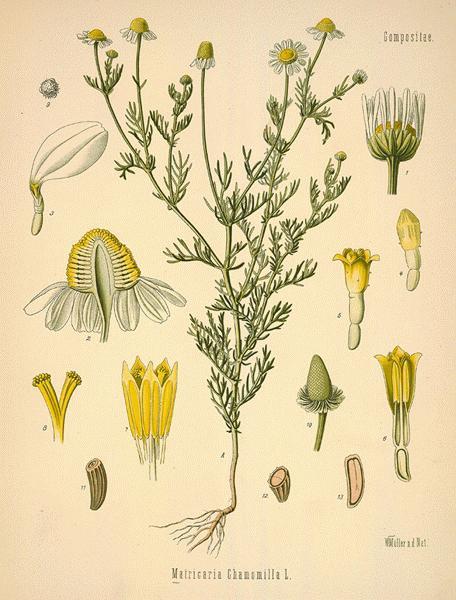
Anthemis nobilis
Chamaemelum nobile · Plant · Asteraceae
The Anthemis Nobilis patient is sensitive to cold air and cold things, with marked gastric disturbance accompanied by internal coldness and chilliness extending into the legs. This remedy is akin to Chamomilla and suits persons with liver congestion, colic, and respiratory catarrh that worsens indoors.
Key symptoms
- Gastric disturbance with coldness and chilliness
- Sensitive to cold air and cold things
- Coryza with much lachrymation, sneezing, and clear watery nasal discharge
- Cough tickling, worse in warm room
- Aching in region of liver with griping and chilliness inside abdomen into legs
- Itching of anus with white putty-like stools
- Itching of soles as if from chilblains
Worse (aggravation)
- Worse from cold air
- Worse from touch of cold things
- Worse indoors (respiratory symptoms)
- Worse in warm room (cough)

Roman Chamomile
This remedy is akin to the ordinary Chamomilla. Gastric disturbance with coldness. Sensitive to cold air and cold things.
Respiration
Coryza with much lachrymation, sneezing, and discharge of clear water from the nose. Symptoms worse indoors. Constriction and rawness of throat. Cough, tickling; worse in warm room.
Abdomen
Aching in region of liver; griping and chilliness inside of abdomen and into legs. Itching of anus, with white putty-like stools.
Urinary
Bladder feels distended. Pain along spermatic cord, which feels full, as if varicosed. Frequent urination.
Skin
Itching of the soles, as if from chilblains. Gooseflesh.
Dose
Use the third potency.

Roman Chamomile. N. O. Compositæ. Infusion of flowers, or tincture of whole plant when beginning to flower.
Clinical
Ascarides. Colic. Dyspepsia. Headache. Liver, congestion of.
Characteristics
Anthem. nob. is the common chamomile used domestically in the form of a tea made of the flowers. It is not to be confounded with Matricaria chamomilla. Burnett has recorded a case in which violent gastric disturbance and headache were caused by the "tea"; and Berridge has proved the tincture. In Burnett's case there was great coldness and chilliness inside abdomen; Berridge had feelings of coldness generally, and sensitiveness to cold air and the touch of cold things but slight exertion caused heat and perspiration.
Classical texts are in the public domain. Educational reference only — not medical advice.
