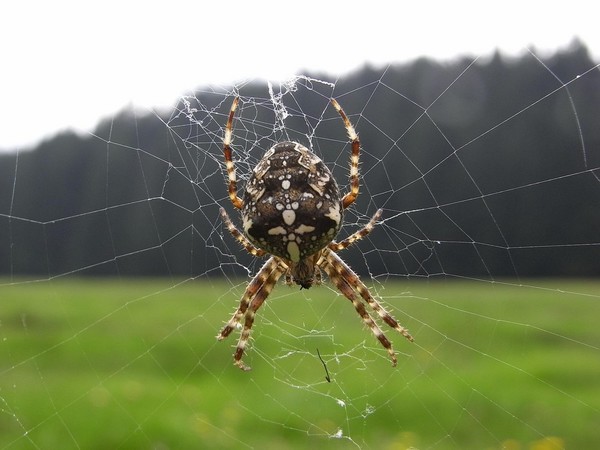
Aranea diadema
Araneus diadematus · Papal cross spider, European garden spider, diadem spider. · Animal
People who respond best to this remedy tend to be irritable, uneasy, nervous, and restless. Feelings of claustrophobia or confusion may also be present.
Aranea diadema is most appropriate for problems that affect the nervous system and are accompanied by coldness and a susceptibility to damp. A sensation of great chilliness may occur, as if the bones themselves are frozen, and there may be a fever. All parts of the body may feel heavy, numb, and enlarged (especially on waking); for example, the hands may feel as if they are twice their normal size, and there may be pains that feel like electric shocks. Symptoms tend to occur or recur periodically, or at the same time each day, and are usually on the right side.
Key symptoms
- All symptoms characterized by periodicity and coldness
- Great susceptibility to dampness; feels cold to the very bones
- Coldness not relieved by anything
- Feeling as if parts were enlarged and heavier than normal
- Wakes at night with hands feeling twice their natural size
- Hydrogenoid constitution; cannot live near fresh water or in damp places
- Spleen swollen; colic returns at same hours
- Sudden violent pain in teeth at night immediately after lying down
- Remedy for constitution favorable to malarial poisoning
Worse (aggravation)
Better (amelioration)

Papal-Cross Spider
All spider poisons powerfully affect the nervous system (See tarentula, Mygale, etc).
All symptoms of Aranea are characterized by periodicity, and coldness, and great susceptibility to dampness. It is the remedy for the constitution favorable to malarial poisoning, where every damp day or place favors chilliness. Patient feels cold to the very bones. Coldness not relieved by anything. Feeling as if parts were enlarged and heavier. Wake up at night with hands feeling twice their natural size. Spleen swollen. Hydrogenoid Constitution*, i.e*, Abnormal sensitiveness to damp and cold, inability to live near fresh water, lakes, rivers, etc, or in damp, chilly places (Nat. Sulph. Thuja).
Head
Pain in right trifacial nerve from periphery inwards. Confusion; better by smoking in open air. Heat and flickering in eyes; worse in damp weather. Sudden violent pain in teeth at night immediately after lying down.
Female
Menses too early, too copious. Distention of abdomen. Lumbo-abdominal neuralgia.
Chest
Pain in intercostal nerve from nerve endings to spine. Bright red hæmorrhage from lungs (Millefol; Ferr phos).
Stomach
Cramps after eating a little; epigastrium painful to pressure.
Abdomen
Enlarged spleen. Colic returns same hours. Heaviness in lower abdomen, as of a stone. Diarrhœa. Arms and legs feel as if asleep.
Extremities
Bone-pains in extremities. Pain in os calcis. Sensation of swelling, and of parts going to sleep.
Sleep
Restless and waking, as if hands and forearms were swollen and heavy.
Fever
Coldness, with pain in long bones, and feeling of stone in abdomen at the same hour daily. Chilly day and night; always worse during rain.
Modalities
Worse, damp weather; late in afternoon, and at midnight. Better, smoking tobacco.
Relationship
Tela aranearum-Spider's web.--Cardiac sleeplessness, increased muscular energy. Excitement and nervous agitation in febrile states. Dry asthma, harassing coughs; periodic headaches with extreme nervous erethism. Obstinate intermittents. Acts immediately on arterial system, pulse full, strong, compressible.
Lowers pulse rate frequency. Masked periodical diseases, hectic, broken down patients. Symptoms come on suddenly with cool, clammy skin. Numbness of hands and legs when at rest. Continued chilliness.
Aranea Scinencia-Grey Spider--(constant twitching of under eyelids. Sleepiness. Worse in warm room).
Heloderma; Cedron; Arsenic.
Dose
Tincture to thirtieth potency.

The Cross Spider. N. O. Arachnida. Tincture.
Clinical
Bones, affections of. Catalepsy. Chills. Dysmenorrhœa. Dyspepsia. Hæmorrhages. Hæmorrhagic diathesis. Headache. Hydrogenoid constitution. Intermittents. Malarial cachexia. Menstruation, irregularities of. Neuralgia. Punctured wounds. Scorbutic affections. Scurvy rickets. Spleen, affections of. Toothache.
Characteristics
Grauvogl is our chief authority for the use of Aranea. It is one of the leading remedies for the hydrogenoid constitution as described by him, and for intermittent fevers and other intermittent affections. By hydrogenoid constitution he meant abnormal sensitiveness to damp and cold; and inability to live near fresh water, either rivers or lakes, or in damp, chilly places. This gives the < from bathing; from damp weather; damp localities, or habitations; < drawing in cold air. Chilliness followed by little or no fever. Chill and neuralgic attacks at the same hour every day, every other day, week, month, or regular period. Attacks are violent …

Phatak's chapter on Aranea diadema is available in the app.
Read Phatak in the appClassical texts are in the public domain. Educational reference only — not medical advice.
