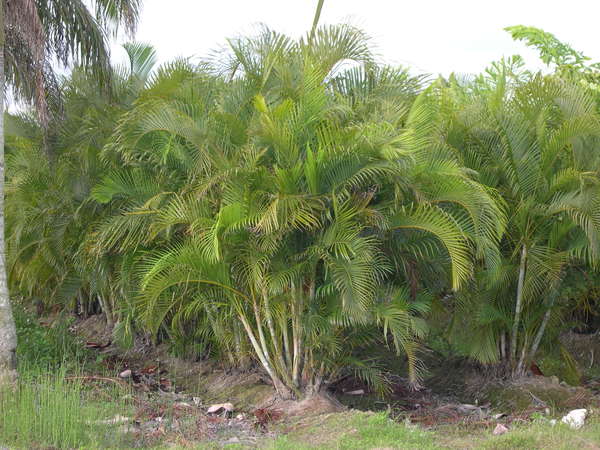
Areca
Plant · Arecaceae
Areca is not a well-developed constitutional remedy; its use is largely based on its alkaloid effects on smooth muscle and the parasympathetic nervous system. It is primarily indicated in parasitic infestations and conditions requiring pupillary constriction or salivary stimulation.
Key symptoms
- Helminthiasis; effective against tapeworm and intestinal parasites
- Myopia and visual disturbances linked to pupillary effects
- Profuse salivation from arecoline activity
- Difficulty breathing and sudden collapse in overdose states
- Promotes intestinal contractility without additional laxative

Areca catechu. Fruit: Areca-nut, Betel-nut. N. O. Palmeæ. Trituration of the nut, and triturations and solutions of the alkaloids, Arecoline and Tenaline.
Clinical
Helminthiasis. Myopia. Salivation. Tapeworm.
Characteristics
The Betel-nut is in very common use in the East as a masticatory for sweetening the breath and hardening the gums. It is also used as a source of catechu, but the true catechu is an extract of Uncaria gambir of the Leguminosæ. The chief medical use of the Areca nut has been in helminthiasis in dogs; but it is not altogether without danger. Some animals to which it was administered experienced in five minutes great difficulty of breathing, slight cough, and fell down on one side, and some died. The dose given for this purpose is one grain to each pound of the dog's weight. The Hydrobromate of Arecoline has been used to cause contraction of the pupil. It acts more promptly and more energetically than Eserine, but its duration of action is shorter. According to Ricapet it surpasses …
Classical texts are in the public domain. Educational reference only — not medical advice.
