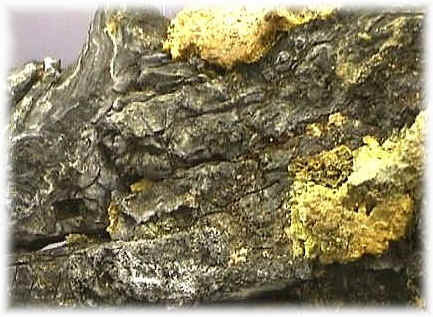
Arsenicum iodatum
Arsenic triiodide · Arsenic iodide, iodide of arsenic. · Mineral
This remedy is most appropriate for people who are irritable and restless. Excitable and impatient, they may have sudden, violent impulses. Their bodies are warm.
The classic symptom picture for Arsen. iod. is of either great restlessness or total exhaustion, possibly associated with chronic chest infection and burning discharges from the mucous membranes. There may be a history of allergic and respiratory conditions.
Arsen. iod. is most often used for hay fever or influenza that is accompanied by the classic burning discharge, soreness of the mucous membranes, and frequent sneezing. There may be a loose, short, hacking cough or a burning, sore throat associated with inflammation. The remedy may also be given for asthma and shortness of breath with rapid breathing that gradually becomes a wheeze. It may also be used for hyperactivity in children.
Key symptoms
- Persistently irritating and corrosive discharges that excoriate
- Thin watery excoriating discharge from anterior and posterior nares with sneezing
- Chronic nasal catarrh; hay-fever with swelling of nasal tissues
- Profound prostration; rapid irritable pulse; recurring fever and night sweats
- Emaciation with good appetite
- Hoarse racking cough with profuse purulent expectoration
- Afternoon rise in temperature; hectic fever
- Hypertrophied eustachian tube and deafness
- Senile heart; myocarditis and arteriosclerosis
Worse (aggravation)
Better (amelioration)

Iodide of Arsenic
Is to be preferred for persistently irritating, corrosive discharges. The discharge irritates the membrane from which it flows and over which it flows. The discharge may be fetid, watery, and the mucous membrane is always red, angry, swollen; itches and burns. Influenza, hay-fever, old nasal catarrhs, and catarrh of middle ear. Swelling of tissues within the nose. Hypertrophied condition of eustachian tube and deafness. Senile heart, myocarditis and fatty degeneration. Pulse shotty. Chronic aortitis. Epithelioma of the lip. Cancer of breast after ulceration has set in.
It seems probable that in Arsenic iod, we have a remedy most closely allied to manifestations of tuberculosis. In the early stages of tuberculosis, even though there is an afternoon rise in temperature, Ars jod is very effective. It will be indicated by a profound prostration, rapid, irritable pulse, recurring fever and sweats, emaciation; tendency to diarrhœa. Chronic pneumonia, with abscess in lung. Hectic; debility; night sweats.
This remedy is also to be remembered in phthisis with hoarse, racking cough and profuse expectoration of a purulent nature, and attended with cardiac weakness, emaciation and general debility; in chronic, watery diarrhœa in phthisical subjects; in cases of emaciation with good appetite; in amenorrhœa, with anæmic palpitation and dyspnœa. In chronic pneumonia, when abscess is about to form. Great emaciation. Arteriosclerosis, myocardial degeneration and senile heart. Threatened pyæmia (Pyrog; Methyl blue).
Head
Vertigo, with tremulous feeling, especially in aged.
Nose
Thin, watery, irritating, excoriating discharge from anterior and posterior nares; sneezing. Hay-fever. Irritation and tingling of nose constant desire to sneeze (Pollanin). Chronic nasal catarrh; swollen nose; profuse, thick, yellow discharge; ulcers; membrane sore and excoriated. Aggravation by sneezing.
Throat
Burning in pharynx. Tonsils swollen. Thick membrane from fauces to lips. Breath fetid, glandular involvement. Diphtheria. Chronic follicular pharyngitis.
Eyes and Ears
Scrofulous ophthalmia. Otitis, with fetid, corrosive discharge. Thickening of tympanum. Burning, acrid coryza.
Stomach
Pain and pyrosis. Vomiting an hour after food. Nausea distressing. Pain in epigastrium. Intense thirst; water is immediately ejected.
Respiratory
Slight hacking cough, with dry and stopped-up nostrils. Pleuritis exudativa. Chronic bronchitis. Pulmonary tuberculosis. Pneumonia that fails to clear up. Broncho-pneumonia after grippe. Cough dry, with little difficult expectoration. Aphonia.
Fever
Recurrent fever and sweats. Drenching night-sweats. Pulse rapid, feeble, weak, irregular. Chilly, cannot endure cold.
Skin
Dry, scaly, itching. Marked exfoliation of skin in large scales, leaving a raw exuding surface beneath. Ichthyosis. Enlarged scrofulous glands. Venereal bubo. Debilitating night-sweats. Eczema of the beard; watery, oozing, itching; worse, washing. Emaciation. Psoriasis. Acne hard, shotty, indurated base with pustule at apex.
Relationship
Compare: Tuberculinum; Antimon iod. In hay-fever, compare: Aralia; Naphthalin; Rosa; Sang nit.
Dose
Second and third trituration. Ought to be prepared fresh and protected from light. Continued for some time. Clinically, it has been found advisable in tuberculosis to begin with about the 4x and gradually go lower to the second x trit, 5 grains 3 times a day.

Generalities and modalities
From a study of the elements making up this agent, it may be known that it is a deep-acting constitutional remedy.
Its complaints come on in the morning, afternoon, evening, night, after midnight. In hectic conditions, with many abscesses. Extreme anaemia, such as belongs to tuberculous subjects.
The patient craves open air when not too cold; wants the windows open, is sensitive to a close room. Marked general physical anxiety. The hands and feet tingle as if asleep and the limbs feel as if tied with a band.
Complaints are worse from bathing; takes cold from bathing. It has been of the highest use in cancerous affections and has cured lupus and epithelioma. Its symptoms are often found in chlorotic girls; it has cured choreic action of muscles in girls.

Iodide of Arsenic. As I3. Trituration.
Clinical
Acne rosacea Aneurism. Angina pectoris. Breast, tumour of. Bronchitis. Cancer. Catarrh. Consumption. Debility. Dropsy. Epithelioma. Gastritis. Hay-fever. Heart, affections of. Hydrothorax. Laryngitis. Leucocythæmia. Lichen. Liver, affections of. Lungs, affections of. Measles. Otorrhœa. Pneumonia. Rheumatism. Scrofulous ophthalmia. Syphilis.
Characteristics
This medicine was originally used by H. Nankivell, on analogical grounds, in cases of phthisis. It has had a short, independent proving, and symptoms observed on patients have increased the pathogenesis. The Conditions resemble more closely those of Arsen. than those of Iod.: < from cold wind; > warmth. Great vital prostration. < From any exertion.

Phatak's chapter on Arsenicum iodatum is available in the app.
Read Phatak in the appClassical texts are in the public domain. Educational reference only — not medical advice.
