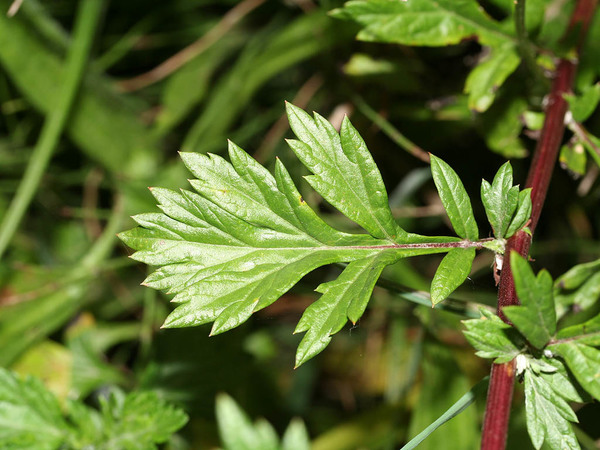
Artemisia vulgaris
Mugwort, wormwood, sailor’s tobacco. · Plant · Asteraceae
The classic symptom picture for Artemisia is of nervous disorders, possibly triggered by bad news, grief, or a blow to the head.
The nervous conditions for which this remedy is used include sleepwalking, fits or seizures, chorea (involuntary rapid, jerky body movements), and epilepsy. There may be absentmindedness and stupor. Seizures may be brought on by cooling after exertion, or by flickering lights. Children who benefit from Artemisia may tend to experience petit mal fits or absences rather than full seizures, possibly during teething. They may have been born to mothers who felt great grief during their pregnancy.
Key symptoms
- Epilepsy without aura; after fright and violent emotions
- Petit mal; several convulsions close together
- Somnambulism; gets up at night and works, remembers nothing in morning
- Epilepsy after masturbation
- Spasms during menses; profuse menses with violent uterine contractions
- Colored light produces dizziness
- Convulsive diseases of childhood and girls at puberty
- Profuse sweat smelling like garlic
- Head drawn back by spasmodic twitchings
Worse (aggravation)
Better (amelioration)

Mugwort
Has some reputation as a remedy for epileptic conditions, and convulsive diseases of childhood and girls at puberty. Locally and internally is injurious to eyes. Petit mal. Epilepsy without aura; after fright and other violent emotions and after masturbation. Several convulsions close together. Somnambulism. Gets up at night and works, remembers nothing in the morning (Kali phos).
Head
Drawn back by spasmodic twitchings. Mouth drawn to left. Congestion of brain.
Eyes
Colored light produces dizziness. Pain and blurring of vision; better; rubbing; worse, using eyes.
Female
Profuse menses. Violent uterine contractions. Spasms during menses.
Fever
Profuse sweat, smelling like garlic.
Relationship
Compare: Absinth; Cina; Cicuta.
Dose
First to third potency. Said to act better when given with wine.

Artemisia vulgaris, Linn. Wormwood. Mugwort. Beifuss. N. O. Compositæ. Tincture of fresh root.
Clinical
Catalepsy. Chorea. Convulsions. Dysmenia. Epilepsy. Hydrocephalus. Hysteria. Somnambulism. Worms.
Characteristics
Like the other Artemisias this remedy has a prominent place in convulsive diseases. It is indicated where the patient is excitable and irritable before attack of epilepsy. Epilepsy after fright or grief; after a blow on the head; with menstrual disturbances; with teething. Attack accompanied or followed by profuse offensive sweat; by seminal ejaculations. Profuse sweat, having a peculiar fetid, cadaverous or garlic-like odour is a characteristic of the remedy. Attacks frequently repeated, then followed by a long interval of rest. Somnambulism. Catalepsy after fright. Spasms. Chorea; swallowing difficult, hungry but cannot get the food down. Right side convulsed, left paralysed. Nocturnal pollutions. Violent cramps in abdomen with irregular, insufficient menstruation. Irregular or deficient menstruation with epileptic convulsions. Nervous chlorosis with a very dry skin. Worms.

Phatak's chapter on Artemisia vulgaris is available in the app.
Read Phatak in the appClassical texts are in the public domain. Educational reference only — not medical advice.
