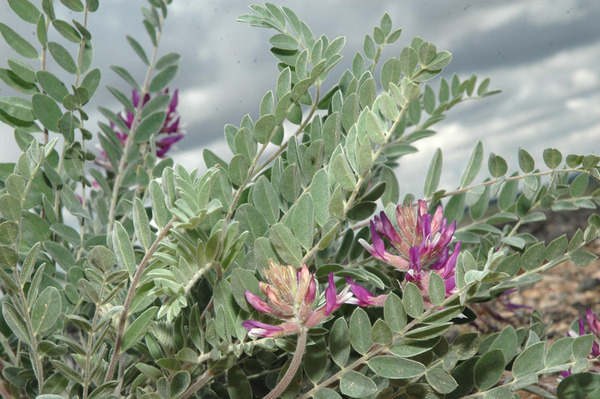
Astragalus mollissimus
Plant · Fabaceae
Astragalus Mollissimus is indicated in conditions with progressive neurological deterioration, loss of muscular coordination, and emaciation resembling locoweed poisoning. In humans it is applicable in early stages presenting as mania or hallucinations progressing to paralytic weakness and wasting.
Key symptoms
- Hallucinations and mania with defective eyesight in first stage
- Emaciation, sunken eyeballs, lusterless hair in later stage
- Irregularities in gait; paralytic affections; loss of muscular coordination
- Fullness in right temple and upper jaw; painful facial bones
- Burning in oesophagus and stomach; weakness and emptiness of stomach
- Purring sensation in right foot outer side from heel to toe
- Pressive pain in temples; aching in maxillae with pressure in both bones

Purple or Woolly Loco-weed
Affects animals like effects of alcohol, tobacco and morphine in man. First stage, period of hallucination or mania with defective eye sight during which the animal performs all sorts of antics. After acquiring a taste for the plant it refuses every other kind of food. Second stage brings emaciation, sunken eyeballs, lusterless hair and feeble movements-after a few months dies as from starvation (U. S. Dept. Agriculture). Irregularities in gait-paralytic affections. Loss of muscular coordination.
Head
Fullness in right temple and upper jaw. Pain over left eyebrow. Painful facial bones. Dizzy. Pressive pain in temples. Pain and pressure in maxillæ.
Stomach
Weakness and emptiness. Burning in œsophagus and stomach.
Extremities
Purring sensation in right foot outer side from heel to toe. Icy coldness of left calf.
Relationship
Compare: Aragallus Lamberti-White Loco-Weed-Rattleweed; Baryta; Oxytropis.
Dose
Sixth potency.

A. Menziesii, Gray. N. O. Leguminosæ. Tincture of leaves.
Clinical
Emptiness, sensation of. Face, bones of, painful. Headache.
Characteristics
From eating some of the green leaves J. M. Selfridge experienced: Burning in pharynx, œsophagus, stomach. Fulness right temple and right upper jaw; slight nausea, with shivering and chilliness; dizziness and fulness of the head. Later, weakness and sense of emptiness in stomach; eating relieved empty sensation, but not the weakness. Pressive pains in both temples; later, slight pain in left maxilla; and still later, aching in right maxilla, with pressure in both bones.
Classical texts are in the public domain. Educational reference only — not medical advice.
