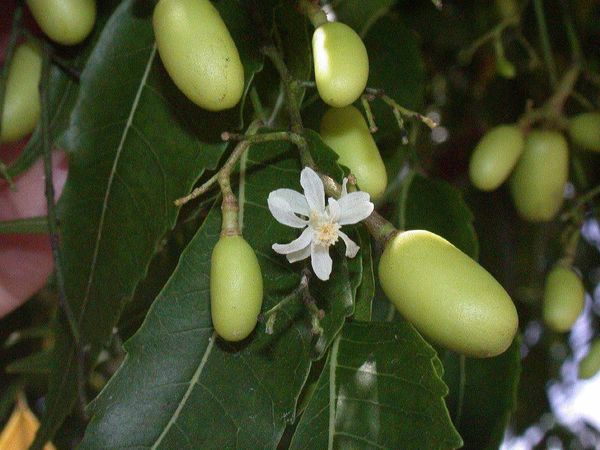
Azadirachta indica
Plant · Meliaceae
Azadirachta Indica suits patients with intermittent fever states, especially those previously maltreated with quinine. The patient is depressed and forgetful with uneasiness and a desire to lie down. The constitutional picture involves afternoon exacerbations with a characteristic sweating pattern (upper body only) and burning sensations in the extremities.
Key symptoms
- Afternoon fever commencing 3 to 4:30 pm abating by 7:30 pm
- Glowing heat and burning in face, eyes, palms, and soles in open air
- Copious sweat commencing on forehead extending to trunk absent on lower body
- Throbbing headache worse on right side with pain in right eyeball
- Giddiness as if head moving to and fro worse on rising
- Scalp painful and sensitive to touch
- Especially useful after quinine abuse
- Craving for sweets with great thirst at long intervals
Worse (aggravation)
- Open air
- Afternoon
- Rising from sitting
- Moving eyes

Margosa Bark
An afternoon fever and rheumatic pains in various parts are caused by this remedy. Pain in sternum and ribs, in back and shoulders and extremities; heat, pricking and aching in hands, especially palms, fingers, also toes.
Head
Forgetful; giddy on rising; head aches, scalp sensitive; eyes burn, pain in right eyeball.
Fever
Slight chill, afternoon fever, glowing heat in face, hands, and feet, copious sweat on upper part of body.
Relationship
Compare: Cedron; Natr mur; Arsenic.

Melia Azadirachta. Nim or Neem. Margosa. N. O. Meliaceæ; Tribe, Melieæ. Tincture of the bark.
Clinical
Constipation. Diarrhœa. Intermittent fever. Quinine, effects of. Spleen, congested.
Characteristics
This is an Indian remedy of very ancient date. All parts of the tree are intensely bitter, and the separate parts are said to have different effects. The bark, known as Margosa Bark, is the best-known medicinal portion, and the tincture for the provings was made from this by Dr. P. C. Majumdar, who is our chief authority for its effects. It contains Azadirin, Margosin and Catechin. It is popularly used in a great variety of complaints, especially of the eyes, digestive derangements, and skin affections. The most peculiar feature of the proving is the fever, which commences with a very slight chill or none at all, about 3 to 4.30 p.m., and abates about 7.30 p.m. Glowing heat and burning, especially in face, eyes, palms of hands and soles of feet in open air; sweat copious, commencing on forehead, gradually …
Classical texts are in the public domain. Educational reference only — not medical advice.
