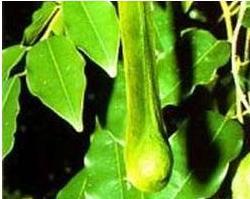
Balsamum peruvianum
Myroxylon balsamum var. pereirae (Peru balsam) · Plant · Fabaceae
Balsamum Peruvianum suits patients with catarrhal phthisis or chronic bronchial catarrh in a state of debility with hectic fever. The patient presents with copious purulent secretions from both the respiratory and urinary tracts. There is marked nutritional exhaustion with night sweats indicating advancing consumption.
Key symptoms
- Bronchial catarrh with copious muco-purulent thick creamy yellowish-white expectoration
- Loud rales in chest with hectic fever and night sweats
- Chronic fetid nasal catarrh with profuse thick discharge
- Irritating short cough with scanty expectoration
- Vomiting of food and mucus; catarrh of stomach
- Scanty urine with mucous sediment; catarrh of bladder
- Debility with hectic fever

Peruvian Balsam from Myroxylon Pereiræ
Useful in bronchial catarrh, with copious, purulent expectoration. Debility; hectic fever.
Nose
Profuse, thick discharge. Eczema, with ulceration. Chronic, fetid, nasal catarrh.
Stomach
Vomiting of food and mucus. Catarrh of stomach.
Chest
Bronchitis, and phthisis, with muco-purulent, thick, creamy expectoration. Loud rales in chest (Kali sulph; Ant tar). Very loose cough. Hectic fever and night-sweats, with irritating, short cough and scanty expectoration.
Urine
Scanty; much mucus sediment. Catarrh of bladder (Chimaph).
Relationship
Balsamum Tolutanum-the balsam of Myroxylon toluifera--(chronic bronchitis with profuse expectoration) (Oleum caryophyllum-oil of cloves-in profuse septic expectoration-3 to 5 minims in milk or capsules).
Dose
First attenuation: In hectic 6x.
Extra homeopathic uses locally. As a stimulant to raw surfaces in indolent ulcers, scabies, cracked nipples, rhagades, itch. Promotes granulation, removes fetor. A one per cent solution in alcohol or ether may be used with the atomizer in respiratory affections. Internally, as an expectorant, in chronic bronchitis. Dose, 5 to 15 M, made into an emulsion with mucilage or yolk of egg.

Balsam of Peru. Myroxylon Pereiræ. N. O. Leguminosæ. Tincture of the balsam that flows from the stems.
Clinical
Bronchitis. Catarrh. Cracks. Epistaxis. Hectic. Itch. Phthisis. Ulcers.
Characteristics
Peruvian Balsam has been chiefly used empirically in catarrhal phthisis or bronchial catarrh with copious purulent expectoration. Sputa thick, creamy, yellowish white; loud râles, night sweats, hectic. Hale has used it with success in "chronic, purulent, fetid anterior or posterior nasal catarrh, with or without ulceration." He says that a cerate of the Balsam is the best application next to Glycerole of Aloes for indolent ulcers, cracked nipples, cracks in fingers and palmer surfaces of hands, or fissured and chapped lips. The Balsam is also used externally for killing the acarus of itch. All parts affected are gently rubbed with it at night and a bath taken in the morning. A single application is sufficient. It has been proved by Lembke.
Classical texts are in the public domain. Educational reference only — not medical advice.
