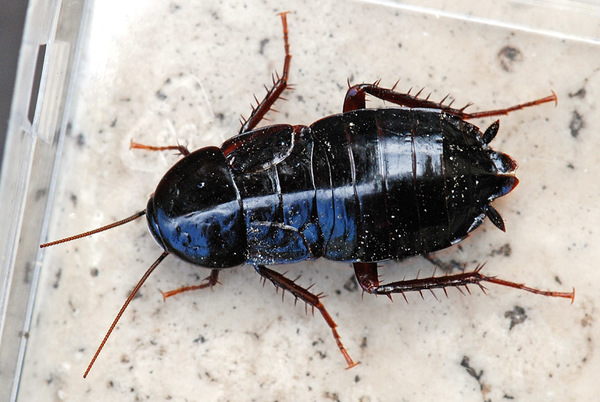
Blatta orientalis
Animal
Blatta Orientalis is especially suited to corpulent, stout patients suffering from asthmatic and bronchial conditions. It is particularly indicated in malarial constitutions and in cases where great mucus accumulation threatens suffocation.
Key symptoms
- Asthma, especially when associated with bronchitis
- Cough with dyspnoea in bronchitis and phthisis
- Much pus-like mucus accumulation in airways
- Great accumulation of mucus threatening suffocation
- Indicated after Arsenic when Arsenic is insufficient
- Worse in rainy weather; suits malarial cases
- Best suited to stout and corpulent patients
Worse (aggravation)
- Rainy weather
- Damp conditions

Indian Cockroach
A remedy for asthma. Especially when associated with bronchitis. Indicated after arsenic when this is insufficient.
Cough with dyspnœa in bronchitis and phthisis. Acts best in stout and corpulent patients. Much pus-like mucus.
Dose
Lowest potencies during an attack. After the spasm, for the remaining cough, use the higher. Stop with improvement to prevent return of aggravation.

Indian cockroach. N. O. Orthoptera. Trituration of live insect.
Clinical
Asthma. Bronchitis. Phthisis.
Characteristics
Found accidentally to relieve asthma in a patient who took tea in which a beetle had been infused; it has since proved to have a wide range in asthmatic cases (Ray, Hom. Recorder, 1890, p. 254; 1891, p. 193). In the acute attack it acts better in low potencies; the higher being given in the more chronic stages. It is especially suited to corpulent people; and to malarial cases; cases < in rainy weather. Has saved cases in which suffocation was threatened by great accumulation of mucus. Useful in cases of bronchitis and phthisis where there is much dyspnœa.
Classical texts are in the public domain. Educational reference only — not medical advice.
