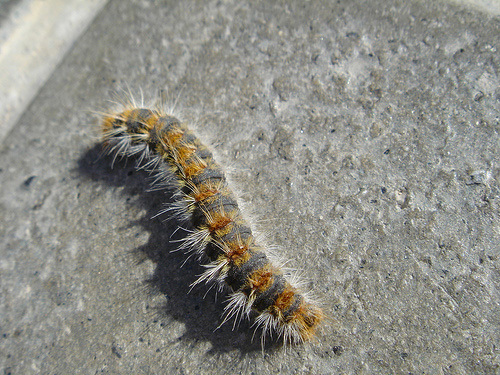
Bombyx processionea
Thaumetopoea processionea · Animal
Bombyx Processionea suits patients with intense, intractable itching and hard tubercular skin eruptions following contact with the procession moth caterpillar or its emanations. The itching is particularly troublesome in the evenings and is relieved by nothing.
Key symptoms
- Hard, large tubercular eruptions with red areola, barely spaced apart
- Linear-formed tubercles, most marked near joints
- Sensation as if a foreign body were under the skin
- Itching of whole body; worse in evenings, not relieved by anything
- Burning heat of skin
- Frequent waking at night from intense itching and troubling dreams
- Fever with somnolency and delirium in severe cases
Worse (aggravation)
- Evening
- Contact with caterpillars or their emanations

Procession Moth. N. O. Lepidoptera. Tincture of live caterpillars.
Clinical
Urticaria.
Characteristics
Contact with the caterpillars or the emanations from a nest of them causes intense irritation, and hard, large, areola-formed tubercles, with a red areola, so thick as to leave hardly any space between. Sometimes they are linear-formed; most marked near joints. Sensation as if a foreign body were under the skin. Itching of whole body. Itching, evenings; not relieved by anything. In one victim it caused frequent waking at night, and dreams that his arms were being cauterised, and arrows thrust into the muscles. Burning heat of skin. In one case, that of a boy who shook a large number of the caterpillars from a tree into his naked breast, it caused an itching so severe that the boy had to run home for assistance; then fever, somnolency, delirium, and finally death ensued.
Classical texts are in the public domain. Educational reference only — not medical advice.
