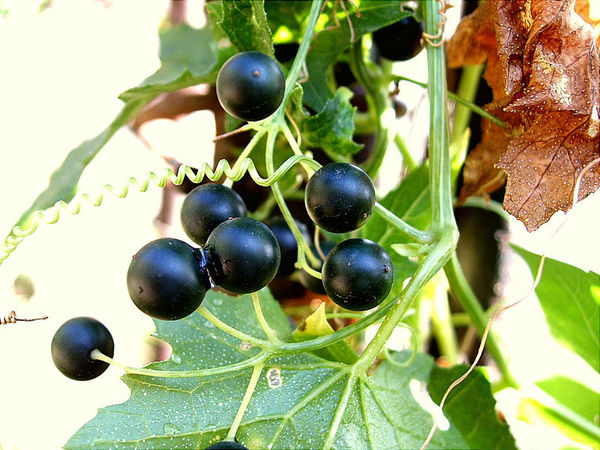
Bryonia alba
Bryony, white bryony, wild hops · Plant · Cucurbitaceae
Bryonia is mainly used for people who are highly irritable when ill. Often clean-living, meticulous individuals, they can be contrary and capricious if ill, wanting things that, when given, are promptly rejected. They may feel tired, taciturn, languid, and angry if disturbed. Anxiety is common, especially about financial security.
The chief physical symptom treated by Bryonia is pain felt on the slightest movement. It is often accompanied by infrequent spells of great thirst, and dry lips, mouth, and eyes. Illness sets in slowly, typically after overexposure to heat or cold. Bryonia is useful for chest inflammation, pneumonia, bad headaches, and rheumatic pains. It may also be taken for some forms of constipation and breast pain.
Key symptoms
- pain upon the slightest movement
- dry mucous membranes
- great thirst
- anxiety about financial security
- irritability
Worse (aggravation)
- Any motion aggravates, even the slightest movement
- Stooping aggravates headache
- Pressure aggravates especially chest pains
- Warm weather after cold days aggravates
- Eating and drinking aggravate
- Morning aggravates
Better (amelioration)
- Rest ameliorates completely
- Lying on the painful side ameliorates
- Cold things ameliorate
- Hard pressure when lying still ameliorates

Wild Hops (BRYONIA)
Acts on all serous membranes and the viscera they contain. Aching in every muscle. The general character of the pain here produced is a stitching, tearing; worse by motion, better rest. These characteristic stitching pains, greatly aggravated by any motion, are found everywhere, but especially in the chest; worse pressure. Mucous membranes are all dry. The Bryonia patient is irritable; has vertigo from raising the head, pressive headache; dry, parched lips, mouth; excessive thirst, bitter taste, sensitive epigastrium, and feeling of a stone in the stomach; stools large, dry, hard; dry cough; rheumatic pains and swellings; dropsical effusions into synovial and serous membranes.
Bryonia affects especially the constitution of a robust, firm fiber and dark complexion, with tendency to leanness and irritability. It prefers the right side, the evening, and open air, warm weather after cold days, to manifest its action most markedly.
Children dislike to be carried or raised. Physical weakness, all-pervading apathy. Complaints apt to develop slowly.
Mind
Exceedingly irritable; everything puts him out of humor. Delirium; wants to go home; talks of business.
Head
Vertigo, nausea, faintness on rising, confusion. Bursting, splitting headache, as if everything would be pressed out; as if hit by a hammer from within; worse from motion, stooping, opening eyes. Headache becomes seated in occiput. Drawing in bones towards zygoma. Headache; worse on motion, even of eyeballs. Frontal headache, frontal sinuses involved.
Nose
Frequent bleeding of nose when menses should appear. Also in the morning, relieving the headache. Coryza with shooting and aching in the forehead. Swelling of tip of nose, feels as if it would ulcerate when touched.
Ears
Aural vertigo (Aur; Nat sal; Sil; Chin). Roaring, buzzing.
Eyes
Pressing, crushing, aching pain. Glaucoma. Sore to touch and when moving them.
Mouth
Lips parched, dry, cracked. Dryness of mouth, tongue, and throat, with excessive thirst. Tongue coated yellowish, dark brown; heavily white in gastric derangement. Bitter taste (Nux; Col). Burning in lower lip in old smokers. Lip swollen, dry, black, and cracked.
Throat
Dryness, sticking on swallowing, scraped and constricted (Bell). Tough mucus in larynx and trachea, loosened only after much hawking; worse coming into warm room.
Stomach
Nausea and faintness when rising up. Abnormal hunger, loss of taste. Thirst for large draughts. Vomiting of bile and water immediately after eating. Worse, warm drinks, which are vomited. Stomach sensitive to touch. Pressure in stomach after eating, as of a stone. Soreness in stomach when coughing. Dyspeptic ailments during summer heat. Sensitiveness of epigastrium to touch.
Abdomen
Liver region swollen, sore, tensive. Burning pain, stitches; worse, pressure, coughing, breathing. Tenderness of abdominal walls.
Stool
Constipation; stools hard, dry, as if burnt; seem too large. Stools brown, thick, bloody; worse in morning, from moving, in hot weather, after being heated, from cold drinks, every spell of hot weather.
Urine
Red, brown, like beer; scanty, hot.
Female
Menses too early, too profuse; worse from motion, with tearing pains in legs; suppressed, with vicarious discharge or splitting headache. Stitching pains in ovaries on taking a deep inspiration; very sensitive to touch. Pain in right ovary as if torn, extending to thigh (Lilium; Croc). Milk fever. Pain in breasts at menstrual period. Breasts hot and painful hard. Abscess of mammæ. Frequent bleeding of nose at appearance of menses. Menstrual irregularities, with gastric symptoms. Ovaritis. Intermenstrual pain, with great abdominal and pelvic soreness (Ham).
Respiratory
Soreness in larynx and trachea. Hoarseness; worse in open air. Dry, hacking cough from irritation in upper trachea. Cough, dry, at night; must sit up; worse after eating or drinking, with vomiting, with stitches in chest, and expectoration of rust-colored sputa. Frequent desire to take a long breath; must expand lungs. Difficult, quick respiration; worse every movement; caused by stitches in chest. Cough, with feeling as if chest would fly to pieces; presses his head on sternum; must support chest. Croupous and pleuro-pneumonia. Expectoration brick shade, tough, and falls like lumps of jelly. Tough mucus in trachea, loosened only with much hawking. Coming into warm room excites cough (Nat carb). Heaviness beneath the sternum extending towards the right shoulder. Cough worse by going into warm room. Stitches in cardiac region. Angina pectoris (use tincture).
Back
Painful stiffness in nape of neck. Stitches and stiffness in small of back. From hard water and sudden changes of weather.
Extremities
Knees stiff and painful. Hot swelling of feet. Joints red, swollen, hot, with stitches and tearing; worse on least movement. Every spot is painful on pressure. Constant motion of left arm and leg (Helleb).
Skin
Yellow; pale, swollen, dropsical; hot and painful. Seborrhœa. Hair very greasy.
Sleep
Drowsy; starting when falling asleep. Delirium; busy with business matters and what he had read.
Fever
Pulse full, hard, tense, and quick. Chill with external coldness, dry cough, stitches. Internal heat. Sour sweat after slight exertion. Easy, profuse perspiration. Rheumatic and typhoid marked by gastro-hepatic complications.
Modalities
Worse, warmth, any motion, morning, eating, hot weather, exertion, touch. Cannot sit up; gets faint and sick. Better, lying on painful side, pressure, rest, cold things.
Relationship
Complementary: Upas when Bryonia fails. Rhus; Alumina. Illecebrum.--A Mexican drug.--(Fever with catarrhal symptoms, gastric and typhoid fever symptoms).
Antidotes: Acon; Cham; Nux.
Compare: Asclep tub; Kali mur; Ptelia.
Dose
First to twelfth attenuation.
Generalities
Every medicine has a sphere of action, a peculiar nature whereby it differs from all other medicines, and hence it becomes suitable to complaints of one class and not suitable to those of another.
It is like the nature of human beings, as they differ from each other, and also like the nature of diseases, which differ from each other in character.
We study a remedy also in regard to its velocity and continuance, its remittence or intermittence.
The symptoms of some remedies come on suddenly, with great violence, with great rapidity, stay but a short time in their paroxysm, and go off as it nothing had happened.
Others come on slowly, are deep acting and continuous, like the continued fevers. We notice the complaints of Ignatia, how flitting and intermittent and unexpected everything is; we notice in Aconitehow complaints come on with violence, and in Belladonnawith what suddenness they come on.

Bryonia alba. White Bryony. N. O. Cucurbitaceæ. Tincture of root procured before flowering.
Clinical
Alcoholism. Amenorrhœa. Anger, effects of. Aphthæ. Apoplexy. Asthma. Bilious attack. Brain, affections of. Breast, inflamed. Bronchitis. Cancer. Chill, effects of. Chlorosis. Constipation. Consumption. Coryza. Cough. Dentition. Diaphragm, rheumatism of. Diarrhœa. Dropsy. Dyspepsia. Eczema. Enteric fever. Eruptions. Gastro-enteritis. Hæmorrhages. Hands, swollen. Headache. Heart, inflammation of. Hernia. Hiccough. Hydrocele. Hydrocephalus. Influenza. Intermittent fevers. Jaundice. Joints, pain in. Lactation, disorder of. Liver, disorders of. Lumbago. Measles. Meningitis. Menstruation, vicarious. Miliaria. Milk fever. Myalgia. Nephritis. Nose-bleed. Peritonitis. Phlegmasia alba dolens. Pleurisy. Pleurodynia. Pneumonia. Pregnancy, morning cough of; sickness of. Puerperal fever. Pyuria. Relapsing fever. Remittent fever. *Rheumatism. Scarlatina. Screaming. Side, pain in. Sleep, anxious dreams in. …

White Bryony, Wild Hop. (Cucurbitaceae.)
Is best adapted to persons of gouty or rheumatic diathesis; prone to so- called bilious attacks. Bryonia patients are irritable, inclined to be vehement and angry; dark or black hair, dark complexion, firm muscular fibre; dry, nervous, slender people (Nux). Pains: stitching, tearing, worse at night; < by motion, inspiration, coughing; > by absolute rest, and lying on painful side (Ptel., Puls. - stitching pain, but < and > are opposite, Kali c.). Excessive dryness of mucous membranes of entire body; lips and tongue dry, parched, cracked; stool, dry as if burnt; cough, dry, hard, racking, with scanty expectoration; urine, dark and scanty; great thirst. Vicarious menstruation; nosebleed when menses should appear (Phos.); blood spitting, or heamoptysis. Ailments from chagrin, mortification, anger (Col., Staph.); violence, with chilliness and coldness; after anger chilly, but with head hot and face red (Aur.). Complaints: when warm weather sets …

Mind
Very irritable, inclined to be angry, chilly, or a red face and heat in the head.
Head
Headache from washing himself in cold water, when the face was sweating; in such cases opening the eyes increases the headache.
Sight and Eyes
Soreness and aching, or pressure crushing pain in eyes, worse on motion.
Nose
Epistaxis in the morning after rising (movement), after being over-heated; vicarious menstruation.
Mouth and Throat
Great dryness of mouth and tongue; lips parched and dry.
Stomach
Longing for warm drink and > by it.
Stomach
Very thirsty for cold water; large quantities at a time; lips parched and dry.
Stomach
Desire for things which cannot be had, or are refused, or not wanted when offered.
-
Very irritable, inclined to be angry.
-
Sensation in bed as if be were sinking deep down.
-
Headache from ironing, or from washing the perspiring face in cold water.
-
Parched and dry lips, likes to moisten them often, mouth dry and thirsty for cold water.
-
Delirium about his business, worse at night, after 3. - a.m.
-
Anxiety about his business, worse at night, not the where-withal to live.
-
Frequent drinking of cold water relieves the bitter taste and the inclination to vomit.
-
Desire for things immediately, which when offered, are refused.
-
Sitting up in bed causes nausea and fainting,
-
Gastric affections, dry mouth and tongue, tongue coated white, giddy when stooping or rising, forehead heavy, taste bitter, food lies heavy, pit of stomach sore to touch, constipation, etc.

Phatak's chapter on Bryonia alba is available in the app.
Read Phatak in the appClassical texts are in the public domain. Educational reference only — not medical advice.
