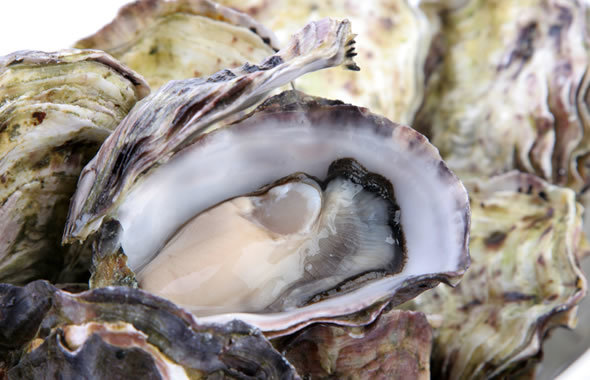
Calcarea carbonica
Calcium carbonate · Calcium carbonate, oyster shell, mother-of-pearl, carbonate of lime. · Mineral
Calc. carb. is best suited to shy, placid, sensitive, contemplative people who may also have an agitated, excitable side, notably in the face of cruelty. Cautious and fearful worriers, they are calmed by reassurance. They are forgetful, lacking in energy, and inherently clumsy, often spraining ankles and wrists. Work and security are important.
As children, these individuals develop slowly, teething and walking later than the average age. Both adults and children may sweat heavily, mostly on the scalp, and have a sluggish circulation. There may be an aversion to meat, dairy foods, and coffee, and cravings for sweets, eggs, or indigestible things such as chalk or soap. They are prone to constipation and sour-smelling sweat, and may be sensitive to the cold. They are inclined to be overweight.
Calc. carb. is prescribed for anxiety-related conditions, and for bone, joint, and dental problems, digestive disorders, headaches, and certain ailments affecting women’s health.
Key symptoms
- fears and anxieties
- delayed development
- sour-smelling discharges
- sensitivity to the cold
- aversion to dairy products
- cravings for sweets and eggs
Worse (aggravation)
- Cold in any form aggravates; great sensitiveness to cold
- Exertion mental or physical aggravates
- Towards evening aggravates
- Working in water aggravates
- Ascending stairs aggravates; vertigo on going upstairs
Better (amelioration)
- Lying on the painful side ameliorates
- Dry weather ameliorates

Carbonate of Lime (CALCAREA CARBONICA - OSTREARUM)
This great Hahnemannian anti-psoric is a constitutional remedy par excellence. Its chief action is centered in the vegetative sphere, impaired nutrition being the keynote of its action, the glands, skin, and bones, being instrumental in the changes wrought. Increased local and general perspiration, swelling of glands, scrofulous and rachitic conditions generally offer numerous opportunities for the exhibition of Calcarea. Incipient phthisis (Ars jod; Tuberculin). It covers the tickling cough, fleeting chest pains, nausea, acidity and dislike of fat. Gets out of breath easily*. A jaded state, mental or physical, due to overwork. Abscesses in deep muscles; polypi and exostoses*. Pituitary and thyroid disfunction.
Raised blood coagulability (Strontium). Is a definite stimulant to the periosteum. Is a hæmostatic and gives this power probably to the gelatine injections.
Easy relapses, interrupted convalescence. Persons of scrofulous type, who take cold easily, with increased mucous secretions, children who grow fat, are large-bellied, with large head, pale skin, chalky look, the so-called leuco-phlegmatic temperament; affections caused by working in water. Great sensitiveness to cold; partial sweats. Children crave eggs and eat dirt and other indigestible things; are prone to diarrhœa. Calcarea patient is fat, fair, flabby and perspiring and cold, damp and sour.
Mind
Apprehensive; worse towards evening; fears loss of reason, misfortune, contagious diseases. Forgetful, confused, low-spirited. Anxiety with palpitation. Obstinacy; slight mental effort produces hot head. Averse to work or exertion.
Head
Sense of weight on top of head. Headache, with cold hands and feet. Vertigo on ascending, and when turning head. Headache from overlifting, from mental exertion, with nausea. Head feels hot and heavy, with pale face. Icy coldness in, and on the head, especially right side. Open fontanelles; head enlarged; much perspiration, wets the pillow. Itching of the scalp. Scratches head on waking.
Eyes
Sensitive to light. Lachrymation in open air and early in morning. Spots and ulcers on cornea. Lachrymal ducts closed from exposure to cold. Easy fatigue of eyes. Far sighted. Itching of lids, swollen, scurfy. Chronic dilatation of pupils. Cataract. Dimness of vision, as if looking through a mist. Lachrymal fistula; scrofulous ophthalmia.
Ears
Throbbing; cracking in ears; stitches; pulsating pain as if something would press out. Deafness from working in water. Polypi which bleed easily. Scrofulous inflammation with muco-purulent otorrhœa, and enlarged glands. Perversions of hearing; hardness of hearing. Eruption on and behind ear (Petrol). Cracking noises in ear. Sensitive to cold about ears and neck.
Nose
Dry, nostrils sore, ulcerated. Stoppage of nose, also with fetid, yellow discharge. Offensive odor in nose. Polypi; swelling at root of nose. Epistaxis. Coryza. Takes cold at every change of weather. Catarrhal symptoms with hunger; coryza alternates with colic.
Face
Swelling of upper lip. Pale, with deep-seated eyes, surrounded by dark rings. Crusta lactea; itching, burning after washing. Submaxillary glands swollen. Goitre. Itching of pimples in whiskers. Pain from right mental foramen along lower jaw to ear.
Mouth
Persistent sour taste. Mouth fills with sour water. Dryness of tongue at night. Bleeding of gums. Difficult and delayed dentition. Teeth ache; excited by current of air, anything cold or hot. Offensive smell from mouth. Burning pain at tip of tongue; worse, anything warm taken into stomach.
Throat
Swelling of tonsils and submaxillary glands; stitches on swallowing. Hawking-up of mucus. Difficult swallowing. Goitre. Parotid fistula.
Stomach
Aversion to meat, boiled things; craving for indigestible things-chalk, coal, pencils; also for eggs, salt and sweets. Milk disagrees. Frequent sour eructations; sour vomiting. Dislike of fat. Loss of appetite when overworked. Heartburn and loud belching. Cramps in stomach; worse, pressure, cold water. Ravenous hunger. Swelling over pit of stomach, like a saucer turned bottom up. Repugnance to hot food. Pain in epigastric region to touch. Thirst; longing for cold drinks. Aggravation while eating. Hyperchlorhydria (Phos).
Abdomen
Sensitive to slightest pressure. Liver region painful when stooping. Cutting in abdomen; swollen abdomen. Incarcerated flatulence. Inguinal and mesenteric glands swollen and painful. Cannot bear tight clothing around the waist. Distention with hardness. Gall-stone colic. Increase of fat in abdomen. Umbilical hernia. Trembling; weakness, as if sprained. Children are late in learning to walk.
Stool
Crawling and constriction in rectum. Stool large and hard (Bry); whitish, watery, sour. Prolapse ani, and burning, stinging hæmorrhoids. Diarrhœa of undigested, food, fetid, with ravenous appetite. Children's diarrhœa. Constipation; stool at first hard, then pasty, then liquid.
Urine
Dark, brown, sour, fetid, abundant, with white sediment, bloody. Irritable bladder. Enuresis (Use 30th, also Tuberculin. 1 m.).
Male
Frequent emissions. Increased desire. Semen emitted too soon. Coition followed by weakness and irritability.
Female
Before menses, headache, colic, chilliness and leucorrhœa. Cutting pains in uterus during menstruation. Menses too early, too profuse, too long, with vertigo, toothache and cold, damp feet; the least excitement causes their return. Uterus easily displaced. Leucorrhœa, milky (Sepia). Burning and itching of parts before and after menstruation; in little girls. Increased sexual desire; easy conception. Hot swelling breasts. Breasts tender and swollen before menses. Milk too abundant; disagreeable to child. Deficient lactation, with distended breasts in lymphatic women. Much sweat about external genitals. Sterility with copious menses. Uterine polypi.
Respiratory
Tickling cough troublesome at night, dry and free expectoration in morning; cough when playing piano, or by eating. Persistent, irritating cough from arsenical wall paper (Clarke). Extreme dyspnœa. Painless hoarseness; worse in the morning. Expectoration only during the day; thick, yellow, sour mucus. Bloody expectoration; with sour sensation in chest. Suffocating spells; tightness, burning and soreness in chest; worse going upstairs or slightest ascent, must sit down. Sharp pains in chest from before backwards. Chest very sensitive to touch, percussion, or pressure. Longing for fresh air. Scanty, salty expectoration (Lyc).
Heart
Palpitation at night and after eating. Palpitation with feeling of coldness, with restless oppression of chest; after suppressed eruption.
Back
Pain as if sprained; can scarcely rise; from overlifting. Pain between shoulder-blades, impeding breathing. Rheumatism in lumbar region; weakness in small of back. Curvature of dorsal vertebræ. Nape of neck stiff and rigid. Renal colic.
Extremities
Rheumatoid pains, as after exposure to wet. Sharp sticking, as if parts were wrenched or sprained. Cold, damp feet; feel as if damp stockings were worn. Cold knees cramps in calves. Sour foot-sweat. Weakness of extremities. Swelling of joints, especially knee. Burning of soles of feet. Sweat of hands. Arthritic nodosities. Soles of feet raw. Feet feel cold and dead at night. Old sprains. Tearing in muscles.
Sleep
Ideas crowding in her mind prevent sleep. Horrid visions when opening eyes. Starts at every noise; fears that she will go crazy. Drowsy in early part of evening. Frequent waking at night. Same disagreeable idea always arouses from light slumber. Night terrors (Kali phos). Dreams of the dead.
Fever
Chill at 2 pm begins internally in stomach region. Fever with sweat. Pulse full and frequent. Chilliness and heat. Partial sweats. Night sweats, especially on head, neck and chest. Hectic fever. Heat at night during menstruation, with restless sleep. Sweat over head in children, so that pillow becomes wet.
Skin
Unhealthy; readily ulcerating; flaccid. Small wounds do not heal readily. Glands swollen. Nettle rash; better in cold air. Warts on face and hands. Petechial eruptions. Chilblains. Boils.
Modalities
Worse, from exertion, mental or physical; ascending; cold in every form; water, washing, moist air, wet weather; during full moon; standing. Better, dry climate and weather; lying on painful side. Sneezing (pain in head and nape).
Relationship
Antidotes: Camph; Ipec; Nit ac; Nux.
Complementary: Bell; Rhus; Lycop; Silica.
Calcar is useful after Sulphur where the pupils remain dilated. When Pulsatilla failed in school girls.
Incompatible: Bry; Sulphur should not be given after Calc.
Compare: Aqua calcar.--Lime-water--(1/2 teaspoonful in milk); (as injection for oxyuris vermicularis), and Calc caust--slaked lime--(pain in back and heels, jaws and malar bones; also symptoms of influenza). Calc brom (removes inflammatory products from uterus; children of lax fiber, nervous and irritable, with gastric and cerebral irritation. Tendency to brain disease. Insomnia and cerebral congestion. Give 1x trituration). Sulph (differs in being worse by heat, hot feet, etc).
Calcar calcinata-Calcined oyster-shell-a remedy for warts. Use 3d trituration. Calcarea ovorum. Ova tosta-Toasted egg-shells--(backache and leucorrhœa. Feeling as if back were broken in two; tired feeling. Also effective in controlling suffering from cancer).
Calcar lactic (anæmias, hæmophilia, urticaria, where the coagulability of the blood is diminished; nervous headache with œdema of eyelids, lips or hands; 15 grains three times a day, but low potencies often equally effective).
Calcar lacto-phosph (5 grains 3 times a day in cyclic vomiting and migraine).
Calc mur.--Calcium chloratum-Rademacher's Liquor--(1 part to 2 of distilled water, of which take 15 drops in half a cup of water, five times daily. Boils. Porrigo capitis. Vomiting of all food and drink, with gastric pain. Impetigo, glandular swellings, angioneurotic œdema. Pleurisy with effusion. Eczema in infants).
Calcar picrata, (peri-follicular inflammation; a remedy of prime importance in recurring or chronic boils, particularly when located on parts thinly covered with muscle tissue, as on shinbones, coccyx, auditory canal, dry, scurfy accumulation and exfoliation of epithelial scales, etc, styes, phlyctenules. Use 3x trit).
Compare also with Calcarea: Lycop; Silica; Pulsat; Chamom.
Dose
Sixth trit. Thirtieth and higher potencies. Should not be repeated too frequently in elderly people.
If you were about to produce a Calcarea subject to order you could do so by feeding him lime or lime water until the digestive organs were so debilitated that they could no longer digest lime; and then the tissues would be increasingly deprived of what they need, and give us the lime subject, the "bone salt inanition" case, for that is really what it is. Infants that are fed lime water in the milk will in a little while be lime subjects.
They will soon get in such a state that they cannot take the lime from their natural food, and the result will be a Calcarea subject such as we are about to describe.
But the natural cases are those that have a natural sickness, are born so, born with an inability to digest the lime that is in their natural food, and they grow fat and flabby, and produce deficient bones.

Impure Calcium Carbonate. Ca CO3. Including symptoms of Calcarea acetica, and Calcarea ostrearum, a trituration of the middle layer of oyster shells, of both of which Hahnemann made provings. Koch's provings were made from carbonate of lime precipitated from a solution of chalk in hydrochloric acid. Trituration.
Clinical
Abdomen, large. Acidity. Alcohol, effects of. Anæmia. Ankles, weak. Appetite, depraved. Beard, sycosis of. Bone, disease of. Brachial neuralgia. Breasts, painful. Bronchial glands, affections of. Calculus. Caries. Cataract. Chilblains. Chorea. Cold. Consumption. Corpulency. Coryza. Cough. Coxalgia. Croup. Crusta lactea. Debility. Delirium tremens. Dentition. Diabetes. Diarrhœa. Dropsy. Dyspepsia. Ear, affections of. Epilepsy. Epulis. Eyes, affections of. Fever, intermittent. Fistula. Gall-stones. Glandular swellings. Gleet. Goître. Gonorrhœa. Gouty swellings. Headache. Hernia. Herpes. Hydrocephalus. Hypochondriasis. Hysteria. Impotence. *Joints, affections of. Lactation, …
-
Head too large, fontanelles not closing.
-
Itching of the scalp, children scratch their heads when their sleep is disturbed or they are awakened.
-
In teething children milk disagrees, may be vomited in curds, or pass the bowels in the same manner.
-
Difficult dentition with little children.
-
Sour taste in the mouth or of the food, sour vomiting, especially during dentition, also sour diarrhoea.
-
Pit of the stomach swollen, like a saucer turned bottom up.
-
Menses several days too early and too copious.
-
Chronic rheumatism and other troubles caused by working in water.
-
Feet constantly cold and damp, as if she had on cold damp stockings.

Phatak's chapter on Calcarea carbonica is available in the app.
Read Phatak in the appClassical texts are in the public domain. Educational reference only — not medical advice.
