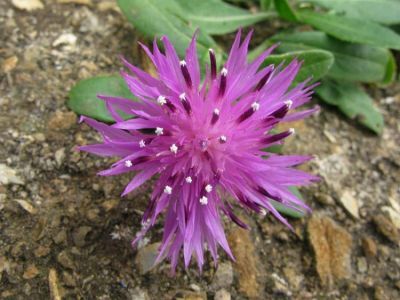
Centaurea tagana
Plant · Asteraceae
Centaurea tagana suits persons with marked symptoms of congestion, stupefaction, and periodic fevers. The mental confusion and home-sickness are characteristic features of those needing this remedy.
Key symptoms
- Stupefying pain in temples, frontal protuberances, orbital arches, and eyes
- Dimness of sight with dull sunken eyes
- Blood surges painfully at every movement
- Running of the nose with lachrymation
- Rapid sinking of strength with general uneasiness
- Drowsiness and thirst with confusion of mind
- Coryza, colic, and diarrhea following initial symptoms
- Home-sickness
Worse (aggravation)
- Night
- Morning on waking
- Movement
- During and after urinating
Better (amelioration)
- Eating

Centaurea tagana. N. O. Compositæ. Tincture of root.
Clinical
Coryza. Diarrhœa. Eyes, inflammation of. Fevers. Home-sickness. Influenza. Intermittents. Sight, vanishing of.
Characteristics
The Centaureas are allied to the Thistles. Dr. Chagon, Duc de Sorentino, experimented with the root of Cent. t. The symptoms of congestion are very marked: "Blood surges pain fully at every movement." A bright servant-girl who took it seemed stupefied for several days. "The earliest symptoms appeared a quarter of an hour after taking the medicine, viz., those of the arms together with dull pains in the hypogastrium, shiverings and general heat, especially on forehead, which was covered with sweat. These were followed by a stupefying pain in temples, frontal protuberances, orbital arches and eyes. Next came the following symptoms: Dimness of sight; appetite alternating with nausea; increase of saliva and vomiting; running of the nose; lachrymation; eructations; rapid sinking of strength; general uneasiness; confusion of …
Classical texts are in the public domain. Educational reference only — not medical advice.
