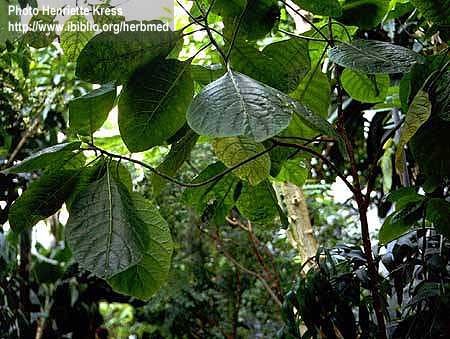
China officinalis
Cinchona officinalis · Peruvian bark, cinchona bark, Jesuit’s bark, china bark, calisaya bark, loxa bark, red bark, yellow cinchona. · Plant · Rubiaceae
China is thought to work best for idealistic, artistic people. Despite problems articulating their feelings, they prefer meaningful talk to trivial chat, but their own intensity often tires them, causing irritability, laziness, depression, violence, or intolerance. Easily offended, they may feel paranoid and mistreated, or that they have been born unfortunate, as if the world is hostile to them. A highly active imagination can lead to a preoccupation with future plans and to egocentric, heroic fantasies that later cause embarrassment.
Physical symptoms may be linked to weaknesses in the liver and digestive system and generally include a dislike of butter and other fatty foods, and cravings for alcohol and foods that are sweet or spicy.
The remedy is used for exhaustion following illness or extreme fluid loss. It is also given for fever, insomnia, gastric upsets, and headaches.
Key symptoms
- exhaustion after fluid loss
- great imagination
- desire for alcohol and for sweet or spicy foods
- oversensitivity
Worse (aggravation)
- Alternate days; periodically
- Touch; slightest touch, though hard pressure may relieve
- Loss of vital fluids; exhausting discharges
- Draught of air; open air
- Motion
Better (amelioration)
- Hard pressure
- Warm room
- Bending double

Peruvian Bark-China (CINCHONA OFFICINALIS)
Debility from exhausting discharges, from loss of vital fluids, together with a nervous erethism, calls for this remedy. Periodicity is most marked. Sensitive to draughts. Seldom indicated in the earlier stages of acute disease. Chronic gout. Chronic suppurative pyelitis. Post operative gas pains, not relief from passing it.
Mind
Apathetic, indifferent, disobedient, taciturn, despondent. Ideas crowd in mind; prevent sleep. Disposition to hurt other people's feelings. Sudden crying and tossing about.
Head
As if skull would burst. Sensation as if brain were balancing to and fro, and striking against skull, receiving great pain (Sulph; Sulph ac). Intense throbbing of head and carotids. Spasmodic headache in vertex, with subsequent pain, as if bruised in sides of head. Face flushed after hæmorrhages, or sexual excesses, or loss of vital fluids. Relieved from pressure and warm room. Scalp sensitive; worse combing hair. Aches worse in open air, from temple to temple. Worse by contact, current of air, stepping. Dizzy when walking.
Eyes
Blue color around eyes. Hollow eyes. Yellowish sclerotica. Black specks, bright dazzling illusions; night blindness in anæmic retina. Spots before eyes. Photophobia. Distortion of eyeballs. Intermittent ciliary neuralgia. Pressure in eyes. Amaurosis; scalding lachrymation.
Ears
Ringing in ears. External ear sensitive to touch. Hearing sensitive to noise. Lobules red and swollen.
Nose
Checked catarrh. Easily bleeding from nose, especially on rising. Coryza, sneezing, watery discharge. Violent dry sneezing. Cold sweat about nose.
Face
Sallow complexion. Face bloated; red.
Mouth
Toothache; better pressing teeth firmly together, and by warmth. Tongue coated thick, dirty; tip burns, succeeded by ptyalism. Bitter taste. Food tastes too salty.
Stomach
Tender, cold. Vomiting of undigested food. Slow digestion. Weight after eating. Ill effects of tea. Hungry without appetite. Flat taste. Darting pain crosswise in hypogastric region. Milk disagrees. Hungry longing for food, which lies undigested. Flatulence; belching of bitter fluid or regurgitation of food gives no relief; worse eating fruit. Hiccough. Bloatedness better by movement.
Abdomen
Much flatulent colic; better bending double. Tympanitic abdomen. Pain in right hypochondrium. Gall-stone colic (Triumfetta semitriloba). Liver and spleen swollen and enlarged. Jaundice. Internal coldness of stomach and abdomen. Gastro-duodenal catarrh.
Stool
Undigested, frothy, yellow; painless; worse at night, after meals, during hot weather, from fruit, milk, beer. Very weakening, with much flatulence. Difficult even when soft (Alum; Plat).
Male
Excited lascivious fancy. Frequent emissions, followed by great weakness. Orchitis.
Female
Menses too early. Dark clots and abdominal distention. Profuse menses with pain. Desire too strong. Bloody leucorrhœa. Seems to take the place of the usual menstrual discharge. Painful heaviness in pelvis.
Respiratory
Influenza, with debility. Cannot breathe with head low. Labored, slow respiration; constant choking. Suffocative catarrh; rattling in chest; violent, hacking cough after every meal. Hæmorrhage from lungs. Dyspnœa, sharp pain in left lung. Asthma; worse damp weather.
Heart
Irregular with weak rapid beats followed by strong, hard beats. Suffocative attacks, syncope; anæmia and dropsy.
Back
Sharp pains across kidneys, worse movement and at night. Knife-like pains around back (D. MacFarlan).
Extremities
Pains in limbs and joints, as if sprained; worse, slight touch; hard pressure relieves. Sensation as of a string around limb. Joints swollen; very sensitive, with dread or open air. Great debility, trembling, with numb sensation. Averse to exercise; sensitive to touch. Weariness of joints; worse, mornings and when sitting.
Skin
Extreme sensitiveness to touch, but hard pressure relieves. Coldness; much sweat. One hand ice cold, the other warm. Anasarca (Ars; Apis). Dermatitis; erysipelas. Indurated glands; scrofulous ulcers and caries.
Sleep
Drowsiness. Unrefreshing or constant stupor. Wakens early. Protracted sleeplessness. Anxious, frightful dreams with confused consciousness on waking, so that the dream cannot be rid of and fear of dream remains. Snoring, especially with children.
Fever
Intermittent, paroxysms anticipate; return every week. All stages well marked. Chill generally in forenoon, commencing in breast; thirst before chill, and little and often. Debilitating night-sweats. Free perspiration caused by every little exertion, especially on single parts. Hay fever, watery coryza, pain in temples.
Modalities
Worse, slightest touch. Draught of air; every other day; loss of vital fluids; at night; after eating; bending over. Better, bending double; hard pressure; open air; warmth.
Relationship
Antidotes: Arn; Ars; Nux; Ipec.
Compare:-Quinidin--(Paroxysmal tachycardia and auricular fibrillation. Heart is slowed, and the auriculo-ventricular conduction time is lengthened. Dose 1/2 grain t.i.d). Cephalanthus--(Button Bush-Intermittent fever, sore throat, rheumatic symptoms, vivid dreams). Ars; Cedron; Nat sulph. Cydonia vulgaris-Quince (supposed to be of use to strengthen the sexual organs and stomach).
Complementary: Ferrum; Calc phos.
Dose
Tincture, to thirtieth potency.
Now we shall take up the study of Cinchona, or China. Persons who have suffered much from neuralgias due to malarial influences, who have become anaemic and sickly from repeated haemorrhages, are likely to develop symptoms calling for China.
China produces a gradually increasing anaemia, with great pallor and weakness. It is sometimes- indicated in plethoric individuals, but this is the exception, and even in this class we find that the symptoms are tending towards the cachectic state, which is avoided by the prompt action of the remedy.
Throughout the body there is a gradually increasing sensitivity, a gradually increasing irritability of the nerves; the nerves are always in a fret, so that these people will say:

Cinchona officinalis. Cinchona calisaya. Peruvian bark. N. O. Rubiaceæ. Tincture of the dried bark.
Clinical
Abscess. Alcoholism. Amblyopia. Anæmia. Aphthæ. Apoplexy Appetite, disordered. Asthma. Back, weakness of. Bilious attack. Catarrhal affections. Coma. Constipation. Cough. Debility. Delirium. Diarrhœa. Dropsy. Dyspepsia. Ears, deafness; noises in. Emissions. Empyæma. Erysipelas. Facial neuralgia. Gall-stone colic. Hæmorrhages. Hæmorrhoids. Headache. Hectic fever. Hip-joint disease. Ichthyosis. Impotence. Influenza. Intermittent fever. Jaundice. Labour. Lactation. Leucorrhœa. Lienteria. Liver, diseases of; cirrhosis of. Menière's disease. Menstruation, disordered. Mercury, effects of. Muscæ volitantes. Neuralgia. Peritonitis. Perspiration, excessive. Pleurisy. Prosopalgia. Psoriasis. Pylorus, disease of. Rheumatism. Self-abuse. Sleep, disordered. Spermatorrhœa. Spleen, affections of. Suffocation, fits of. Taste, disordered. Tea, effects of. Thirst. Tinnitus. Tobacco habit. Traumatic fever. Tympanitis. Varicose veins. Vertigo.
Peruvian Bark (Rubiaceae)
For stout, swarthy persons; for systems, once robust, which have become debilitated, "broken down" from exhausting discharges (Carbo v.). Apathetic, indifferent, taciturn (Phos. ac.); despondent, gloomy, has no desire to live, but lacks courage to commit suicide. Ailments: from loss of vital fluids, especially haemorrhages, excessive lactation, diarrhoea, suppuration (Chin. s.); of malarial origin, with marked periodicity; return every other day. After climacteric with profuse haemorrhages; acute diseases often result in dropsy. Pains: drawing or tearing; in every joint, all the bones. Peristeum, as if strainted, sore all over; obliged to move limbs frequently, as motion gives relief; renewed by contact, and then gradually increase to a great height. Headache: as if the skull would burst; intense throbbing of head and carotids, face flushed; from occiput over whole head; < sitting or lying, must stand or walk; after haemorrhage or sexual excesses. Face pale, hippocratic; eyes …
Mind
Full of plans, projects and schemes, especially in the evening and night.
Head
Scalp sensitive to touch; roots of hair hurt, when hair is moved.
Head
Intense throbbing of head from loss of blood or other animal fluid.
Head
Headache relieved by moving the head up and down.
Head
Heaviness and loss of sight; fainting and ringing in the ears.
General Face
Periodical prosopalgia, pains excessive; skin sensitive to touch, mostly infra-orbital and maxillary branches.
General Face
Face pale, sunken, pinched, eyes sunken and surrounded by blue margins.
Hearing and Ears
Ringing in the ears from debility or loss of fluids.
Nose
Epistaxis with anaemic state; singing and ringing in the ears; great paleness of face and fainting.

Phatak's chapter on China officinalis is available in the app.
Read Phatak in the appClassical texts are in the public domain. Educational reference only — not medical advice.
