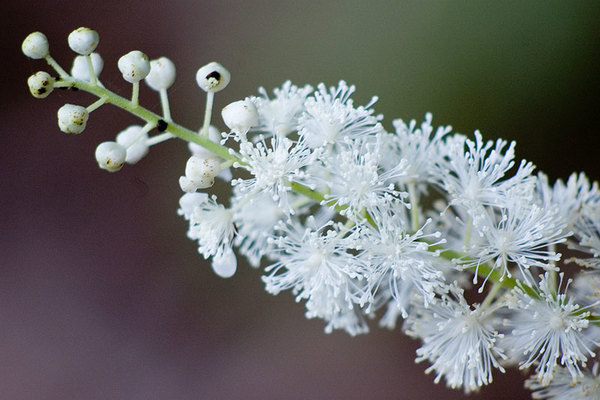
Cimicifuga racemosa
Actaea racemosa · Black cohosh, black snakeroot, rattleroot, cohosh bugbane, squawroot · Plant · Ranunculaceae
Primarily a women’s remedy, Cimicifuga is particularly suited to those whose emotions swing between overexcitement and depression. They tend to have very intense emotional lives, possibly marked by fears of death and insanity. Emotional symptoms often alternate with physical ones, such as chilliness and sharp pains, especially on the left side of the body. Symptoms may intensify during menstruation.
Cimicifuga acts upon the nerves and uterine muscles. It is prescribed mostly for gynecological problems; for head, neck, and back pain; and for emotional symptoms.
Key symptoms
- depression
- neck and back pain
- fear of death
- overexcitability
- menstrual irregularities
Worse (aggravation)
- Morning; cold; during menses
- Mental worry and over-study
- Cold, damp weather
- Excitement; motion
Better (amelioration)
- Warmth; open air
- Continued motion
- Pressure

Black Snake-root (CIMICIFUGA - ACTAEA RACEMOSA - MACROTYS)
Has a wide action upon the cerebrospinal and muscular system, as well as upon the uterus and ovaries. Especially useful in rheumatic, nervous subjects with ovarian irritation, uterine cramps and heavy limbs. Its muscular and crampy pains, primarily of neurotic origin, occurring in nearly every part of the body, are characteristic. Agitation and pain indicate it. Pains like electric shocks here and there. Migraine. Symptoms referable to the pelvic organs prominent. "It lessens the frequency and force of the pulse soothes pain and allays irritability".
Mental
Sensation of a cloud enveloping her. Great depression, with dream of impending evil. Fears riding in a closed carriage, of being obliged to jump out. Incessant talking. Visions of rats, mice, etc. Delirium tremens; tries to injure himself. Mania following disappearance of neuralgia.
Head
Wild feeling in brain. Shooting and throbbing pains in head after mental worry, over-study, or reflex of uterine disease. Waving sensation or opening and shutting sensation in brain. Brain feels too large. Pressing-outward pain. Tinnitus. Ears sensitive to least noise.
Eyes
Asthenopia associated with pelvic trouble. Deepseated throbbing and shooting pains in eyes, with photophobia from artificial light. Intense aching of eyeball. Pain from eyes to top of head.
Stomach
Nausea and vomiting caused by pressure on spine and cervical region. Sinking in epigastrium (Sep; Sulph). Gnawing pain. Tongue pointed and trembling.
Female
Amenorrhœa (use Macrotin preferably). Pain in ovarian region; shoots upward and down anterior surface of thighs. Pain immediately before menses. Menses profuse, dark, coagulated, offensive with backache, nervousness; always irregular. Ovarian neuralgia. Pain across pelvis, from hip to hip. After-pains, with great sensitiveness and intolerance to pain. Infra-mammary pains worse, left side. Facial blemishes in young women.
Respiratory
Tickling in throat. Dry, short cough, worse speaking and at night. Cough when secretion is scanty-spasmodic, dry with muscular soreness and nervous irritation.
Heart
Irregular, slow, trembling pulse. Tremulous action. Angina pectoris. Numbness of left arm; feels as if bound to side. Heart's action ceases suddenly, impending suffocation. Left-sided infra-mammary pain.
Back
Spine very sensitive, especially upper part. Stiffness and contraction in neck and back. Intercostal rheumatism. Rheumatic pains in muscles of back and neck. Pain in lumbar and sacral region, down thighs, and through hips. Crick in back.
Extremities
Uneasy, restless feeling in limbs. Aching in limbs and muscular soreness. Rheumatism affecting the belly of muscles, especially large muscles. Choreic movements, accompanied by rheumatism. Jerking of limbs. Stiffness in tendo-Achilles. Heaviness in lower extremities. Heavy, aching, tensive pain.
Sleep
Sleeplessness. Brain irritation of children during dentition.
Skin
Locally and internally for ivy poisoning.
Modalities
Worse, morning, cold (except headache), during menses; the more profuse the flow, the greater the suffering. Better, warmth, eating.
Relationship
Compare: Rhamnus Californica (muscular pains, lumbago, pleurodynia, acute rheumatism). Derris pinnata (Neuralgic headaches of rheumatic origin). Aristolochia milhomens (pain in tendo-Achilles; diabetes). Caulophyl; Pulsat; Lilium; Agar; Macrotin (especially for lumbago).
Dose
First to thirtieth attenuation, third most frequently used.

Mind
Gloominess and dejection as of a black pall over everything; fears she will be insane.
Head
Brain feels too large, pressing pain within outward.
Head
Uterine headaches, frontal, vertical, occipital, with pains in the eyeballs > by pressure < by motion.
Female Sexual Organs
Infra mammary pains especially at the climacteric.
Neck and Back
Stiff neck from cold air, or from even moving hands.
-
Pains in every portion of the head, but more in vortex and occiput; pressing and aching; sometimes extending to shoulders and down the spine.
-
Top of head feels as if it would fly off.
-
Rush of blood to the head, brain fools too large for the cranium, after suppressed uterine discharges or suddenly ceasing pains.
-
Intense aching pain in eyeballs, worse from moving the head.
-
Nervous or muscular irritation, of a rheumatism or neuralgic origin, especially in delicate or hysterical women, who are affected with more or less disease of the generative organs.
-
Neuralgic or rheumatic dysmenorrhoea, with great mental and nervous Irritability, sleeplessness, low spirited, sensitive.

Phatak's chapter on Cimicifuga racemosa is available in the app.
Read Phatak in the appClassical texts are in the public domain. Educational reference only — not medical advice.
