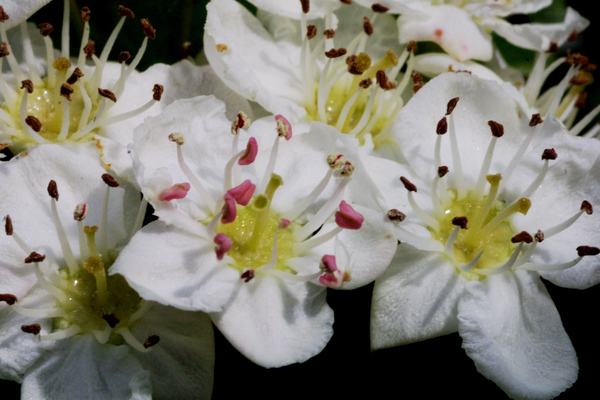
Crataegus oxyacantha
Crataegus laevigata · C. oxyacantha, or C. monogyna, Hawthorn, May tree, whitethorn · Plant · Rosaceae
Crataegus is most appropriate for irritable, cross, melancholic people who are prone to heart complaints. They tend to feel weak, fragile, and despairing. Their brains feel dull and confused, with possible periods of quiet and calm.
The characteristic symptom picture for the remedy is of a weak heart, palpitations, and a rapid heartbeat with a sense of hurry and urgency. The pulse is fast, feeble, and intermittent. Fainting and collapse may accompany palpitations, while the area around the heart can feel as though it is bursting due to congestion or overexertion.
Key symptoms
- and is a heart tonic
- Cardiac dropsy
- and under left clavicle
- Heart dilated; first sound weak
- irregular, feeble, intermittent
Worse (aggravation)
Better (amelioration)

Hawthorn Berries (CRATAEGUS)
Produces giddiness, lowered pulse, and air hunger and reduction in blood-pressure. Acts on muscle of heart, and is a heart tonic. No influence on the endocardium.
Myocarditis. Failing compensation. Irregularity of heart. Insomnia of aortic sufferers; anæmia; œdema; cutaneous chilliness. High arterial tension. Is a sedative in cross, irritable patients with cardiac symptoms.
Chronic heart disease, with extreme weakness. Very feeble and irregular heart action. General anasarca. Very nervous, with pain in back of head and neck. Collapse of typhoid. Hæmorrhage from bowels. Cold extremities, pallor; irregular pulse and breathing. Painful sensation of pressure in left side of chest below the clavicle. Dyspepsia and nervous prostration, with heart failure. In the beginning of heart mischief after rheumatism. Arteriosclerosis. Said to have a solvent power upon crustaceous and calcareous deposits in arteries.
Head
Apprehensive, despondent. Very nervous and irritable, with pain in back of head and neck. Mental dullness conjunctival irritation nasal discharges.
Urinary
Diabetes, especially in children.
Heart
Cardiac dropsy. Fatty degeneration. Aortic disease. Extreme dyspnœa on least exertion, without much increase of pulse. Pain in region of heart and under left clavicle. Heart muscles seem flabby, worn out. Cough. Heart dilated; first sound weak. Pulse accelerated, irregular, feeble, intermittent. Valvular murmurs, angina pectoris. Cutaneous chilliness, blueness of fingers and toes; all aggravated by exertion or excitement. Sustains heart in infectious diseases.
Skin
Excessive perspiration. Skin eruptions.
Sleep
Insomnia of aortic patients.
Modalities
Worse, in warm room. Better, fresh air, quiet and rest.
Relationship
Strophantus; Digit; Iberis; Naja; Cactus.
Dose
Fluid extract or tincture, one to fifteen drops. Must be used for some time in order to obtain good results.

Cratægus oxyacantha. Hawthorn. N. O. Rosaceæ. Tincture of the ripe fruit.
Clinical
Angina pectoris. Heart, affections of; failure of; hypertrophy of.
Characteristics
Cratægus was introduced into medicine as a heart remedy by Dr. Greene, of Ennis, Ireland, and it has been used empirically with much success in cases of heart failure. It has usually been given in 5-drop doses of the tincture. Weak and rapid pulse; dyspnœa and dropsy, dependent on failure of heart-power whether from valvular affection or from anæmia, appear to be the leading indications. Heart-failure threatened from slightest exertion. The drug may cause nausea when given in the tincture unless given during or immediately after a meal. The mental state is that of irritability, crossness, and melancholy. Cratæg. is the nearest approach to a positive heart tonic that I know of. It has produced some heart symptoms and has, doubtless, a homœopathic relation; but it is not a heart-poison like Digitalis, and has no cumulative action. Here are …

Phatak's chapter on Crataegus oxyacantha is available in the app.
Read Phatak in the appClassical texts are in the public domain. Educational reference only — not medical advice.
