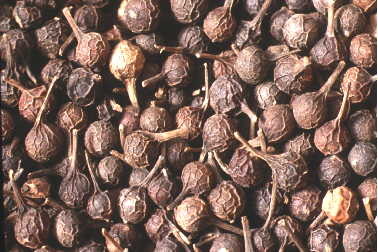
Cubeba officinalis
Piper cubeba · Plant · Piperaceae
Cubeba acts best in persons of bilious temperament with a tendency to constipation. It is suited to subacute or chronic gonorrhea where burning persists after urination with a thick, yellow, pus-like discharge. Burning rawness permeates mucous membranes from throat to urethra, and stools are worse at night in bed.
Key symptoms
- Burning throughout mucous membranes: throat, stomach, abdomen, rectum, urethra
- Thick acrid yellow or pus-like urethral discharge after inflammatory stage of gonorrhea
- Burning and itching in fossa navicularis after urination
- Acrid, offensive leucorrhea in children
- Barking, croupy or incessant bronchial cough, worse in the evening
- Stools with mucus, bile, or blood; worse at night in bed, better walking
- Sensation of pressure and heaviness in pelvis; femoral hernia
- Roseolous skin eruptions concomitant with kidney affections
Worse (aggravation)
- Worse at night in bed (stools and colic)
- Worse in evening (cough)
- Worse from heat
- Worse in open air (cough)
Better (amelioration)
- Better getting up and walking about (stools)

Cubebs (CUBEBA)
Mucous membranes generally, but especially that of the urinary tract, are chiefly affected by this remedy. Frequent urination of a nervous origin. Leucorrhœa in little girls.
Urine
Urethritis, with much mucus, especially in women. Cutting after urination, with constriction. Hæmaturia. Prostatitis, with thick yellow discharge. Cystitis.
Respiratory
Catarrh of nose and throat, with fetid odor and expectoration. Mucus trickles from posterior nares. Rawness of throat and hoarseness.
Relationship
Compare: Cucurbita; Copaiva; Piper meth; Sandal.
Dose
Second and third attenuation.

Piper cubeba. Cubeba officinalis. Cubebs. N. O. Piperaceæ. Tincture of dried unripe fruit.
Clinical
Albuminuria. Aphthæ. Croup. Diarrhœa. Dysentery. Enuresis. Gleet Gonorrhœa. Hernia. Leucorrhœa in children. Orchitis. Prostatitis. Rheumatism. Roseola. Urticaria.
Characteristics
Cubeba corresponds to catarrh. It is an old-world remedy for gonorrhœa and gleet, but it affects the mucous membrane of the nose, air passages and intestines, as well as that of the urino-genital tract. It acts well in persons of bilious temperament with tendency to constipation. Some of its most characteristic symptoms are: Burning in throat with dryness, constant need to swallow saliva; burning in stomach; in abdomen; in rectum; in urethra; in fossa navicularis. Nash defines its place in gonorrhœa thus: "After the inflammatory stage is passed under the usual remedies for that stage, if there still remains burning in the urethra after micturition, and the discharge remains thick, yellow, or pus-like (with Puls. the discharge is …

Phatak's chapter on Cubeba officinalis is available in the app.
Read Phatak in the appClassical texts are in the public domain. Educational reference only — not medical advice.
