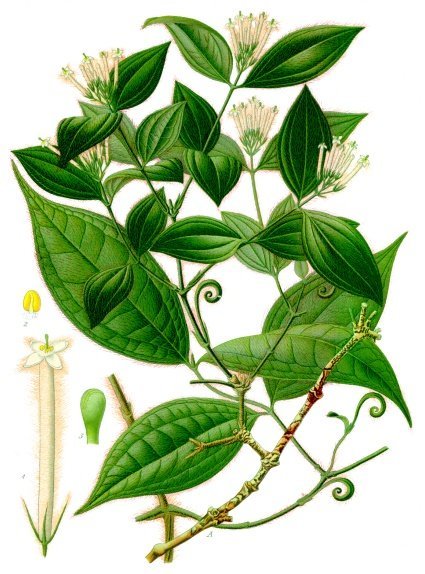
Curare
Strychnos toxifera · Plant · Loganiaceae
Curare is suited to debilitated patients, especially the aged and scrofulous children, with progressive muscular weakness short of complete paralysis, diminished reflexes, and fetid discharges. The sensation of a heavy weight hanging from the limbs is characteristic. Diabetic patients with motor weakness have responded well to this remedy.
Key symptoms
- Muscular paralysis without loss of sensation or consciousness
- Threatened paralysis of respiratory muscles on falling asleep
- Reflex action diminished or abolished
- Extreme weakness and heaviness of arms and hands, cannot lift fingers
- Legs tremble and give way on walking
- Lancinating, piercing pains all over head compelling patient to lie down
- Ptosis of right eyelid
- Diabetes mellitus with copious clear urine and great emaciation
Worse (aggravation)
- Worse from motion
- Worse in dampness
- Worse in cold weather and cold wind
- Worse at 2 a.m.
- Worse on right side

Arrow-poison (WOORARI)
Muscular paralysis without impairing sensation and consciousness. Paralysis of respiratory muscles. Reflex action diminished. Debility of the aged (Baryta) and from loss of fluids. Catalepsy. Nervous debility. Trismus. Glycosuria with motor paralysis. Curare decreases the output of adrenaline. Vomiting of bile in cirrhosis of liver. Diabetes mellitus, 4th dilution (Dr. Barkhard).
Mind
Indecision; no longer wishes to think, or act for herself.
Head
Lancinating pains all over head. Head drawn backward. Falling out of hair. Brain feels full of fluid.
Eyes
Sharp, stitching pains over right eye. Black spots before vision. Ptosis of right side.
Ears
Noises; unbearable earache. Lancinating pains start from ears; extending down to legs. Swelling of lobes of ear.
Nose
Ozæna. Tubercles on nose; fetid lumps of pus.
Face
Facial and buccal paralysis. Tongue and mouth drawn. Red face. Tongue and mouth drawn to right.
Female
Dysmenorrhœa. Menses too early, during menses, colic, headache, kidney pain. Leucorrhœa, thick, purulent, offensive.
Respiratory
Threatened paralysis of respiration on falling asleep. Short breath. Short dry cough; provokes vomiting, followed by fainting. Chest sore to pressure. Very distressing dyspnœa.
Extremities
Tired pain up and down spine. Arms weak, heavy. Cannot lift the fingers. Weakness of hands and fingers in pianists. Legs tremble; give way in walking. Debility; paralysis. Catalepsy. Favors development of corns. Reflexes lessened or abolished.
Skin
Leprosy. Dirty-looking skin. Boils. Tubercles on nose. Liver spots. Blood oozes through. Itching.
Modalities
Worse, dampness, cold weather, cold wind; 2 am; right side.
Relationship
Compare: Cystisin (motor paralysis); Conium; Causticum; Crotalus; Nux. Curare antidotes Strychnin.
Dose
Sixth to thirtieth potency.

Curara, Woorara. Woorali. Hoorali. Oorari. (An arrow poison used by South American Indians. Accounts differ as to its actual composition, into which the juice of different species of Strychnos are said to enter, or of Cocculus toxiferos with serpent poison. Others have said it is prepared from the venom of toads. In appearance it is something like the extract of liquorice. That used in C. Wesselhoeft's provings was obtained from Merck of Darmstadt.) N. O. Loganiaceæ (?). Tincture.
Clinical
Cancer. Catalepsy. Corns. Cough. Debility. Diabetes. Dysmenia. Dyspnœa. Ears, affections of. Eczema. Emphysema. Epilepsy. Face, paralysis of. Fainting. Headache. Hydrophobia. Liver spots. Locomotor ataxia. Nervous debility. Neuralgia. Otitis. Ozæna. Paralysis. Phthisis. Pseudo-hypertrophic paralysis. Ptosis. Scrofula. Tetanus. Ulceration. Uterus, affections of. Vaginitis. Whooping-cough.

Phatak's chapter on Curare is available in the app.
Read Phatak in the appClassical texts are in the public domain. Educational reference only — not medical advice.
