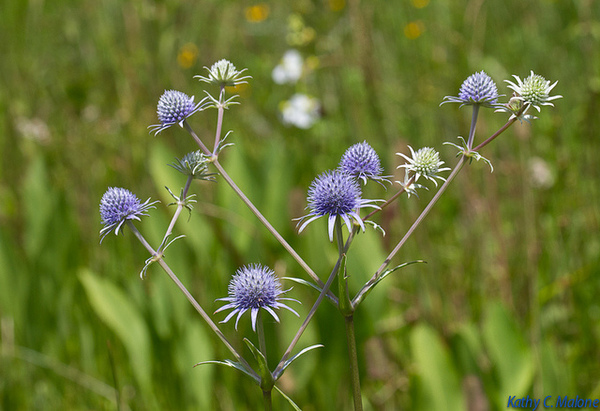
Eryngium aquaticum
Plant · Apiaceae
Eryngium aquaticum is indicated in patients with marked irritability of the urinary tract combined with weakness of the sexual organs. It suits those with gonorrhoea, gleet, or spermatorrhoea where mucous membranes are prominently affected.
Key symptoms
- Strangury and difficult frequent micturition with nervous erethism
- Thick yellow mucous discharges
- Renal colic with congestion of kidneys
- Dull pain in back running down ureters and limbs
- Irritable bladder from enlarged prostate or uterine pressure
- Tenesmus of bladder and urethra
- Discharge of prostatic fluid from slight causes
- Seminal emissions without erections with lassitude
- Cough with sense of constriction and smarting in larynx
- Uridrosis — sweat of urinous odour in evening

Button Snake-root
A remedy for urinary disorders. Strangury, etc, with nervous erethism. Thick, yellow mucous discharges. Influenza. Uridrosis, sweat of urinous odor in evening.
Respiratory
Cough, with sense of constriction. Smarting in throat and larynx.
Urinary
Tenesmus of bladder and urethra. Difficult and frequent micturition. Pain behind pubes. Spasmodic stricture. Renal colic (Pareira; Calc). Congestion of kidneys with dull pain in back, running down the ureters and limbs. Irritable bladder from enlarged prostate gland, or from pressure of uterus.
Male
Discharge of prostatic fluid from slight causes. Seminal emissions without erections, with lassitude (Dioscor; Phos ac).
Relationship
Compare: Conium; Cannab; Dios; Ocim; Clemat.
Dose
Tincture, to third potency.

Button Snake-root. N. O. Umbelliferæ. Tincture of fresh root.
Clinical
Anus, prolapse of. Conjunctivitis. Constipation. Cough. Diarrhœa. Dropsy. Gleet. Gonorrhœa. Hæmorrhoids. Influenza. Laryngitis. Leucorrhœa. Renal colic. Sclerotitis. Sexual weakness. Strabismus. Spermatorrhœa. Urine, incontinence of. Wounds.
Characteristics
Eryngium acts on the mucous membranes, producing thick yellow mucous discharges from eyes, ears, nose, mouth, bowels, urethra, and vagina. Hæmorrhages from stomach and bowels. It is a vulnerary, antidoting the effect of blows. It causes headaches; expanding sensation in forehead; dull, dragging pain in occiput, neck, and shoulders. Seminal and prostatic weakness. I. J. Whitfield has cured three cases of renal colic with calculi (two left side, the other not stated) with Eryng. a. W. K. Leonard reports the following case: A young Methodist minister, apparently healthy, was just over his twelfth attack of renal colic. The attacks had recurred at intervals of two to four weeks and lasted …
Classical texts are in the public domain. Educational reference only — not medical advice.
