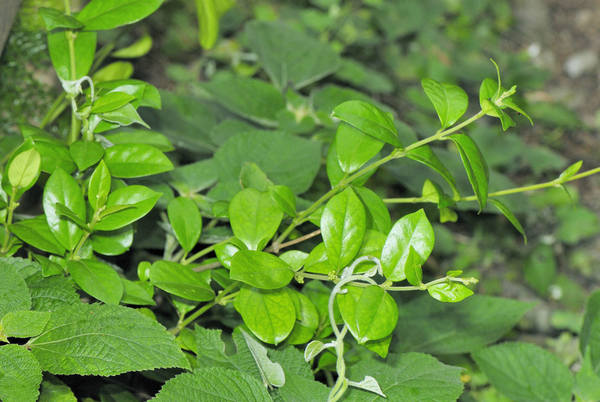
Gymnema sylvestre
Plant · Apocynaceae
The remedy picture is based on a single striking symptom: selective abolition of the senses of sweet and bitter taste while all other tastes remain unaffected. This highly specific action on taste perception makes it a remedy to consider when similar taste alterations are present clinically.
Key symptoms
- Loss of sense of taste for sweet substances after chewing leaves
- Loss of taste for bitter substances simultaneously
- Taste alteration lasting several hours
- Quinine tastes like chalk (loss of bitter taste)
- All other tastes (e.g., ginger, spicy) remain intact

Gymnema sylvestre. N. O. Asclepiadaceæ. Tincture of leaves.
Clinical
Snake-bite. Taste, altered.
Characteristics
This plant, which grows in the Deccan peninsula, Assam, and some parts of Africa, is a woody climber with long, slender branches. The powdered root has a reputation among the natives as a remedy for snake-bite. It is mentioned here an account of a single symptom observed from chewing one or two leaves, which had a bitterish, astringent, and slightly acid taste. Immediately after chewing them the sense of taste for sugar was lost, and also the taste for bitters, the effect lasting some hours. Everything else could be tasted, as the ginger in gingerbread but not the sweet. Quinine tasted like chalk.
Classical texts are in the public domain. Educational reference only — not medical advice.
