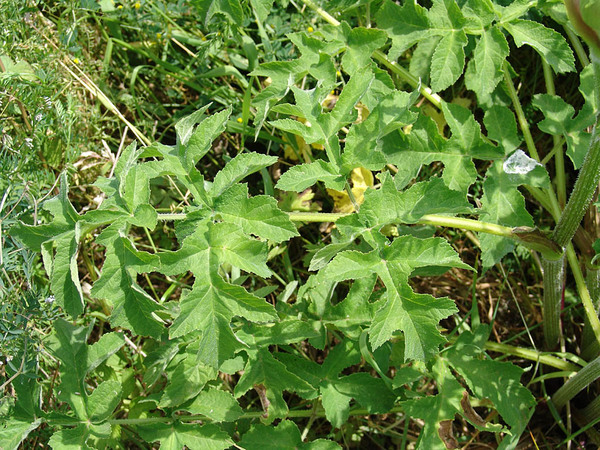
Heracleum sphondylium
Plant · Apiaceae
Heracleum sphondylium acts primarily on the digestive system and skin, producing hunger with inability to eat, nausea, colic, diarrhoea, and splenic pains. A characteristic feature is headache with drowsiness, worse on moving in open air but relieved by tying up the head with a cloth. It is also recommended as a spinal stimulant in epilepsy with flatulency and skin symptoms.
Key symptoms
- Headache with drowsiness, worse on moving in open air
- Headache better by tying up head with a cloth
- Much fatty perspiration on head with violent itching
- Seborrhoea capitis
- Hunger but inability to eat; nausea and vomiting
- Bitter risings and bitter taste
- Abdominal and splenic pain
- Exhaustion, indolence, and weakness
Worse (aggravation)
- Moving in open air (headache)
Better (amelioration)
- Tying up head with a cloth (headache)

Hogweed (HERACLEUM - BRANCA URSINA)
Recommended as a spinal stimulant; in epilepsy with flatulency, gouty and skin symptoms.
Head
Aches, with drowsiness, worse moving in open air, better tying up head with cloth. Much fatty perspiration on head and violent itching. Seborrhœa capitis. Sick headache.
Stomach
Pain with inclination to vomit. Bitter risings and taste. Hungry but unable to eat. Abdominal and spleenic pain.
Dose
Third potency.

Heracleum sphondylium. "Branca ursina." N. O. Umbelliferæ. Tincture of whole plant.
Clinical
Debility. Dyspepsia. Gout. Headache. Seborrhœa capitis. Skin, affections of. Spleen, pain in.
Characteristics
Heracl. has been proved. It was found to exercise a pronounced action on the digestion, producing hunger, with inability to eat, nausea, vomiting; colic, diarrhœa, and pains in the spleen. It also affected the sexual organs and the skin. A characteristic is "Headache with drowsiness; < on moving in open air; > tying up the head with a cloth." Exhaustion, indolence, and weakness were complained of.
Relations
Compare: Con., Abies n., Cean.; in headache with drowsiness, Brucea, Ginseng, Gels., Nat. s., Nux mos., Sul.
Classical texts are in the public domain. Educational reference only — not medical advice.
