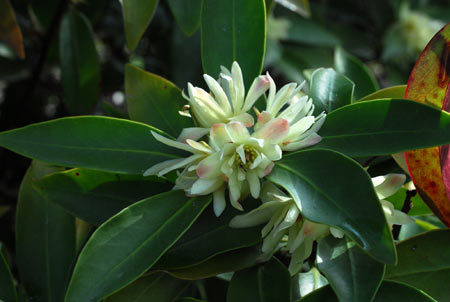
Illicium anisatum
Plant · Schisandraceae
Illicium suits old asthmatics troubled by tough white expectoration and viscid phlegm. It is also indicated for old drunkards with stomach catarrh. The remedy addresses babies with recurring colic and those with a peculiar sensation in the thigh as if broken while seated.
Key symptoms
- Tough white expectoration, frequently confirmed as characteristic
- Pain in region of third rib, one to two inches from sternum, usually right side
- Left thigh feels as if broken in the middle while sitting, disappears on standing
- Colic of babies, especially recurring at regular hours
- Stomach catarrh of old drunkards with tough viscid phlegm
- Dyspnoea in old asthmatics
- Pains in head worse in mornings, better in evenings
- Violent wind colic with rumbling in abdomen
Worse (aggravation)
- Sitting (pain in thigh)
- Morning (head pains)
- Pressing the hand against anything hard
Better (amelioration)
- Rising or standing (thigh pain disappears)
- Evening (head pains better)
- Touch (stinging in upper lip)

Star Anise. Chinese Anise. N. O. Magnoliaceæ. Tincture of seeds.
Clinical
Catarrh. Colic. Cough. Hæmoptysis. Lungs, affections of. Stomach, catarrh of. Rheumatism. Thigh, pain in.
Characteristics
Illicium is a genus of Magnoliaceous shrubs or low trees with smooth entire leaves, exhaling when, bruised a strong odour of aniseed, owing to the volatile oil contained in minute pellucid dots, which may be seen by the aid of a lens. The fruit is used throughout China, Japan, and India as a condiment, and is chewed in small quantities after a meal for sweetening the breath. It has also a local repute as a stomachic and carminative. Provings were made by Franz and Mure. Both showed the action of the drug on the nose, mouth, and stomach. Franz had many symptoms on the face, especially lips, skin, and extremities. A very remarkable symptom of Franz' has been confirmed by Flora A. Waddell (H. P., vii. 427). A man suffering from rheumatism of two years' duration came limping into Dr. Waddell's office, asking if she …
Classical texts are in the public domain. Educational reference only — not medical advice.
