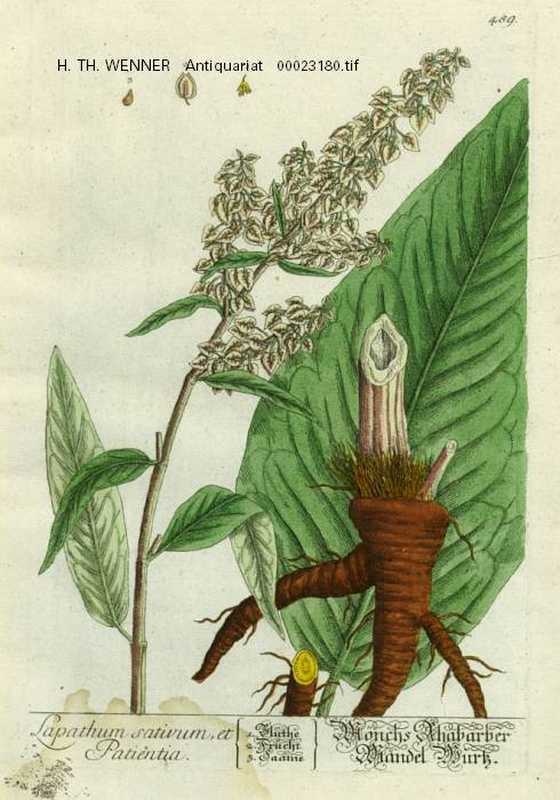
Lapathum
Rumex obtusifolius · Plant · Polygonaceae
Lapathum is suited to patients with severe headaches and nosebleed combined with kidney and uterine complaints. The mental state shows alternation between sadness and gaiety. Urinary and genital weakness with leucorrhoea and bearing-down sensation are characteristic.
Key symptoms
- Headache at vertex as after intoxication
- Pressive headache in morning with sensation as if head were swollen
- Epistaxis following headache
- Pain in kidneys with pressure from without inwards
- Weak feeling in genital parts with leucorrhoea
- Uterine bearing down with pain in kidneys
- Pain in pit of stomach with loss of appetite and weight in stomach
- Feeling of distension in left hypochondrium
- Sadness and moroseness alternating with gaiety

Lapathum Sylvestre fol. minus acutum (Gerarde). Rumex obtusifolius. Common Dock. N. O. Polygonaceæ. Tincture of fresh root.
Clinical
Epistaxis. Headache. Kidneys, pain in. Leucorrhœa. Uterus, atony of.
Characteristics
Lapathum is the old name of the Docks now generally named Rumex. The word is of Greek origin and signifies, according to Gerarde, "to soften, ease, or purge the belly," and the name was given to "herbs used in pottage and medicine, very well known to have the power of cleansing." Lapath. was proved by Widenhorn. It produced some rather severe headaches and nosebleed. (Hansen says it is indicated in epistaxis following headache.) Weight in stomach. Pain in kidneys with pressure from without inwards. Weak feeling in genital parts; leucorrhœa with uterine bearing down and pain in kidneys.
Classical texts are in the public domain. Educational reference only — not medical advice.
