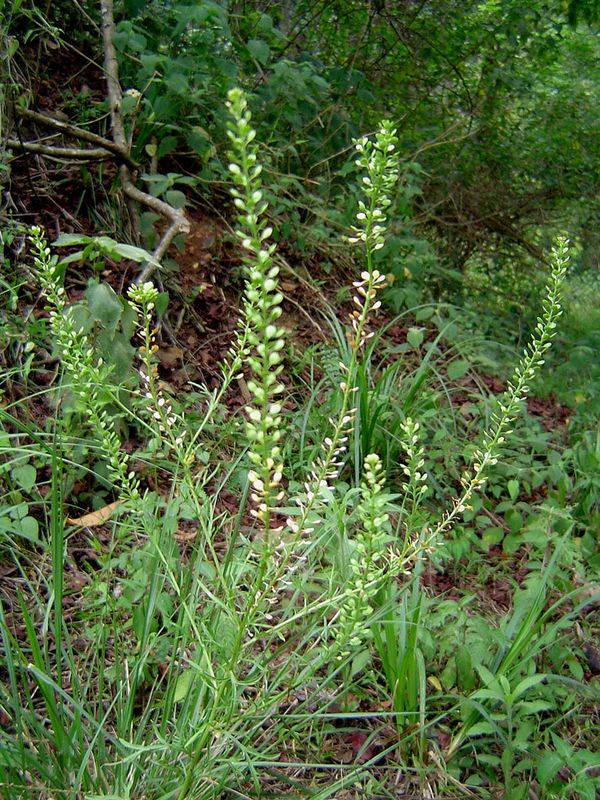
Lepidium bonariense
Plant · Brassicaceae
Lepidium Bonariense predominantly affects the left side with lancinating, knife-like pains centred on the heart and chest. It shares characteristics with Arnica in domestic use and with Lachesis in left-sided affinity. Numbness of the left arm accompanying cardiac symptoms is a keynote.
Key symptoms
- Lancinating pains on the left side: head, face, chest, hip to knee
- Numbness and pain in left arm with heart symptoms
- Sensation of a tight girdle around chest
- Pain like a knife piercing the heart
- A streak of pain from temple to chin as if face were cut with a razor
- Burning in throat with roaring in ears
- Sensation of sinking in pit of stomach
- Pain in neck, back, and extremities
Worse (aggravation)
- Stooping
- Turning head to the right
- When covered (left arm pain worse)
Better (amelioration)
- Pressing on right cheekbone (cheek pain better)

Cress-Brazilian Cress
Affections of breast, heart, lancinating pains.
With heart symptoms, numbness and pain in left arm, sensation of sinking in pit of stomach.
Left side of head, face, chest, hip to knee, all have lancinating pain.
A streak of pain from the temple to the chin, as if the face were cut with a razor. Burning in throat, roaring in ears. Sensation of a tight girdle around chest, as of a knife piercing the heart. Pain in neck, back, and extremities. Compare: Arnica; Lachesis.

Lepidium mastruco. N. O. Cruciferæ or Brassicaceæ. Tincture and trituration of fresh leaves.
Clinical
Breasts, affections of. Cough. Head, pains in. Heart, affections of. Indigestion. Rheumatism.
Characteristics
Lep. bon. is a Brazilian cress, "very common in the neighbourhood of Rio, where it is found along the roads and in stony regions" (Mure). It is a great remedy in domestic practice in Brazil, and is used for purposes similar to those for which Arnica is used. All the Lepidiums are anti-scorbutic, and L. oleraceum, the New Zealand variety, was eagerly sought after as a remedy for scurvy by the early voyagers. L. sativum is our common garden cress. "Watercress," Nasturtium officinale, belongs to the same family; but the garden "Nasturtium," or "Indian Cress," belongs to a quite different family, and it receives its name of "cress" from the "acrid taste, similar to that which exists among the Cruciferæ," which it possesses. Mure's proving brought out some distinctive symptoms on the left side …
Classical texts are in the public domain. Educational reference only — not medical advice.
