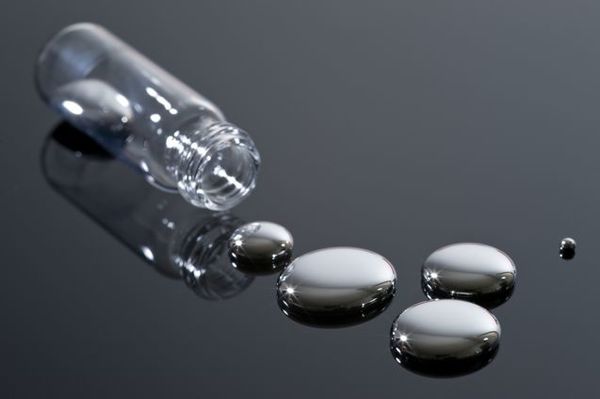
Mercurius
Mercury (element) · Mineral
The Mercurius patient is characteristically moist, sweating, and offensive in all secretions, yet the sweating brings no relief. They are worse at night and in the warmth of bed. The patient tends toward glandular involvement, bone destruction, and ulceration, with a syphilitic diathesis being prominent.
Key symptoms
- Profuse offensive sweating that does not relieve
- Glandular swellings with tendency to suppuration
- Offensive breath, saliva, and body odors
- Bone diseases with nightly pains
- Dysentery with blood and mucus, straining not relieved by stool
- Ulcers and mucous patches especially in mouth and throat
- Trembling and weakness, worse at night and from warmth of bed
- Syphilitic affections in all stages
Worse (aggravation)
- Night
- Warmth of bed
- Damp weather
- Perspiration
Better (amelioration)
- Moderate temperature
- Rest

General features
The pathogenesis of Mercury is found in the provings of Merc. viv. and Merc. sol., two slightly different preparations, but not different enough to make any distinction in practice.
Mercury is used in testing the temperature, and a Merc. constitution is just as changeable and sensitive to heat and cold. The patient is worse from the extremes of temperature, worse from both heat and cold. Both the symptoms and the patient are worse in a warm atmosphere, worse in the open air, and worse in the cold.
The complaints of Mercury when sufficiently acute to send him to bed are worse from the warmth of the bed, so that he is forced to uncover; but after he uncovers and cools off he gets worse again, so that he has difficulty in keeping comfortable. This applies to the pains, the fever, ulcers and eruptions and the patient himself.

(1) MERCURIUS OXYDULATUS NIGER.
Clinical
[The letters s and v indicate the preparation─Solubilis or Vivus─mentioned in the Prescriber in connection with the malady the name of which they follow; they are not intended to indicate a preference of one over the other.] Abscess (s). Anæmia. Aphthæ. Appendicitis. Balanitis (s). Bone, disease of (s). Brain, inflammation of. Breath, offensive (s). Bronchitis (s). Bubo (s). Cancrum oris. Catarrh (s). Chancre. Chicken-pox (s). Cold (s). Condylomata. Cough (s). Dentition, abnormal (s). Diarrhœa (s). Dysentery. Dyspepsia (s). Ecthyma (s). Eczema. Emaciation. Excoriation (s). Eyes, affections of (s); gouty inflammation of. Fainting. Fevers. Fissures. Glandular swellings (s). Gout (s). Gum-boil (s). Gums, unhealthy (s). Heart, affections of (s). Herpes (s). Hydrophobia. Jaundice (s). Joints, affections of (s). Leucorrhœa; in little girls. Liver, affections of (s). Lumbago (s). Mania. Measles (s). Melancholia (s). Meningitis. Mollities ossium. Mucous …

Quicksilver. (The Element.)
Best adapted for light-haired persons; skin and muscles lax. In bone diseases, pains worse at night; glandular swellings with or without suppuration, but especially if suppuration be too profuse (Hep., Sil.). Cold swellings; abscesses, slow to suppurate. Profuse perspiration attends nearly every complaint, but does not relieve; may even increase the suffering (profuse perspiration relieves, Nat. m., Psor., Ver.). Great weakness and trembling from least exertion. Breath and body smell foul (Psor.). Hurried and rapid talking (Hep.). Catarrh: with much sneezing; fluent, acrid, corrosive; nostrils raw, ulcerated; yellow-green, fetid, pus-like; nasal bones swollen; < at night and from damp weather. Toothache: pulsating, tearing, lacerating, shooting into face or ears; < in damp weather or evening air, warmth of bed, from cold or warm things; > from rubbing the cheek. Crowns of teeth decay, roots remain (crowns intact, roots decay, Mez.). Ptyalism; tenacious, soapy, stringy, profuse, …
-
Gums painful to the touch, swollen, spongy, receding from the teeth, edges whitish, bleeding, fetid odour from the month.
-
Moist tongue with intense thirst.
-
Tongue swollen and flabby, showing impress of the teeth on the margins, movement difficult.
-
Teeth feel loose, fall out, or become black and carious.
-
During every menstrual period, anxiety, red tongue with dark spots and burning, salty taste; sickly colour of the gums and teeth set on edge.
-
Leucorrhoea always worse at night, itching, burning, smarting, corroding with rawness.
-
Itching of genitals, made worse from contact of urine remaining on the parts.
-
Round spots shining through the skin, of a coppery-red colour. Syphilis.
Classical texts are in the public domain. Educational reference only — not medical advice.
