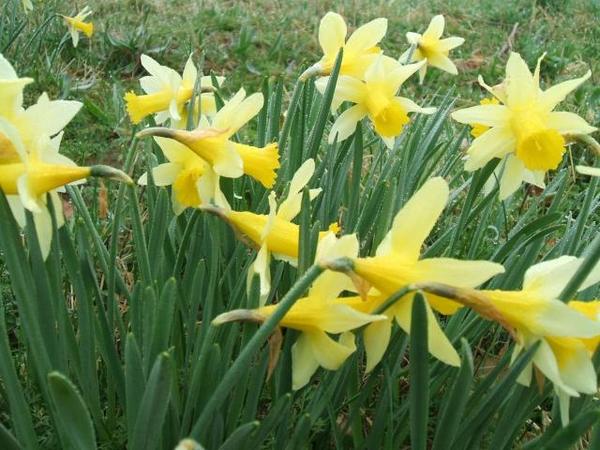
Narcissus pseudonarcissus
Plant · Amaryllidaceae
Narcissus Pseudonarcissus has a dual character depending on the plant part used: the flower alkaloid produces drying and stimulant effects while the bulb alkaloid produces secretory and depressant effects. It is indicated in cough, bronchitis, and whooping cough, and in gastrointestinal irritation with vomiting and diarrhoea. Skin eruptions worsen in wet weather.
Key symptoms
- Violent nausea followed by vomiting and diarrhoea
- Continuous cough and bronchitis; coryza with frontal headache
- Convulsive stage of whooping-cough
- Copious salivation with increased cutaneous secretion (bulb alkaloid)
- Dryness of mouth checking perspiration and dilating pupil (flower alkaloid)
- Skin eruption of papular, vesicular, and pustular type
- Slight faintness and nausea
Worse (aggravation)
- Wet weather (skin eruptions)

Daffodil (NARCISSUS)
Symptoms of nausea followed by violent vomiting and diarrhœa.
Daffodil bulbs contain an alkaloid the action of which, according to authorities, varies as to whether the alkaloid is extracted from the flowering bulb or from the bulb after flowering. Thus in the former case the alkaloid produces dryness of the mouth, checks cutaneous secretions, dilates the pupil of the eye, quickens the pulse, and slows and weakens the heart contractions. On the other hand, the alkaloid from the bulbs after flowering produces copious salivation, increases cutaneous secretion, contracts the pupil of the eye, produces slight relaxation of the pulse, and slight faintness and nausea.--The Lancet.
A remedy for cough and bronchitis. Continuous cough, Coryza; frontal headache. Convulsive stage of whooping-cough.
Skin
Erythema of a papular, vesicular and pustular type, aggravation in wet weather.
Dose
First attenuation.

Narcissus pseudonarcissus. Daffodil. N. O. Amaryllidaceæ. Tincture of unexpanded blossom-buds, stem, leaf, and flower. Trituration of the alkaloid.
Clinical
Bronchitis. Cough. Coryza. Diarrhœa.
Characteristics
Ringer experimented with the alkaloid (sulphate and nitrate) obtained from flowers and bulbs of the daffodil, and produced the symptoms recorded in the Schema. A patient of mine once had a very severe cough set up by daffodils used in some profusion as a decoration of a dinner-table. In Ringer's experiments the bulb preparation produced the greater number of effects, including salivation, sinking, vomiting, and diarrhœa. The flower preparation acted on the head and eyes, and dried up a profuse perspiration of the hands. A fatal case of poisoning from eating the flowers is on record (H. W., xxxvi. 244). A salad of onions in which were mixed some bulbs of Narcissus poeticus caused tormina, burning, copious stools with dreadful griping, obtuse senses, fainting, cold hands, cold sweat, symptoms not …
Classical texts are in the public domain. Educational reference only — not medical advice.
