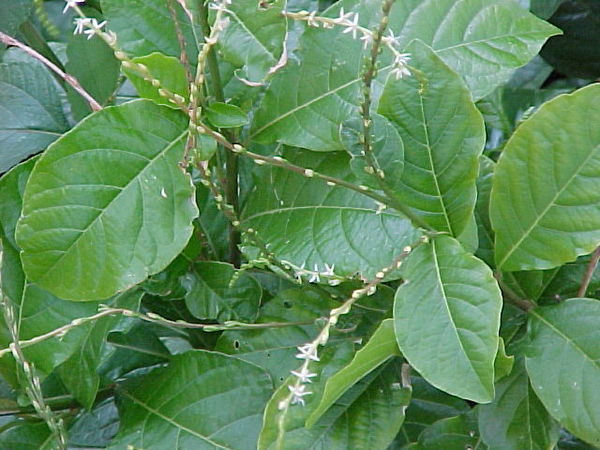
Petiveria
Petiveria alliacea · Plant · Phytolaccaceae
Petiveria suits individuals with paralytic conditions, numbness, and coldness sensations, especially those with alternating moods of gaiety and sadness. The remedy is associated with conjunctivitis and paraplegia.
Key symptoms
- Numbness and paralytic sensations in limbs
- Weariness and heaviness of eyelids
- Cold saliva and internal coldness felt inside bones
- Excessive gaiety followed by sadness and tears
- Head feels heavy as if bound with a warm cloth
- Head feels as if it would split
- Headache better from motion
Worse (aggravation)
- Movement in general
- Morning on waking and rising
- After breakfast and during and after dinner
- Bending backward
Better (amelioration)
- Headache better from motion

Petiveria tetrandra (Gom.). Erva de Pipi. N. O. Phytolaccaceæ. Trituration of fresh root.
Clinical
Conjunctivitis. Paralysis. Paraplegia.
Characteristics
Mure proved Petiv., and I have given his terminology. Allen says in a note that it is probably identical with the Mexican and West Indian species, P. alliacea. Mure's figure corresponds to this, and he says the roots, which are branching and fibrous, "smell strongly of garlic." P. alliac. (according to Treas. of Bot.) is called "Guinea-hen Weed" in West Indies," and "Raiz de Guine" in Brazil, in which country "it is put into warm baths to restore motion to paralysed limbs." Mure does not mention these names or this fact; but his proving brings out some strongly confirmative symptoms in numbness and paralytic sensations; weariness and weight of eyelids. Cold saliva; internal coldness; coldness inside bones were experienced. The symptoms in general were < by movement; in the morning on waking and on rising; after breakfast and during and after dinner; bending backward.
Classical texts are in the public domain. Educational reference only — not medical advice.
