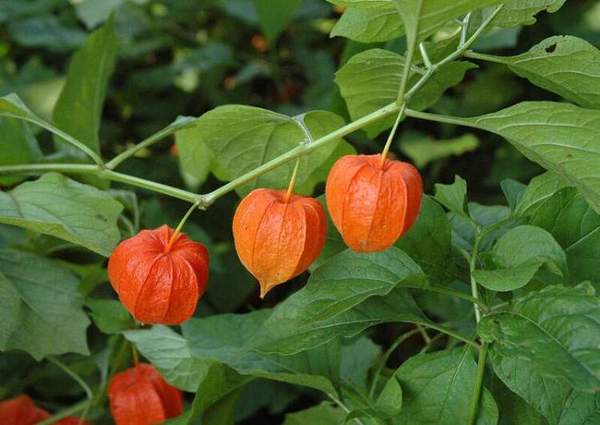
Physalis alkekengi
Alkekengi officinarum · Plant · Solanaceae
Physalis alkekengi suits individuals with urinary complaints, particularly lithiasis, polyuria, and incontinence, combined with muscular weakness and languor. It is also indicated in facial paralysis and neurological weakness.
Key symptoms
- Acrid, foul urine with polyuria
- Sudden inability to retain urine in women; nocturnal enuresis
- Throbbing heavy pain over eyes in forehead
- Vertigo with hazy feeling and memory weakness
- Stiff limbs with tonic cramps and paralysis
- Languor and muscular weakness
- Chilly in open air; feverish in the evening
Worse (aggravation)
- Cold and damp evening
- After becoming heated

Alkekengi-Winter Cherry (PHYSALIS - SOLANUM VESICARIUM)
Marked urinary symptoms confirming its ancient uses in gravel, etc. Lithiasis; marked diuretic action. Languor and muscular weakness.
Head
Vertigo, hazy feeling; memory weakness; desire to talk constantly. Throbbing pain, heavy over eyes in forehead. Facial paralysis. Dryness of mouth.
Extremities
Stiff limbs; tonic cramps. Paralysis. When walking, every jar seems repeated in the head.
Fever
Chilly in open air. Feverish in evening. Sweat during stool, with creeping sensation, with abundant urine. Pain in liver during, fever.
Respiratory
Cough. Hoarse voice; throat irritated; chest oppressed, causing insomnia. Stabbing in chest.
Urinary
Acrid, foul, retained, abundant. Polyuria. Sudden inability to hold it in women. Nocturnal incontinence. Enuresis.
Skin
Excoriation between fingers and toes; pustules on thighs; nodes on forehead.
Modalities
Worse, cold camp evening. After going heated.
Dose
Tincture to third attenuation. The juice of the berries is used in dropsical conditions and irritable bladder.

Physalia pelagica. Portuguese man-of-war. N. O. Physophoridæ.
Clinical
Urticaria.
Characteristics
G. Bennett was stung by the animal on second and ring fingers. The sensation was as if stung by a nettle, succeeded in a few minutes by violent aching, affecting the finger-joints and spreading up arm, involving elbow-joint. The pain was < by application of water; < by motion; and < when joints became affected. The pain spread to the shoulder-joint and pectoral muscles causing oppression of breathing. After half an hour the symptoms began to abate, leaving numbness of the limb and a vesicle at the spot which was stung.
Relations
Compare: Medusa, Urt. ur.
Classical texts are in the public domain. Educational reference only — not medical advice.
