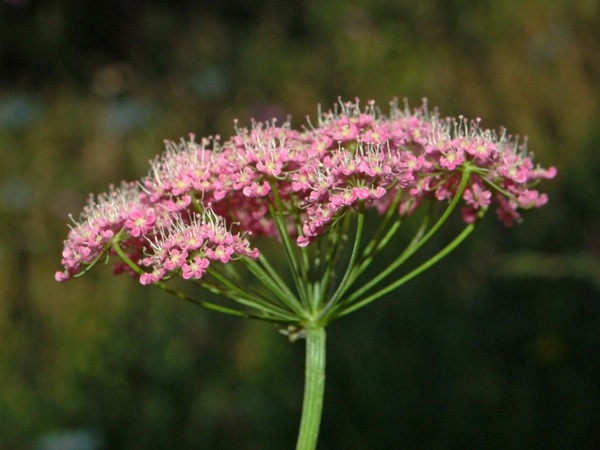
Pimpinella
Pimpinella saxifraga (or P. anisum) · Plant · Apiaceae
Pimpinella suits chilly, sensitive individuals who are very susceptible to drafts, with head rush, epistaxis, and pain extending from one part to another. It is indicated in conditions with marked chilliness, tinnitus, lumbago, and stiff neck.
Key symptoms
- Marked chilliness in the back even in a warm room, worse from opening a window
- Cold sensation in the occiput as from a cutting wind behind
- Rush of blood to the head followed by nosebleed in the afternoon
- Whizzing in the head and roaring in the ears
- Vertigo on rising in the morning
- Pains extending from above downward (temples to nape, forehead to eyes)
- Great drowsiness with desire to take a deep breath, which is difficult
Worse (aggravation)
- Morning on rising (vertigo, sweat)
- Afternoon (heat and rush of blood to head)
- Chewing, reading, writing, or reflecting
- Rest (weary pain in limbs)
- Standing or stooping
- Walking
- Opening a window
- In a warm room
Better (amelioration)
- Motion (headache better)

Pimpinella saxifraga. Burnet saxifrage. Bibernell. N. O. Umbelliferæ. Tincture of the fresh root.
Clinical
Chilliness. Corns. Epistaxis. Fever. Headache. Lumbago. Stiff neck. Tinnitus.
Characteristics
The majority of the symptoms of Pimpinella were obtained by Schelling from chewing the fresh root. The rest were contributed by Berridge, who proved the 1x on a man. Chilliness was a marked symptom, chilly in the back even in a warm room, and much < if a window was opened. Sensitive to draughts. Sensation of coldness in occiput as from a cutting wind behind. Cold stream from hip and into right leg. The pains and sensations extended from one part to another, principally from above downward and from before backward (temples to nape; forehead to eyes; nape to shoulders), from within outward; or alternated between different parts. There was rush of blood to head, followed by nose-bleed; whizzing in head, roaring in ears. Sinking sensation in intestines. Weariness and falling asleep of parts rested on. Frequent …
Classical texts are in the public domain. Educational reference only — not medical advice.
