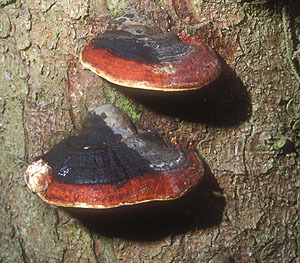
Polyporus pinicola
Fomitopsis pinicola · Fungus · Fomitopsidaceae
Polyporus Pinicola suits patients with intermittent febrile states combined with liver and spleen affections, enlarged tonsils, and deep bone pains in the shins. The despondency and aching distress in many parts are characteristic features of the proving.
Key symptoms
- Intermittent, remittent, and bilious fevers with headache
- Yellow tongue and constant nausea with faintness at epigastrium
- Deep, dull, severe pain in shin bones preventing sleep
- Enlarged tonsils with dysphagia and constant inclination to swallow
- Neuralgic pains in head, face, and temples
- Pain in liver and spleen with diarrhea or constipation and piles
- Stiffness of back and fingers
- Restlessness at night from pain in wrists and knees
Worse (aggravation)
- By motion

Pine Agaric
Useful in intermittent, remittent and bilious fevers, with headache, yellow tongue, constant nausea, faintness at epigastrium, and constipation. Similar to its botanical relative, Polyp officinalis, or Boletus laricis, q.v. Deep dull, severe pain in shin bones, preventing sleep.
Fever
Great lassitude, congestion of head, with vertigo, face hot and flushed, prickling sensation all over; restless at night from pain in wrists and knee; rheumatic pains; profuse perspiration. Headache about 10 am, with pain in back, ankles and legs increasing until 3 pm, then gradually better.

Polyporus pinicola. Pine agaric. N. O. Fungi. Tincture of fresh plant.
Clinical
Anus, prolapse of. Constipation. Hæmorrhoids. Intermittent fever. Liver, affections of. Malar bone, pain in. Prolapsus ani. Rheumatism. Spleen, affections of. Tonsils, enlarged.
Characteristics
The Pine agaric, Pol. pin., like the Larch agaric, Polyporus officinalis (described in this work as Boletus Laricis, its older and less correct name), was proved by Dr. Burt. The symptoms of the two have a very close resemblance, and many are common to both. Despondency; aching distress in many parts; stiffness of back; of fingers; enlarged tonsils with dysphagia and constant inclination to swallow; neuralgic pains in head, face, and temples; pain in liver and spleen with diarrhœa or constipation and piles─these are the chief features of the proving. Hale says it is a remedy for ague in the Middle and Southern States, taken during the intermission macerated in whisky. Quotidian fevers, he says, are most suited to it. The symptoms are < by motion; by walking; > by rest. < In damp air. < After stool.

Chill, Fever, and Sweat
Chills beginning between shoulder.
Classical texts are in the public domain. Educational reference only — not medical advice.
