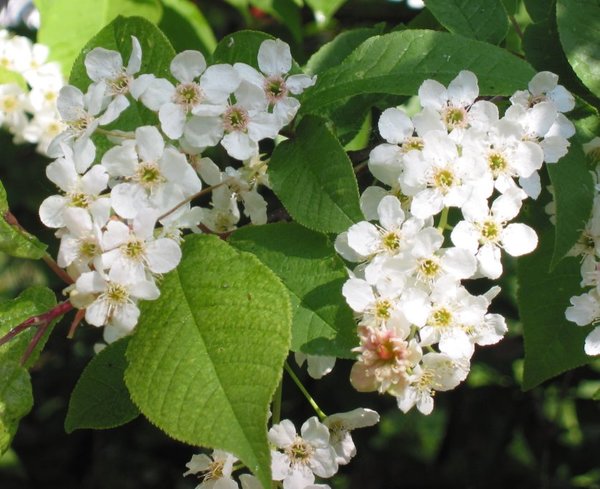
Prunus padus
Plant · Rosaceae
Prunus Padus is indicated in patients with pressing head pains, rectal sticking, and tumultuous cardiac action. The remedy produces heaviness and confusion of the head with pressive pains in the forehead, occiput, and beneath the sternum.
Key symptoms
- Pressive headache with dull pressure in forehead; head heavy and confused
- Pressure at base of brain; heaviness of occiput extending transversely
- Sticking pain in rectum
- Pressive pain beneath the sternum
- Tumultuous, violent heart-beats
- Pupils much dilated
- Pulsating feeling under skin at root of nose, with visible trembling
Worse (aggravation)
- By pressure
- Sitting
- Standing
- Stooping
- Walking

Cerasus padus. Padus racemosa. P. vulgaris. Bird cherry. N. O. Rosaceæ. Tincture of leaves and bark of small twigs collected when in blossom.
Clinical
Headache. Heart, affections of. Rectum, pains in.
Characteristics
Prunus padus was proved by Lembke. The plant is now classed with the Cherries, but I retain it under its old name. "In Scotland it is known as the Hayberry. The fruit is small, black, and nauseous to the taste. In the North of Europe it enters into the formation of a palatable liqueur; the juice is also expressed and drunk with milk, while the residue of the fruit is kneaded up into cakes" (Treas. of Bot.). Lembke's proving brought out marked symptoms in head, rectum, chest, and heart. Pains were pressive in head, sticking in rectum, pressive beneath sternum. Heart-beats were tumultuous. The symptoms were < by pressure; sitting; standing; stooping, and walking.
Classical texts are in the public domain. Educational reference only — not medical advice.
