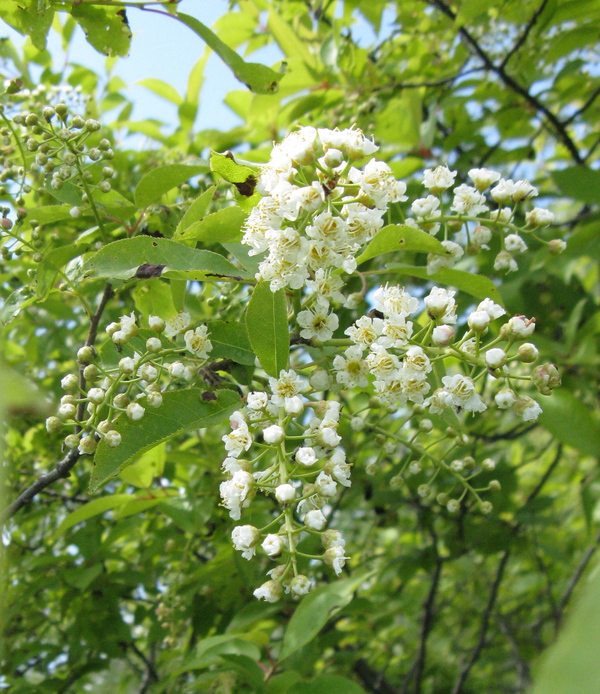
Prunus virginiana
Plant · Rosaceae
Prunus Virginiana suits patients with cardiac weakness and irregular heart action combined with sympathetic respiratory and digestive symptoms. It is particularly useful in elderly patients with weak digestion, post-influenzal cough, and right heart dilatation.
Key symptoms
- Irregular, intermittent action of the heart with deficient impulse
- Dilatation of right heart from chronic bronchitis or mitral stenosis
- Persistent cough worse at night on lying down
- Spasmodic and asthmatic coughs with wheezing in trachea and bronchi
- Dyspepsia with acidity, slow digestion, and loss of appetite
- Pyrosis; cough sympathetic with heart troubles
Worse (aggravation)
- At night on lying down — persistent cough worse

Cerasus virginiana. Choke-cherry. N. O. Rosaceæ. Cold infusion or tincture of inner bark. Solution of concentrated resinous extract, Prunin.
Clinical
Acidity. Anorexia. Dyspepsia. Heart, weakness of; hypertrophy of; irritable. Pyrosis.
Characteristics
Hale says the cold infusion of Prun. virg. has been used from time immemorial for irregular, intermittent action of the heart with deficient impulse. Hale adds cough, sympathetic with heart troubles; dyspepsia with tendency to acidity; slow digestion; loss of appetite and pyrosis. Excessive doses have caused "dull, heavy feeling in head" like that of the other Pruneæ. Seymour Tayler (H. W., xxx. 80) says it is especially useful in dilatation of right heart, whether as a result of chronic bronchitis or of mitral stenosis. Laidlaw (N. Y. Med. Times, xxiv. 290) gives as a particular indication: Persistent coughs acquired in winter, < at night on lying down. Also: Spasmodic and asthmatic coughs, attacks of wheezing and whistling in trachea and large bronchi; …
Classical texts are in the public domain. Educational reference only — not medical advice.
