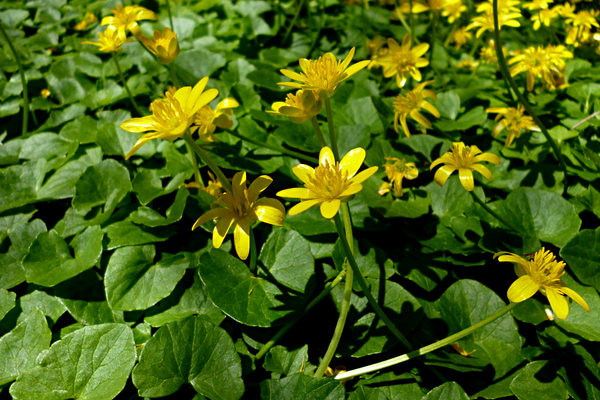
Ranunculus ficaria
Ficaria verna · Plant · Ranunculaceae
Key symptoms
- Haemorrhoids, both internal and external

Ficaria ranunculoides. Scrophularia minor. Lesser Celandine. Pilewort. N. O. Ranunculaceæ. Tincture of whole fresh plant.
Clinical
Hæmorrhoids.
Characteristics
The "Lesser Celandine" is not botanically related to the true Celandine, Chelidonium magus, or to the Figwart tribe (Scrophularia), though it is named in the old books Scrophularia minor. R. ficaria is in all respects a true Crowfoot except that it has three deciduous instead of five persistent sepals, and nine petals instead of five. "It groweth in medows, by commonwaies, by ditches and trenches, and it is common everywhere, in moist and dankish places. It cometh forth about the Calends of March, and floureth a little after: it beginneth to fade away in April, it is quite gone in May, afterwards it is hard to be found, yea scarcely the root" (Gerarde). Gerarde's cut of the plant shows whence the idea of its use in piles was derived─the cluster of small tubers growing around the crown of the root bears a striking resemblance to a bunch of piles. Sir …
Classical texts are in the public domain. Educational reference only — not medical advice.
