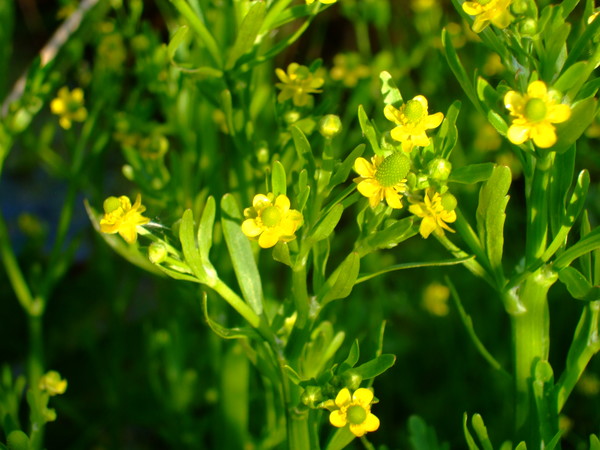
Ranunculus sceleratus
Plant · Ranunculaceae
Ranunculus Sceleratus suits individuals with periodical complaints, right-sided affections of the chest and extremities, and a marked tendency to vesicular skin eruptions with acrid exudate. The constitutional type shows indolence and aversion to mental labour, with sadness in the evening and restless sleep disturbed by frightful dreams of corpses and serpents.
Key symptoms
- Mapped or peeled tongue with smarting, burning, and rawness
- Face as if covered with cobwebs
- Sensation as if a plug lodged in the umbilicus
- External sensitiveness of chest and sternum, worse touch and deep inspiration
- Gnawing boring pains, especially on right side and in the toes
- Sudden stitches in right big toe passing into burning; painful corns
- Vesicular eruptions with acrid thin discharge; pemphigus
- Pain with fainting; convulsive twitches of limbs
- Gnawing in the left palm (peculiar laterality)
Worse (aggravation)
- Touch and pressure
- Motion and deep inspiration
- Evening and after midnight
- Letting the limb hang down
- Open air
- After a meal
Better (amelioration)
- After midnight (pains)

Marsh Buttercup
Is more irritating than others of this botanical family, as seen in the skin symptoms. Boring, gnawing pain very marked. Pemphigus. Periodical complaints. Fainting with pain in stomach.
Head
Gnawing in one spot left of vertex. Frightful dreams about corpses, serpents, battles, etc. Fluent coryza, with sneezing and burning micturition.
Mouth
Teeth and gums sensitive. Tongue mapped denuded patches. Mouth sore and raw. Burning and rawness of tongue.
Abdomen
Sensation of a plug behind umbilicus. Pain over region of liver, with sensation as if diarrhœa would set it. Pressure as of a plug behind right false ribs; worse, deep inspiration.
Chest
Integument sensitive. Bruised pain and weakness in the chest every evening. Sore burning behind xiphoid cartilage.
Skin
Vesicular eruption, with tendency to form large blisters. Acrid exudation, which makes surrounding parts sore.
Extremities
Boring pain. Sudden burning sticking in right toe. Corns, with burning and soreness, especially when feet hang down. Gout in fingers and toes.
Dose
First to third potency.

Ranunculus sceleratus. Marsh crowfoot. Celery-leaved crowfoot. N. O. Ranunculaceæ. Tincture of whole plant.
Clinical
Aneurism. Anus, itching in. Chest, sternum, pain behind. Corns. Coryza. Diphtheria. Earache. Glossitis. Gout. Hæmorrhoids. Herpes; zoster. Liver, pain in. Neuralgia. Nose, ulceration of. Pemphigus. Quinsy. Sternum, pains in. Stomatitis. Toes, affections of. Tongue, peeling, mapped. Varicosis.
Characteristics
The best-known characteristic of R. sc. (which is a well-proved drug) is the mapped or peeled tongue, and when this is associated with smarting, burning, and rawness R. sc. will be the remedy. R. sc. has the acridity of all the Ranunculi, causing burning in mouth, throat, stomach, chest, urethra, and other parts. It causes blisters on the skin which leave a raw surface with acrid discharge. It has cured pemphigus in a three-months old infant, with continual thirst, weak, intermitting pulse, trembling, with anxious features. After Ars. 4 had caused improvement, R. sc. 3 healed …

Phatak's chapter on Ranunculus sceleratus is available in the app.
Read Phatak in the appClassical texts are in the public domain. Educational reference only — not medical advice.
