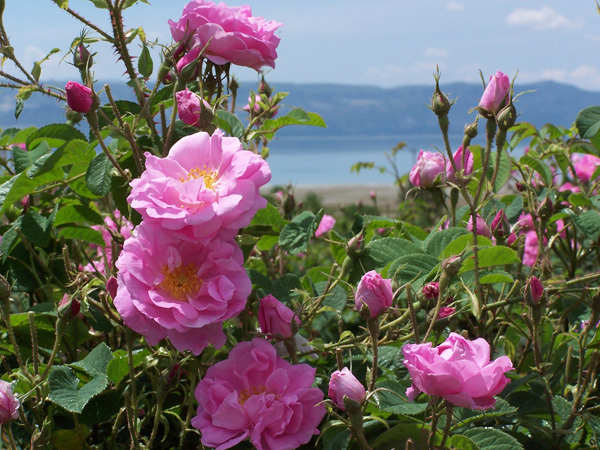
Rosa damascena
Plant · Rosaceae
Rosa damascena is suited to patients at the very beginning of hay-fever or rose-cold, particularly when there is involvement of the Eustachian tube with some degree of deafness and tinnitus. It is indicated in the early stage before the full catarrhal picture develops.
Key symptoms
- Hay-fever at its beginning, especially with Eustachian tube involvement
- Hardness of hearing with tinnitus
- Eustachian catarrh

Damask Rose
Useful in the beginning of hay-fever, with involvement of Eustachian tube.
Ear
Hardness of hearing; tinnitus. Eustachian catarrh (Hydr; Merc dulc).
Relationship
Compare: in hay-fever: Phleum pratense--Timothy grass--(Hay-fever with asthma; watery coryza, itching of nose and eyes; frequent sneezing, dyspnœa. Use 6-30 potency. Rabe). Succin acid; Sabad; Euph; Psor; Kali hyd; Naphth.
Dose
Lower potencies.

Damask or Damascus Rose.─N. O. Rosaceæ. Tincture of the flowers (?).
Clinical
Hay-fever.
Characteristics
Farrington mentions that R. dam. was introduced by Jeanes as a remedy at the beginning of rose-cold when the Eustachian tube is involved, with some degree of deafness and tinnitus.
Classical texts are in the public domain. Educational reference only — not medical advice.
