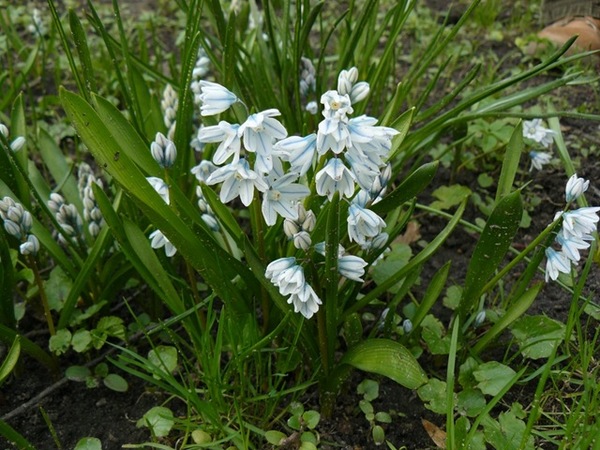
Scilla maritima
Drimia maritima (formerly Urginea maritima) · Plant · Asparagaceae
Scilla maritima suits patients with respiratory and urinary affections occurring together, the characteristic feature being involuntary urination accompanying every cough or sneeze. The remedy has strong diuretic and cardiac effects similar to Digitalis, making it useful in dropsy and heart conditions. It has been used since ancient times on the Mediterranean coast.
Key symptoms
- Spasmodic cough with sneezing and profuse involuntary urination accompanying every cough
- Profuse urination with strong diuretic action
- Asthma and bronchitis with catarrhal symptoms
- Palpitation of the heart
- Coryza with splenic affections
- Whooping-cough with urinary incontinence
- Cardiac action like Digitalis; useful in dropsy
Worse (aggravation)
- Morning
- Cold air
- Wet weather
Better (amelioration)
- Rest
- Warmth

Scilla maritima. Squill. Sea Onion. (Red variety.) N. O. Liliaceæ. Tincture of fresh bulb. Acetum.
Clinical
Angina pectoris. Asthma; dry; splenic. Bright's disease. Bronchitis. Conjunctivitis, phlyctenular. Coryza. Cough, catarrhal. Diabetes; insipidus. Dropsy; splenic. Eyes, affections of; watering of. Fidgets. Heart, palpitation of. Hydrothorax. Measles. Pleurisy. Pneumonia. Spleen, affections of. Spleen-cough. Toothache. Urine, excessive. Whooping-cough. Worms.
Characteristics
The genus Scilla is distinguished from Allium by having the flowers inserted one above the other on the scape, and from Ornithogalum by having the petals deciduous. Scilla maritima grows on the shores of the Mediterranean Sea, and has had a place in medicine from the most ancient times. If much handled it irritates the skin; and in large doses excites nausea, strangury, bloody urine and hæmorrhoids; fatal inflammation, gangrene of stomach and bowels; in small doses, promotes expectoration and urine; in large doses, …
Classical texts are in the public domain. Educational reference only — not medical advice.
