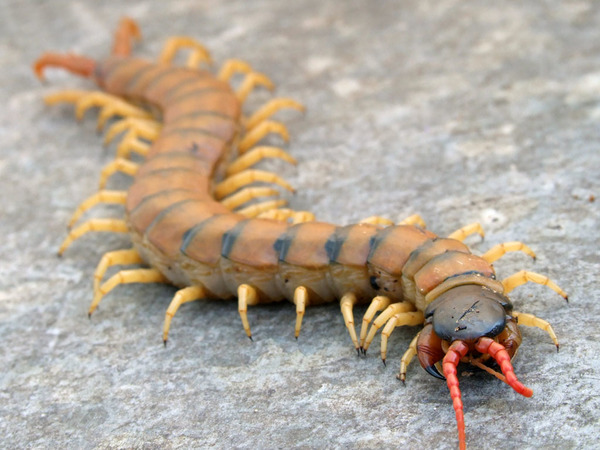
Scolopendra
Scolopendra (centipede) · Animal · Scolopendridae
Scolopendra is indicated in conditions following venomous bites or stings with severe local inflammation progressing to gangrene, accompanied by systemic symptoms of vomiting and precordial anxiety. A peculiar symptom is the complete absence of perspiration on the right arm for months following the bite.
Key symptoms
- Swelling, pain, inflammation, and gangrene at the site of bite resembling malignant pustule
- Vomiting of pale yellow glairy matter at short intervals with increasing violence
- Precordial anxiety
- Arm greatly swollen with erysipelatous blush extending half over arm
- No perspiration on right arm for three months after bite
- Vertigo and headache
- Large red spot becoming black gangrene at bite site
Worse (aggravation)
- which was described by the child as being all over (from S

Scolopendra morsitans (and other species). Centipede. N. O. Chilopoda (sub-ord. Scolopendridæ). Tincture of living animals.
Clinical
Angina pectoris. Convulsions. Malignant pustule.
Characteristics
The effects of Centipede bites have been observed on several persons. Swelling, pain, inflammation, and gangrene of the bitten part, with appearance like malignant pustule in one case, were constant symptoms. Vomiting and præcordial anxiety occurred, and in one fatal case the paroxysms of vomiting increased in intensity till the child in a convulsive struggle ceased to breathe. A symptom worth noting is "No perspiration of the right arm for three months."
Classical texts are in the public domain. Educational reference only — not medical advice.
