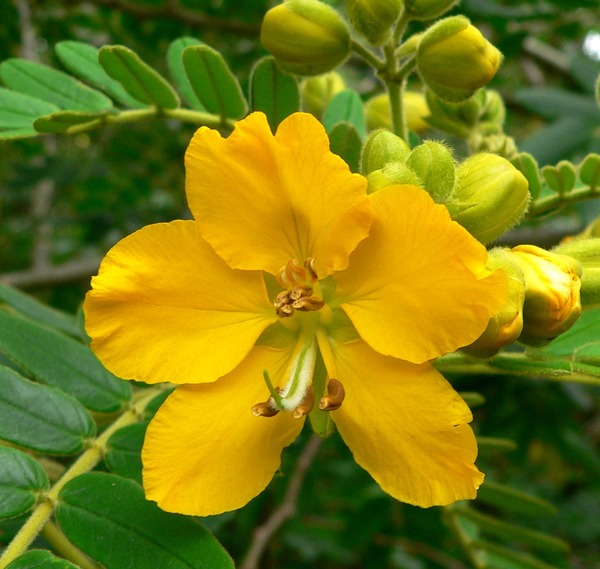
Senna
Senna alexandrina · Plant · Fabaceae
Senna suits patients with a broken-down system featuring constipation with flatulent colic, muscular weakness, and disturbances of nitrogen metabolism including oxaluria and acetonuria. It acts as a tonic when there is general debility with constipated bowels and enlarged tender liver. Ebullitions of blood at night are characteristic.
Key symptoms
- Infantile colic in children who seem full of wind
- Constipation with colic and flatulence
- Fluid yellowish stools with pinching pains before
- Greenish mucus stools with never-get-done sensation
- Burning in rectum with strangury of bladder
- Liver enlarged and tender with hard dark stools, loss of appetite, and coated tongue
- Oxaluria with excess of urea, hyperazoturia, and acetonuria
- Acetonaemia with prostration and fainting
Worse (aggravation)
- After meals
- Night (ebullition of blood, sleeplessness)

Cassia Acutifolia
Is of much use in infantile colics when the child seems to be full of wind. Oxaluria, with excess of urea; increased specific gravity. Where the system is broken down, bowels constipated, muscular weakness, and waste of nitrogenous materials, Senna will act as a tonic. Ebullitions of blood at night. Acetonæmia, prostration, fainting, constipation with colic a flatulence. Liver enlarged and tender.
Stool
Fluid yellowish, with pinching pains before. Greenish mucus; never-get-done sensation (Merc). Burning in rectum, with strangury of bladder. Constipation, with colic and flatulence. Liver enlarged and tender, stools hard and dark, with loss appetite, coated tongue, bad taste, and weakness.
Urine
Specific gravity and density increased; hyperazoturia, oxaluria, phosphaturia, and acetonuria.
Relationship
Compare: Kali carb; Jalapa.
Antidotes: Nux; Cham.
Dose
Third to sixth potency.

The leaflets of several species of Cassia: C. obovata, Alexandrian Senna, is the principal. N. O. Leguminosæ. Trituration or tincture of the dried leaves.
Clinical
Colic; flatulent, of infants. Exhaustion. Nitrogenous waste. Sleeplessness. Sneezing, with heat.
Characteristics
Used as a laxative in ordinary practice, Senna has proved an excellent remedy in the colic of infants, with incarcerated flatulence and sleeplessness. Infantile colic when the patient seems full of wind.─The symptoms of the Schema are mostly derived from overdosings. A peculiar symptom is: "Repeated sneezing, which caused heat (especially of hands), exhaustion, and panting breathing," Exhaustion is typical of Senna. Farrington says it is one of the best remedies in the materia medica for "simple exhaustion with excess of nitrogenous waste." The exhaustion is exemplified in the sinking immediately after meals. The pods caused a nasty unclean smell from the body of a woman taking them for constipation (R. T. C.).
Classical texts are in the public domain. Educational reference only — not medical advice.
