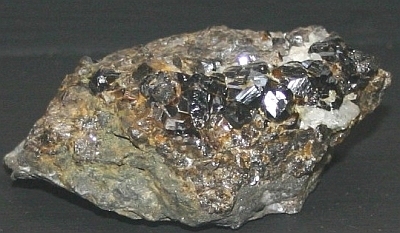
Stannum metallicum
Tin (Sn) · Tin · Mineral
People who benefit most from Stannum met. are suspicious, anxious, uneasy, and sad, possibly with fixed ideas. They may be weak, debilitated, and unable to talk or move, and feel worse during the day.
Stannum met. is used for exhaustion after chronic respiratory problems, or for nervous system disorders. It may be given for weakness in the chest, during or after a serious infection such as bronchitis or pneumonia. The weakness leaves the lungs and bronchi susceptible to inflammation or serious illness, including asthma.
Key symptoms
- Great debility of chronic bronchial and pulmonary conditions
- Profuse muco-purulent expectoration on a tubercular basis
- Talking causes very weak feeling in throat and chest
- Pains that come and go gradually
- Smell of cooking causes vomiting
- Bearing-down sensation; prolapsus with weak sinking feeling in stomach
- Colic around navel with feeling of emptiness; relieved by hard pressure
- Paralytic weakness; spasms; paralysis
- Sad, anxious, discouraged; dread of seeing people
Worse (aggravation)
Better (amelioration)

Tin (STANNUM)
Chief action is centered upon the nervous system and respiratory organs. Debility is very marked when Stannum is the remedy, especially the debility of chronic bronchial and pulmonary conditions, characterized by profuse muco-purulent discharges upon tuberculosis basis. Talking causes a very weak feeling in the throat and chest. Pains that come and go gradually, call unmistakably for Stannum. Paralytic weakness; spasms; paralysis.
Mind
Sad, anxious. Discouraged. Dread of seeing people.
Head
Aching in temples and forehead. Obstinate acute coryza and influenza with cough. Pain worse motion; gradually increasing and decreasing as if constricted by a band; forehead feels pressed inwards. Jarring of walking resounds painfully in head. Drawing pains in malar bones and orbits. Ulceration of ringhole in lobe of ear.
Throat
Much adhesive mucus, difficult to detach; efforts to detach cause nausea. Throat dry and stings.
Stomach
Hunger. Smell of cooking causes vomiting. Bitter taste. Pain better pressure, but sore to touch. Sensation of emptiness in stomach.
Abdomen
Cramp-like colic around navel, with a feeling of emptiness. Colic relieved by hard pressure.
Female
Bearing-down sensation. Prolapsus, with weak, sinking feeling in stomach (Sep). Menses early and profuse. Pain in vagina, upward and back to spine. Leucorrhœa, with great debility.
Respiratory
Hoarse; mucus expelled by forcible cough. Violent, dry cough in evening until midnight. Cough excited by laughing, singing, talking; worse lying on right side. During day, with copious green, sweetish, expectoration. Chest feels sore. Chest feels weak; can hardly talk. Influenzal cough from noon to midnight with scanty expectoration. Respiration short, oppressive; stitches in left side when breathing and lying on same side. Phthisis mucosa. Hectic fever.
Sleep
Sleeps with one leg drawn up, the other stretched out.
Extremities
Paralytic weakness; drops things. Ankles swollen. Limbs suddenly give out when attempting to sit down. Dizziness and weakness when descending. Spasmodic twitching of muscles of forearm and hand. Fingers jerk when holding pen. Neuritis. Typewriters' paralysis.
Fever
Heat in evening; exhausting night-sweats, especially towards morning. Hectic. Perspiration, principally on forehead and nape of neck; debilitating; smelling musty, or offensive.
Modalities
Worse, using voice (i.e, laughing, talking, singing), lying on right side, warm drinks. Better, coughing or expectorating, hard pressure.
Relationship
Complementary: Puls.
Compare: Stann iod. 3x (Valuable in chronic chest diseases characterized by plastic tissue changes). Persistent inclination to cough, excited by tickling dry spot in the throat, apparently at root of tongue. Dryness of throat. Trachial and bronchial irritation of smokers. Pulmonary symptoms; cough, loud, hollow, ending with expectoration (Phellandrium). State of purulent infiltration. Advanced phthisis sometimes when Stann jod has not taken effect, an additional dose of Iodine in milk caused the drug to have its usual beneficial effect (Stonham). Compare: Caust; Calc; Sil; Tuberc; Bacil; Helon. Myrtus chekan (chronic bronchitis, cough of phthisis, emphysema, with gastric catarrhal complications and thick, yellow difficult sputum. Old persons with weakened power of expectoration).
Dose
Third to thirtieth potency.
Stannum is especially suited to persons who have long been growing feeble.
This is so striking that it may be said that some deep seated constitutional state must be present. There is a history of increasing weakness, cachexia, catarrhal conditions, and neuralgia dating back over years. There is sensitiveness to pain and an increasing aversion to doing anything, aversion to business in a man, and in a woman, to going about her housework; always tired, all work becomes irksome.
The countenance becomes increasingly sallow, even to a waxy, cachectic aspect. Once who has been growing weaker and develops neuralgia of the face, eyes, stomach, and intestines; not the shooting, tearing pains often described, but a pain beginning gradually, increasing steadily and then diminishing gradually.

Stannum. Tin. Sn. (A. W., 118.8) Trituration of the pure metal.
Clinical
Anæmia. Asthma. Bronchitis. Chilblains. Colic. Consumption. Convulsions. Cramps. Debility. Dentition. Diaphragm, pains in. Dyspepsia. Ears, ring-holes, ulceration of. Epilepsy. Epistaxis. Gastralgia. Hæmatemesis. Hæmoptysis. Headache. Hectic fever. Hemiplegia. Hypochondriasis. Hysteria. Lachrymal fistula. Lachrymal sac, suppuration of. Milk, altered. Nails, splitting. Neuralgia. Neurasthenia. Opisthotonos. Paralysis. Phthisis pituitosa. Ptosis. Sleeplessness. Styes. Tapeworm. Trachea, affections of. Uterus, prolapse of. Vagina, prolapse of. Worms.
Characteristics
Stannum is the Jupiter of the alchymists. "The ancients have recorded wonderful cures of the most serious diseases with Tin," says Hahnemann, but in his day, until he proved it, its only use was as a vermifuge. Alston obtained indirectly from "a woman of Leith in Scotland" this prescription, of which he has witnessed the efficacy in a case of tapeworm: "Take an ounce and …
Tin. (The Element.)
Extreme exhaustion of mind and body. Sinking, empty, all-gone sensation in stomach (Chel., Phos., Sep.). Sad, despondent, feels like crying all the time, but crying makes her worse (Nat. m., Puls., Sep.); faint and weak, especially when going down stairs; can go up well enough (Bor., - rev. of Calc.). Headache or neuralgia; pains begin lightly and increase gradually to the highest point and then gradually decline (Plat.). Colic: > by hard pressure, or by laying abdomen across knee or on shoulder (Col.); lumbrici; passes worms. Menses; too early, too profuse; sadness before; pain in malar bones, during. Leucorrhoea; great debility; weakness seems to proceed from chest (from abdomen, pelvis, Phos., Sep.). Prolapsus, worse during stool (with diarrhoea, Pod.); so weak she drops into a chair instead of sitting down. While dressing in the morning has to sit down several times to rest. Nausea and vomiting; in the morning; from the odor of cooking food (Ars., Colch.). When singing or using the …
Head
Neuralgic headache, begins lightly and increases gradually to a great height and then gradually declines.
Female Sexual Organs
Leucorrhoea with marked loss of strength, which seems to centre in the chest, < by reading or talking aloud.
Respiratory Organs
Cough with profuse expectoration of greenish, sweetish, or salty mucus, and great sensation of weakness in chest.
Respiratory Organs
Great sense of weakness in the chest, reading or talking produces great exhaustion.
Generalities
Pains begin lightly and increase gradually to the highest points, and gradually decline.
-
Neuralgic headache. begins lightly and increases gradually to its highest point, and then gradually declines.
-
Hoarseness and roughness in the larynx, with great weakness in the chest.
-
Great accumulation of mucus in the trachea, easily detached by a slight cough.
-
Respiratory diseases characterized by Profuse mucus or muco-purulent expectoration, sometimes expectoration of balls of sweetish mucus.
-
Reading aloud or talking produces great exhaustion.

Phatak's chapter on Stannum metallicum is available in the app.
Read Phatak in the appClassical texts are in the public domain. Educational reference only — not medical advice.
