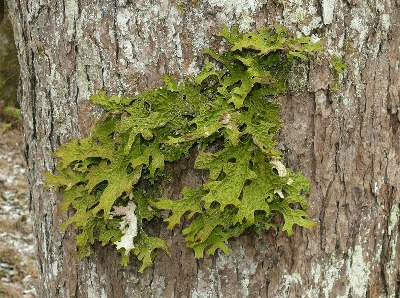
Sticta pulmonaria
Lobaria pulmonaria · tree lungwort, lung lichen, lung moss, lungwort lichen, oak lungs or oak lungwort,Lobaria pulmonaria · Plant · Lobariaceae
Sticta is most effective for lively people who tend to be loquacious, and who may feel as if they are floating on air. They may experience sleeplessness or confusion. Sticta is most appropriate for respiratory problems associated with hay fever or other allergic reactions, influenza, or bronchitis. There may be repeated sneezing, which tends to become worse at night, then dries suddenly. Sticta may also be used for pneumonia, and for chronic catarrh that is difficult to expel and causes stuffiness, a dull, heavy feeling in the head, and a dry, tickly throat.
Key symptoms
- Feeling of fullness at the root of the nose
- Dryness of nasal membrane; constant need to blow nose but no discharge
- Dry scabs in nose especially in evening and night
- Hay-fever with incessant sneezing
- Catarrhal headache before discharge appears
- Dry hacking cough during night
- Rheumatic stiffness of neck
- Feels as if floating in air; confusion of ideas
- Dull heavy pressure in forehead and root of nose
Worse (aggravation)
Better (amelioration)

Lungwort (STICTA)
Offers a set of symptoms like coryza, bronchial catarrh and influenza, together with nervous and rheumatic disturbances. There is a general feeling of dullness and malaise, as when a cold is coming on; dull, heavy pressure in forehead, catarrhal conjunctivitis, etc. Rheumatic stiffness of neck.
Mind
Feels as if floating in air (Datura arborea; Lac. Can). Confusion of ideas; patient must talk.
Head
Dull headache, with dull heavy pressure in forehead and root of nose. Catarrhal headache before discharge appears. Burning in eyes and soreness of balls. Sensation as if scalp were too small. Burning in eyelids.
Nose
Feeling of fullness at the root of the nose (Nux). Atrophic rhinitis (Calc fluor). Dryness of nasal membrane. Constant need to blow the nose, but no discharge. Dry scabs, especially in evening and night. Hay-fever; incessant sneezing (Sabad).
Female
Scanty flow of milk.
Abdomen
Diarrhœa; stools profuse, frothy; worse, morning. Urine increased, with soreness and aching in bladder.
Respiratory
Throat raw; dropping of mucus posteriorly. Dry, hacking cough during night; worse, inspiration. Tracheitis, facilitates expectoration. Loose cough in morning. Pain through chest from sternum to spiral column. Cough after measles (Sang); worse towards evening and when tired. Pulsation from right side of sternum down to abdomen.
Extremities
Rheumatic pain in right shoulder joint, deltoid, and biceps. Swelling, heat, redness of joints. Spot of inflammation and redness over affected joint. Pain severe and drawing. Chorea-like spasms; legs feel floating in air. Housemaid's knee (Rhus; Kali hyd; Slag). Shooting pains in knees. Joints and neighboring muscles red, swollen, painful. Rheumatic pains precede catarrhal symptoms.
Modalities
Worse, sudden changes of temperature.
Relationship
Compare: Datura arborea-Bougmancia candida (cannot concentrate thoughts; brain floats in thousands of problems and grand ideas. Floating sensation as if ideas were floating outside of brain. Headache, heartburn. Burning sensation around cardiac and of stomach, extending to œsophagus with sense of constriction. Heat and fullness over liver region). Cetraria-Iceland Moss (chronic diarrhœa, phthisis, bloody expectoration. Is used as a decoction and boiled with milk as an expectorant and nutrient in bronchorrhœa, catarrh, etc). Also compare: Eryng; Dros; Stilling; Rumex; Sambuc.
Dose
Tincture, to sixth potency.

Sticta pulmonaria. Lung-wort. N. O. Lichenes. Tincture.
Clinical
Angina pectoris. Anus, pain in. Asthma. Bronchitis. Catarrh. Clergyman's sore throat. Cold. Cough. Diabetes. Diaphragm, rheumatism of. Diarrhœa. Glands, swollen. Hay-fever. Headache. Housemaid's knee. Hysteria. Influenza. Laryngitis. Levitation. Measles, cough of. Migraine. Milk, scanty. Neuralgia. Ozæna. Phthisis. Post-nasal catarrh. Pott's disease. Rheumatism. Seminal emissions. Sick headache. Sleeplessness. Syphilis.
Characteristics
There cannot be much doubt whence Sticta received its name of Pulmonaria. The likeness of the plant to lung tissue is self-evident. It was a popular remedy of great repute in catarrhs and coughs when Hale introduced it to homeopathy. S. P. Burdock, C. H. Lutes, and S. Lilienthal proved it and elicited some very remarkable and valuable symptoms. Hering added many no less valuable clinical symptoms. Dewey (Trans. Paris Int. H. Cong. 1900, p. 317) conducted another proving on several persons which has further …

Nose
Feeling of fullness and heavy pressure at the root of the nose.
Extremities
Legs as if floating in the air; she feels light and airy without any sensation of resting in bed.
Sleep and Dreams
Sleepless after surgical operations.

Phatak's chapter on Sticta pulmonaria is available in the app.
Read Phatak in the appClassical texts are in the public domain. Educational reference only — not medical advice.
