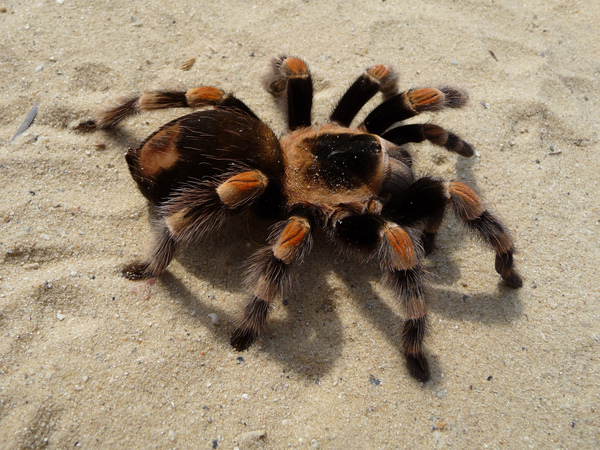
Tarantula
Lycosa tarantula (and/or Tarentula hispanica) · Animal
Tarantula suits nervous, hysterical patients subject to choreic affections, with restlessness, constant involuntary movements, and extreme excitability. It is particularly indicated for persons of foxy, mischievous, or destructive temperament, and for chorea when the whole body or right arm and left leg are involved. Strong sexual excitement, alternating moods of gaiety and profound melancholy, and marked sensitivity to music are characteristic.
Key symptoms
- Constant uncontrollable movements — jerking, twitching, dancing
- Extreme restlessness, must keep moving though motion worsens symptoms
- Intense neuralgic headache as if thousands of needles pricking the brain
- Hysterical hyperesthesia with extreme sensitivity of fingertips
- Chorea predominantly on the right side
- Sexual excitement to the point of mania (erotomania)
- Spinal irritation — slightest touch along spine causes spasmodic chest pain
- Paroxysms of insanity, destructive impulses, kleptomania
- Dark red or purplish discoloration and swelling of skin
- Music first excites then relieves symptoms
Worse (aggravation)
- From touch or contact
- At night
- From noise
- From strong light
- During rest
- After sleep
- From washing the head
- From wetting hands in cold water
- After coitus
Better (amelioration)
- From music (relieves after initial excitement)
- From rubbing affected parts
- In fresh open air
- From warm water
- From pressure
- Riding in a carriage

Lycosa tarentula. Tarantula. N. O. Araneideæ. Tincture of the living spiders.
Clinical
Angina pectoris. Callosities. Chorea. Coccygodynia. Cornea, opacity of. Cystitis. Depression of spirits. Diphtheria. Dysmenorrhœa. Epistaxis. Erotomania. Fibroma. Headache. Hiccough. Hysteria. Intermittents. Kleptomania. Levitation. Locomotor ataxy. Mania. Ménière's disease. Migraine. Onanism. Ovaries, enlargement of. Paralysis; agitans. Physometra. Proctalgia. Pruritus pudendi. Quinsy. Septic diseases. Spinal irritation. Spinal sclerosis. Tumours. Uterus, cancer of; neuralgia of. Vertebræ, tumours of.
Characteristics
The name Tarentula covers a number of poisonous spiders, but in homœopathy, unless otherwise distinguished, it refers to Tarentula hispanica, Lycosa tarentula. Nunez is our chief authority. He instigated the proving and collected much outside information bearing on the action of the poison. "Tarantella" is a dance named from the city of Tarentum. "Tarantism" is a dancing mania, set up in persons …
Classical texts are in the public domain. Educational reference only — not medical advice.
