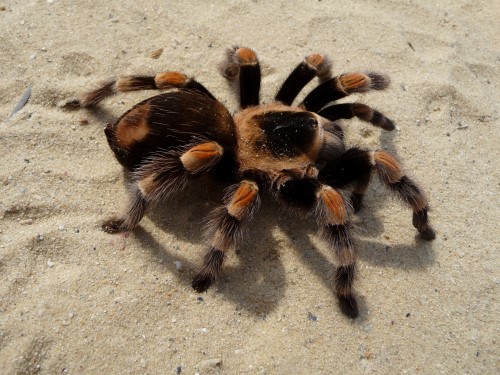
Tarentula cubensis
Mygale cubensis,Cuban tarantula. · Animal
People who respond to Tarentula cub. may be delirious, extremely restless, and uneasy. They often feel drowsy but sleep restlessly and have a sense of hurry. It is useful for hyperactivity.
The classic symptom picture for this remedy is of severe, painful inflammation, burning, stinging pains, and extreme prostration and weakness. It is given for slow-developing fever, acute infection such as diphtheria, and septic conditions such as carbuncles, septicemia, painful abscesses, especially near the fingernails, ulcers that will not heal, and gangrene. In addition, the remedy may be used to ease pain experienced during a slow death. The appetite is generally low, and the stomach feels hard and sore. Severe coughs such as whooping cough may also be helped, if there is great prostration.
Key symptoms
- Septic conditions; malignant suppuration with purplish hue
- Burning, stinging pains in carbuncles and abscesses
- Remedy for pain of death; soothes last struggles
- Pruritus especially about genitals
- Intermittent septic chills; diphtheria; bubonic plague
- Restless feet; hands tremble, turgid with blood
- Gangrene with purplish discoloration; senile ulcers
- Scirrhus of breasts; early and persistent prostration
Worse (aggravation)
Better (amelioration)

Cuban Spider
A toxæmic medicine, septic conditions. Diphtheria. Adapted to the most severe types of inflammation and pain, early and persistent prostration. Various forms of malignant suppuration. Purplish hue and burning, stinging pains. Bubo. It is the remedy for pain of death; soothes the last struggles. Pruritus, especially about genitals. Restless feet. Intermittent septic chills. Bubonic plague. As a curative and preventive remedy especially during the period of invasion.
Head
Dizziness after heat and hot perspiration. Dull ache on top of head. Shooting pain through left eye across frontal region.
Gastric
Stomach feels hard, sore. Loss of appetite, except for breakfast.
Back
Itches across kidney region.
Extremities
Hands tremble, turgid with blood.
Urinary
Retention. Cannot hold urine on coughing.
Skin
Red spots and pimples. Feels puffed all over. Carbuncles, burning, stinging pains. Purplish hue. Gangrene. Abscesses, where pain and inflammation predominate. Scirrhus of breasts. "Senile" ulcers.
Sleep
Drowsiness. Sleep restless. Sleep prevented by harsh cough.
Relationship
Compare: Ars; Pyrog; Crotal; Echin; Anthrac; Bellad; Apis.
Modalities
Better, smoking. Worse, night.
Dose
Sixth to thirtieth potency.

Mygale Cubensis. Arana peluda. Cuban Tarantula. N. O. Araneideæ. Tincture of whole spider.
Clinical
Carbuncle. Chorea. Intermittents.
Characteristics
"The Mygale Cubensis, which may be called the Cuban Tarentula, also found in South Carolina and Texas, is a larger spider, of a dark brown colour, less poisonous, and covered with more hairs than the Tarentula Hispanica" (Hering). The chief uses to which Trn. c. has been put are: (1) Carbuncle, even to sloughing; with great prostration and diarrhœa. (2) Intermittent fever, with evening exacerbation. A keynote symptom is "atrocious pains." A case of chorea in a girl of twelve is reported (H. M., March, 1901) cured with Trn. c. 6. The movements were confined to the left side, and occurred chiefly at night, when Trn. c. was prescribed.

Skin
Boils, abscesses, felons, or swellings of any kind,tissues bluish with "atrocious" burning pains.
Generalities
Swellings of any kind that put on a bluish color and there are intense burning pains.

Phatak's chapter on Tarentula cubensis is available in the app.
Read Phatak in the appClassical texts are in the public domain. Educational reference only — not medical advice.
