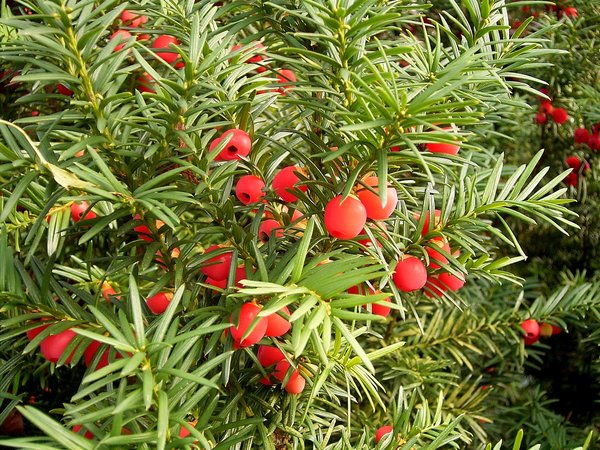
Taxus baccata
Plant · Taxaceae
Taxus Baccata suits patients with marked pustular skin affections, rapid digestion requiring frequent eating, and a tendency to fainting and cardiac disturbance. Impatience unfitting the patient for mental work, and profuse offensive viscid sweats are characteristic constitutional features.
Key symptoms
- Sensation of emptiness in stomach with frequent need to eat
- Large flat itching pustules on skin
- Profuse offensive night-sweats with viscid perspiration
- Fainting and tendency to collapse
- Headache above eyebrows with brilliant moving lines before sight
- Pupils widely dilated with abundant lachrymation
- Irregular heart action with feeble, wiry pulse
- Strangury with red urine and cutting pain at kidneys
- Gout and rheumatic pains, especially shooting pains in toes
Worse (aggravation)
- From pressure
- Before and after each meal
- From application of liquids
- After coitus
- From movement (elbow pain)
- In evening and night (itching eruptions)
Better (amelioration)
- From rubbing (relieves itching of eyelids)
- At night (hip and knee pain)

Yew
In pustular diseases of skin and night-sweats. Also in gout and chronic rheumatism.
Head
Supra-orbital and temporal pain on right side, with lachrymation. Pupils dilated. Face puffy and pale.
Stomach
Saliva hot, acrid. Nausea. Pain in pit of stomach and region of navel. After eating, cough. Feeling of pins and needles at pit of stomach; of emptiness, must eat frequently (compare the coniferæ).
Skin
Large, flat, itching pustules. Badly smelling night-sweats. Podagra. Erysipelas.
Dose
Tincture, to third potency.

Taxus baccata. Yew. N. O. Coniferæ. Tincture of the fresh young shoots. (Tincture of the berries.)
Clinical
Ciliary neuralgia. Cystitis. Digestion, too rapid. Dysuria. Ear, polypus of. Eruptions. Fainting. Gout. Hair, falling out. Headache, with photopsia. Heart, affections of. Kidneys, affections of. Knees, abscess of. Lachrymation. Nose, eruption on. Rheumatism. Purpura. Spermatorrhœa. Strangury. Vision, dim.
Characteristics
The poisonous properties of the Yew have been recognised and disputed from ancient times. Gerarde says that in his schooldays he and his companions ate their fill of the berries of the Yew and slept not only under its shade, but on its branches, without any ill effect. But there is plenty of evidence on the other side. Recently (Med. Press, May 29, 1901), a patient of Mullingar Asylum died suddenly from eating Yew leaves. Some years ago a correspondence in the Times brought to light instances of the lethal effects of Yew leaves on cattle. One correspondent, Mr. James Simmons, of …
Classical texts are in the public domain. Educational reference only — not medical advice.
