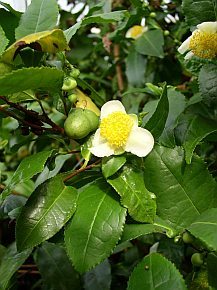
Thea chinensis
Camellia sinensis · Tea,Camellia sinensis · Plant · Theaceae
Thea is associated chiefly with an overactive nervous system. Those who respond best to it tend to be in a rather overwrought frame of mind, and are inclined to quarrel over the slightest things. Thea is given for extreme forms of behavior in children and adults, including irritability, mental restlessness, violent impulses, and even psychiatric problems. Adults may have murderous desires, perhaps toward their own children, or they may feel suicidal, especially at night when they are unable to sleep due to an overactive mind.
This overactivity of the nervous system causes physical symptoms such as insomnia, indigestion, and palpitations or other heart problems, which may be helped by Thea.
Key symptoms
- Nervous sleeplessness from habitual tea-drinking
- Palpitation; pulse rapid, irregular, intermittent; unable to lie on left side
- Sick headache radiating from one point
- Faint, gone feeling at epigastrium
- Craves acids; sudden production of wind in large quantities
- Anxious oppression and precordial distress
- Sleepy in daytime; restless at night with dry skin
- Hallucinations of hearing
Worse (aggravation)
Better (amelioration)

Tea (THE)
Nervous sleeplessness, heart troubles, palpitation, and dyspepsia of old tea-drinkers. Produces most of the sick headaches Tabacum antidotal (Allen).
Head
Temporary mental exaltation. Ill-humored. Sick headache radiating from one point. Sleepless and restless. Hallucinations of hearing. Cold damp feeling at back of head.
Stomach
Sinking sensation at epigastrium. Faint, gone feeling (Sep; Hyd; Oleand). Craves acids. Sudden production of wind in large quantities.
Abdomen
Borborygmi liability to hernia.
Female
Soreness and tenderness in ovaries.
Heart
Anxious oppression. Præcordial distress. Palpitation; unable to lie on left side. Fluttering. Pulse rapid, irregular, intermittent.
Sleep
Sleepy in daytime; sleepiness at night, with vascular excitement and restlessness, and dry skin. Horrible dreams cause no horror.
Modalities
Worse, night, on walking in open air, after meals. Better warmth; warm bath.
Relationship
Antidote: Kali hypophos; Thuja; Ferr; Kali hyd (Material doses for tea-taster's cough).
Dose
Third to thirtieth potency.
Theine 1/4-1/2 grain hypodermically for sciatica and supra-orbital neuralgia.

Thea chinensis. Tea. N. O. Ternströmiaceæ (Genus, Camellia). Infusion. Tincture. Trituration of Theine.
Clinical
Delirium; tremens. Mania; suicidal; homicidal. Megrim. Nervousness. Neuralgia. Paralysis. Sleeplessness.
Characteristics
The use of Tea has spread from the older civilisations of the East to the newer ones of the West. Tea contains an alkaloid, Thein, which is by some considered identical with Coffein, and both tea and coffee are used to stimulate jaded faculties and enable persons to endure fatigue, and get more enjoyment out of themselves than they could obtain by mere food. But coffee and tea are different in their effects though they may be alike in their chemistry. The after-effect of all stimulation is reaction; unless it is kept off by a repetition of the stimulant as the effect of the last dose wears off. The sign that the last dose of Tea is wearing off is a nervous, restless, depressed, ill-tempered state, which is visible in persons who rely on tea, at about 5 p.m. Another symptom is an …
Classical texts are in the public domain. Educational reference only — not medical advice.
