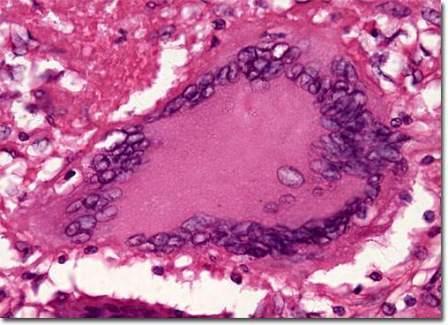
Tuberculinum
Tuberculinum Koch · Tuberculosis · Nosode
Intensity and yearning are two traits that characterize people most suited to Tuberculinum. There is typically a longing for constant stimulation and change that may manifest itself, for example, in a desire to change partners, to change jobs, to travel, or to frequently redecorate the home.
These tendencies can have negative consequences. For example, a deep, romantic longing unfulfilled by a string of partners may ultimately lead to disillusionment. This and a lack of fulfillment may result in maliciousness, cruelty, and destructive anger, and may even lead to alcohol or drug addiction. Many 19th-century Romantic composers and artists were of this disposition: their works display the bittersweetness and underlying dissatisfaction typical of this temperament.
Although the remedy is not used for TB itself, many people suited to Tuberculinum have a family history of TB infection. Common symptoms include a susceptibility to colds and persistent tiredness. Symptoms improve with fresh, dry air, such as mountain air. There is a desire for sweets, cold milk, and smoked meats, and a tendency to perspire heavily during the night.
Key symptoms
- constant desire for change
- irritable, malicious temperament
- romantic nature
- susceptibility to recurrent respiratory illness
- desire for open air
Worse (aggravation)
- Cold air and damp; cold from slightest exposure
- Changes in weather; before storms
- Motion causes intense fatigue
- On awakening (irritable)
- Standing
Better (amelioration)
- Open air; pine forests
- Continued motion
- Warm dry atmosphere
- Rest

A Nucleo-protein, a Nosode from Tubercular Abscess
Tuberculinum is indicated in renal affections, but caution is necessary, for where skin and intestines do not perform normally even high potencies are dangerous. In chronic cystitis, brilliant and permanent results (Dr. Nebel Montreux).
Of undoubted value in the treatment of incipient tuberculosis. Especially adapted to the light-complexioned, narrow-chested subjects. Lax fiber, low recuperative powers, and very susceptible to changes in the weather. Patient always tired; motion causes intense fatigue; aversion to work; wants constant changes. When symptoms are constantly changing and well-selected remedies fail to improve, and cold is taken from the slightest exposure. Rapid emaciation. Of great value in epilepsy, neurasthenia and in nervous children. Diarrhœa in children running for weeks, extreme wasting, bluish pallor, exhaustion. Mentally deficient children. Enlarged tonsils. Skin affections, acute articular rheumatism. Very sensitive, mentally and physically. General exhaustion. Nervous weakness. Trembling. Epilepsy. Arthritis.
Mind
Contradictory characteristics of Tuberculinum are mania and melancholia, insomnia and sopor. Irritable, especially when awakening. Depressed, melancholy. Fear of dogs. Animals especially. Desire to use foul language, curse and swear.
Head
Subject to deep brain headaches and intense neuralgias. Everything seems strange. Intense pain, as of an iron band around head. Meningitis. When critical discharges appear, sweat, polyuria, diarrhœa, exanthema, repeating the dose only when crises come on. Nocturnal hallucinations, awakes frightened. Plica polonica (Vinca). Crops of small boils, intensely painful, successively appear in the nose; green, fetid pus.
Ears
Persistent, offensive otorrhœa. Perforation in membrana tympani, with ragged edges.
Stomach
Averse to meat. All-gone, hungry sensation (Sulph). Desire for cold milk.
Abdomen
Early-morning, sudden diarrhœa (Sulph). Stools dark-brown, offensive, discharged with much force. Tabes mesenterica.
Female
Benign mammary tumors. Menses too early, too profuse, long-lasting. Dysmenorrhœa. Pains increase with the establishment of the flow.
Respiratory
Enlarged tonsils. Hard, dry cough during sleep. Expectoration thick, easy; profuse bronchorrhœa. Shortness of breath. Sensation of suffocation, even with plenty of fresh air. Longs for cold air. Broncho-pneumonia in children. Hard, hacking cough, profuse sweating and loss of weight, rales all over chest. Deposits begin in apex of lung (Repeated doses).
Back
Tension in nape of neck and down spine. Chilliness between shoulders or up the back.
Skin
Chronic eczema; itching intense; worse at night. Acne in tuberculous children. Measles; psoriasis (Thyroid).
Sleep
Poor; wakes early. Overpowering sleepiness in daytime. Dreams vivid and distressing.
Fever
Post-critical temperature of a remittent type. Here repeat dose every two hours (MacFarlan). Profuse sweat. General chilliness.
Modalities
Worse, motion, music; before a storm; standing; dampness; from draught; early morning, and after sleep. Better, open air.
Relationship
Compare: Koch's lymph (acute and chronic parenchymatous nephritis; produces pneumonia, broncho-pneumonia, and congestion of the lungs in tuberculous patients, and is a remarkably efficacious remedy in lobular pneumonia-broncho-pneumonia); Aviare-Tuberculin from birds--(acts on the apices of the lungs; has proved an excellent remedy in influenzal bronchitis; symptoms similar to tuberculosis; relieves the debility, diminishes the cough, improves the appetite, and braces up the whole organism; acute broncho-pulmonary diseases of children; itching of palms and ears; cough, acute, inflammatory, irritating, incessant, and tickling; loss of strength and appetite); Hydrast (to fatten patients after Tuberc); Formic acid (tuberculosis, chronic nephritis, malignant tumors; pulmonary tuberculosis, not in third stage, however; lupus; carcinoma of breast and stomach; Dr. Krull uses injections of solutions corresponding to the third centesimal potency; these must not be repeated before six months). Compare: Bacil; Psorin; Lach. Kalagua (tuberculosis; garlicky odor of all secretions and breath). Teucrium scoradonia. Compare: Thuja (Vaccinosis may block the way of action of Tuberculin-until Thuja has been given and then acts brilliantly (Burnett).
Complementary: Calcarea; China; Bryon.
Dose
Tuberculin needs more frequent repetition in children's complaints than nearly every other chronic remedy (H. Fergie Woods). Thirtieth and much higher, in infrequent doses. When Tuberculinum fails Syphilinum often follows advantageously, producing a reaction.
"The use of Tuberculinum in phthisis pulmonalis demands attention to the following points: In apyretic purely tubercular phthisis results are marked, provided the eliminative organs are in good order, but nothing below the 1000th should be used, unless absolutely necessary. With patients where streptostaphylo-pneumococci are in the bronchi; where also after washing the sputum, a pure "t b. " bacilli-mass remains, the same treatment is indicated. With mixed infection-found in the majority of cases-where the sputum swarms with virulent micro-organisms in addition to the "t b. ", other procedure is necessary. If the heart is in good shape, a single dose of Tuberculinum 1000-2000 is given, provided there are no marked indications for other remedies. With due attention to temperature and possible excretions, the dose is allowed to work until effects are no longer observed, eight days to eight weeks. Usually a syndrome then presents, permitting the accurate choice of an antipsoric Silica, Lycopodium, Phosphorus, etc. After a while the picture again darkens and now a high potency of the isopathic remedy corresponding to the most virulent and prominent micro-organism found in the sputum is given: Staphylo-Strepto-, or Pneumococcin. The accurate bacteriological analysis of the sputum is absolutely essential; the choice of the ison again clears the picture, and so, proceeding on the one side etiologically (where these isopathica have not yet been proved); on the other side symptomatically with antipsoric remedies, the disease is dominated.
My own experience warns, in the case of mixed infection, against the use of Strepto-, Staphylo-, or Pneumococcin below the 500th. I use them only from 2000 to 1000, having seen terrible aggravations from the 30, 100, 200, with a lowering temperature from 104 to 96. Hence the admonition, which need not concern scoffers, but those alone who wish to avail themselves of a potent weapon. The toxins used as remedies are, like Tuberculinum, prepared from pure and virulent cultures.
And cases, seemingly condemned to speedy death, are brought in a year or two back to normal temperature, though, of course, sacrificing a large portion of lung tissue. This result is sure when the patient can and will take care of himself, where the heart has withstood the toxin and the stomach and liver are in good function. Further, climatic variations must be avoided. With the great mineral metabolism of the phthisic, diet regulation is imperative, and should be preponderately vegetable, together with the addition of physiological salts in low potency, Calcarea carb, 3x, 5x, Calcarea phos, 2x, 6x, and intercurrently according to indications organ-remedies as Cactus Tr. 30, Chelidonium Tr. 30, Taraxacum Tr, Nasturtium Tr, Urtica urens Tr, Tussilago farfara Tr, Lysimachia numularia Tr, for short periods.
The first dose of Tuberculinum in any difficult case is, however, the most weighty prescription. The remedy should not be given without a most careful cardiac examination. As the surgeon before the anæsthetic, so must the physician know the heart before administering this drug, especially to children, and seniles-and to young seniles. He who observes this rule will have fewer clinical reproaches on his conscience. When Tuberculinum is contraindicated, recourse must be had to the nearest antipsoric.
The above caution applies also to asthma, pleuritis, peritonitis in scrofulous (tuberculous) subjects. " (Dr. Nebel Montreux)
I want to take up the study of Tuberculinum.
The preparation which I use is a little different from that which is generally found in the market. This preparation I procured through a Professor of Veterinary Surgery.
In Pennsylvania there came a time when a handsome herd of cattle had to be slaughtered because of tuberculosis. Through the Veterinary Surgeon of the Pennsylvania University I secured some: of the tubercular glands from these slaughtered cattle.
Dynamization
I selected from these the most likely specimen.
This was potentized by Boericke & Tafel as far as the 6th, and has since been prepared on the Skinner machine, the 30 th, 200 th, 1000 th and the higher potencies. This preparation I have been using for fifteen years. Many of my friends have been using if, as they have procured it from me.

Tuberculin of Koch. A glycerine extract of a pure cultivation of tubercle bacilli (human). Liquid attenuations.
Clinical
Acne. Albuminuria. Appendicitis. Asthma. Bones, caries of. Bronchitis. Catarrhal pneumonia. Chilblains. Cornea, opacity of; ulceration of. Dentition. Erysipelas. Erythema. Hæmaturia. Hæmoptysis. Headache. Heart, affections of; palpitation of. Influenza. Leprosy. Leucorrhœa. Lungs, œdema of. Lupus. Mania. Menses too early. Nephritis. Night-terrors. Œdema glottidis. Paralysis. Phthisis. Pleurisy. Pneumonia, acute. Tuberculosis.
Characteristics
I consider it best to reserve the name Tuberculinum for this preparation of Koch, as it is universally known by that name. Burnett's "Bacillinum" is now accepted as the name of the original homœopathic preparation, and though its originator, Swan, named it Tuberculinum, it owes its present position in therapeutics to Burnett, and it will simplify matters if we make the term Bacillinum cover the homœopathic nosode and Tuberculinum the …
Pus (with bacilli) from tubercular abscess (A Nosode.)
Note: *The potencies of Fincke and Swan were prepared from a drop of pus obtained from a pulmonary tubercular abscess or sputa. Those of Heath from a tuberculous lung in which the bacillus tuberculosis had been found microscopically; hence the former was called Tuberculinum and the latter Bacillinum. Both preparations are reliable and effective.
Adapted to persons of light complexion; blue eyes, blonde in preference to brunette; tall slim, flat, narrow chest; active and precocious mentally, weak physically; the tubercular diathesis. When the family history of tubercular affections the best selected remedy fails to relieve or permanently improve, without reference to name of disease. Symptoms ever changing; ailments affecting one organ, then another - the lungs, brain, kidneys, liver, stomach, nervous system - beginning suddenly, ceasing suddenly. Takes cold easily without knowing how or where; seems to take cold "every time he takes a breath of …
Generalities
Symptoms ever changing from one organ to another, beginning suddenly, ceasing suddenly.
Generalities
Emaciation rapid and pronounced, while he eats well loses flesh rapidly
Generalities
Takes cold easily, without knowing when or where.

Phatak's chapter on Tuberculinum is available in the app.
Read Phatak in the appClassical texts are in the public domain. Educational reference only — not medical advice.
