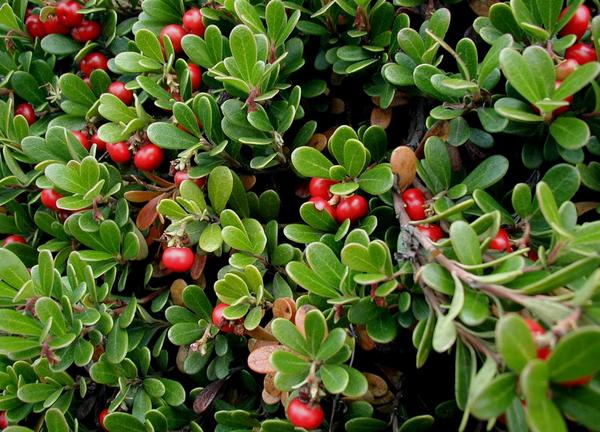
Uva ursi
Arctostaphylos uva-ursi (bearberry) · Uva-ursi, bearberry,Arctostaphylos uva-ursi · Plant · Ericaceae
Uva ursi is generally used for inflammation and stones in the kidneys. There may be chronic bladder irritation with blood in the urine, or pain with straining to pass urine, possibly accompanied by a weak, irregular pulse, breathlessness, vomiting, nausea, and cyanosis (bluish mucous membranes and skin caused by too much deoxygenated hemoglobin in the blood). Sharp pains may pass from hip to hip. In men, the prostate gland may become enlarged. Further symptoms that may accompany urinary conditions include flushing of the face, catarrh, a tight sensation in the chest, slight dizziness, and a headache. Uva ursi may also be given for certain digestive, respiratory, or childbirth symptoms, but the primary focus of the remedy is on urinary problems.
Key symptoms
- Cystitis with bloody urine; burning after discharge of slimy urine
- Frequent urging with severe spasms of bladder
- Urine contains blood, pus, and tenacious mucus with large clots
- Pyelitis; calculous inflammation
- Painful dysuria; involuntary green urine
- Uterine hemorrhage
- Urticaria without itching
Worse (aggravation)
Better (amelioration)

Bearberry
Urinary symptoms most important. Cystitis, with bloody urine. Uterine hæmorrhage. Chronic vesical irritation, with pain, tenesmus, and catarrhal discharges. Burning after the discharge of slimy urine. Pyelitis. Calculous inflammation. Dyspnœa, nausea, vomiting, pulse small and irregular. Cyanosis. Urticaria without itching.
Urinary
Frequent urging, with severe spasms of bladder; burning and tearing pain. Urine contains blood, pus, and much tenacious mucus, with clots in large masses. Involuntary; green urine. Painful dysuria.
Relationship
Compare: Arbutin (a crystallized glucoside of Uva; found also in Kalmia, Gaultheria and other genera of the family of Eriaceæ; given in doses of 3 to 8 grains with sugar three times a day. Used as an urinary antiseptic and diuretic). Arctosphylos manzanita (acts on renal and reproductive organs. Gonorrhœa, vesical catarrh, diabetes menorrhagia. Tincture of leaves). Vaccinum myrtillus-Huckleberries--(dysentery; typhoid, keeps intestines aseptic and prevents absorption and reinfection).
Dose
Tincture, five to thirty drops. In pyelitis a trituration of the leaves.

Arctostaphylos uva-ursi. Bearberry. N. O. Ericaceæ. Tincture or trituration of dried leaves and fruit. Tincture of fresh leaves gathered in autumn.
Clinical
Cystitis. Dysuria. Hæmaturia. Urinary affections.
Characteristics
A few experiments have been made with Uva, and these have seemed to accentuate its traditional reputation as an "astringent used to check excessive secretion of mucus, as in urinary and bronchial affections, and even in calculus." The keynote indications are: Painful micturition with burning sensation. Burning after the discharge of slimy urine. Slime passes with blood. In one cured case there were pains shooting through from hip to hip. The bladder symptoms are > lying on the back.
Classical texts are in the public domain. Educational reference only — not medical advice.
