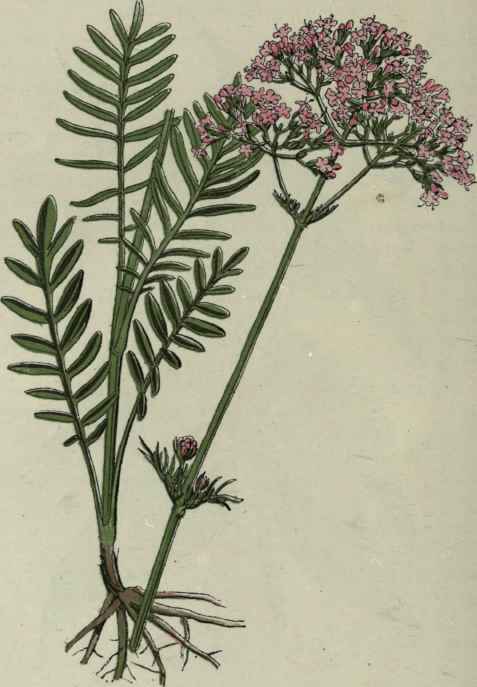
Valeriana officinalis
Common valerian. · Plant · Caprifoliaceae
Those with a nervous, irritable, restless, and mentally or emotionally unstable state of mind respond best to Valeriana. It is used for an extreme nervous state possibly characterized by hysteria, raving, swearing, and madness, accompanied by a sensation of dreaming or floating. Fluctuating mood swings that alternate between extreme joy and deepest grief are typically linked to this remedy.
Physically, Valeriana is associated with neuralgic pains, a rapid pulse, and blood congestion in the head. Pains tend to be darting and tearing, alternating between the upper and lower limbs. The limbs feel painful, heavy, and difficult to move, and may jerk on resting. Headaches tend to develop slowly, in spurts, or suddenly, as if caused by a blow to the head.
Key symptoms
- Hysterical spasms and affections; over-sensitiveness of nervous system
- Changeable disposition; feels light as if floating in air
- Sensation as if a thread were hanging down throat
- Child vomits curdled milk in large lumps after nursing
- Thin watery diarrhea with lumps of coagulated milk and violent screaming
- Spasmodic asthma; choking on falling asleep
- Hysterical flatulency; cramps in bowels at night
- Hallucinations at night; tremulous and irritable
Worse (aggravation)
Better (amelioration)

Valerian (VALERIANA)
Hysteria, over-sensitiveness, nervous affections, when apparently well-chosen remedies fail. Hysterical spasms and affections generally. Hysterical flatulency.
Mind
Changeable disposition. Feels light, as if floating in air. Over-sensitiveness (Staph). Hallucinations at night. Irritable. Tremulous.
Head
Sensation of great coldness. Pressure in forehead. Feeling of intoxication.
Ears
Earache from exposure to draughts and cold. Nervous noises. Hyperæsthesia.
Throat
Sensation as if a thread were hanging down throat. Nausea felt in throat. Pharynx feels constricted.
Stomach
Hunger, with nausea. Eructations foul. Heartburn with gulping of rancid fluid. Nausea, with faintness. Child vomits curdled milk in large lumps after nursing.
Abdomen
Bloated. Hysterical cramps. Thin, watery diarrhœa, with lumps of coagulated milk, with violent screaming in children. Greenish, papescent, bloody stool. Spasms in bowels after food and at night in bed.
Respiratory
Choking on falling asleep. Spasmodic asthma; convulsive movements of the diaphragm.
Female
Menses late and scanty (Puls).
Extremities
Rheumatic pains in limbs. Constant jerking. Heaviness. Sciatica; pain worse standing and resting on floor (Bell); better walking. Pain in heels when sitting.
Sleep
Sleepless, with nightly itching and muscular spasms. Worse on waking.
Fever
Long lasting heat, often with sweat on face. Heat predominates. Sensation of icy coldness (Heloderma; Camp; Abies c).
Relationship
Compare: Asaf; Ign; Croc; Castor; Amm valer (in neuralgia, gastric disturbance, and great nervous agitation). Insomnia especially during pregnancy and menopause. Feeble, hysterical nervous patients.
Dose
Tincture.
This remedy cures many nervous and hysterical phenomena in excitable women and children, and the complaints of the hypochondriac.
Great nervous excitability, exaltation, hysterical contractures, trembling, palpitation, sense of levitation, paroxysmal respiration, stitching pains, tension in the limbs, jerking, twitching, globus hystericus.
Sensation of something warm rising from the stomach, causing paroxysmal suffocation. All the nerves are in a fret. Oversensitiveness of all the senses; great nervous restlessness.
All these general symptoms come on during rest, and are relieved by motion and moving about. Fainting easily. Slight exertion brings on symptoms. Complaints change about, and pains wander from place to place.

Valeriana officinalis. N. O. Valerianaceæ. Tincture of the fresh root.
Clinical
Asthma, spasmodic; nervous. Bed-sores. Change of life. Clairvoyance. Coxalgia. Headache. Heart, palpitation of. Heels, pain in. Hypochondriasis. Hysteria. Levitation. Neuralgia. Sciatica. Sleeplessness. Toothache.
Characteristics
V. officinalis is usually found in moist hedgerows or on the banks of ditches and streams. The peculiar fetid odour of Valerians is probably due to the presence of Valerianic acid. It is especially agreeable to eats, who become, as it were, intoxicated with it. "Volatile oil of Valerian seems not to exist naturally in the plant, but to be developed by the agency of water" (Treas. of Bot.). Val. first appeared in homœopathic medicine in Stapf's Additions, the article on it was written by Franz, and Hahnemann and Stapf were among the provers. When Franz wrote, it was the custom among ladies in Germany to take Valerian almost as frequently as coffee, and to this practice he attributed no little …

Valerian. (Valerianaceae.)
Excessive nervous excitability; hysterical nervous temperament (Ign., Puls.); persons in whom the intellectual faculties predominate; changeable disposition. Red parts become white (Fer.). Feels light as if floating in the air (Asar., Lac c., - as if legs were floating Sticta). Oversensitiveness of all the senses (Cham., Nux). Sensation of great coldness in head (on vertex, Sep., Ver.). Sensation as if a thread were hanging down throat (on tongue, Nat. Sil.). Child vomits: curdled milk, in large lumps; same in stools (Aeth.); as soon as it has nursed, after mother has been angry. Sciatica: pain < when standing and letting foot rest on floor (Bell.); when straightening out limb, during rest from previous exertion; > when walking.

Stomach
Nausea as if a thread were hanging in the throat.

Phatak's chapter on Valeriana officinalis is available in the app.
Read Phatak in the appClassical texts are in the public domain. Educational reference only — not medical advice.
